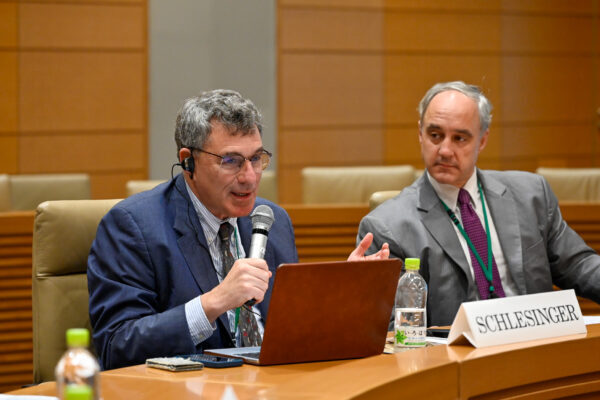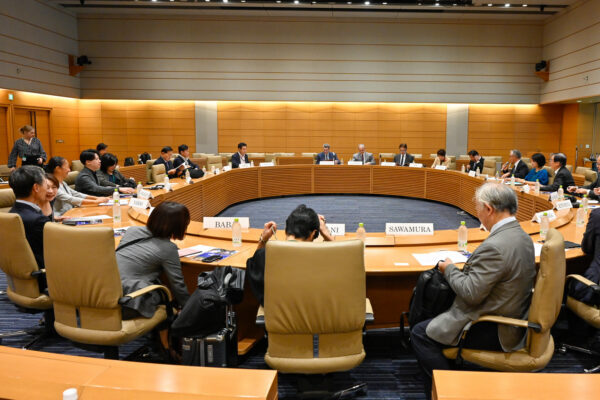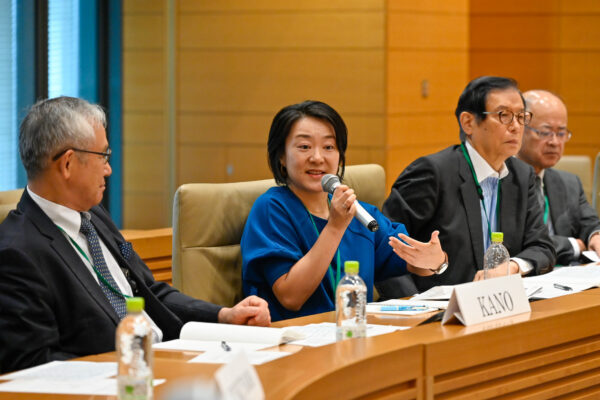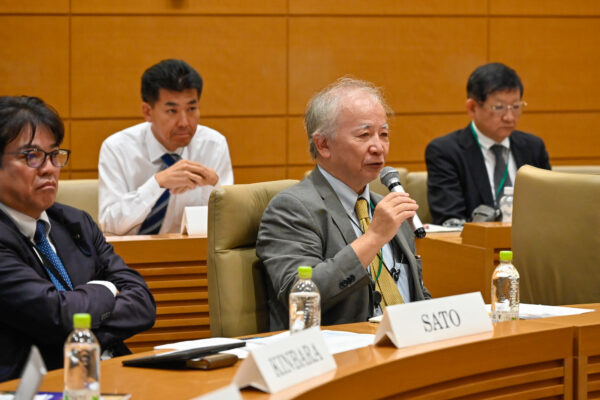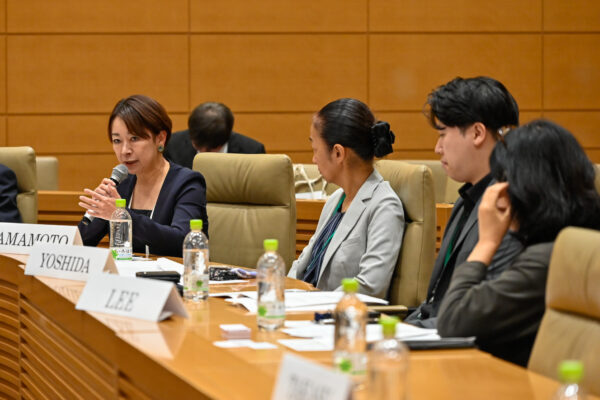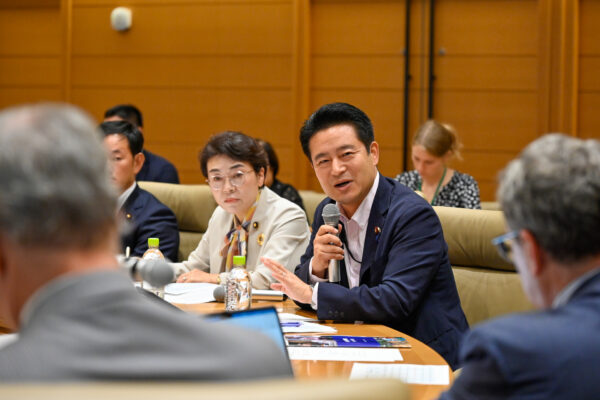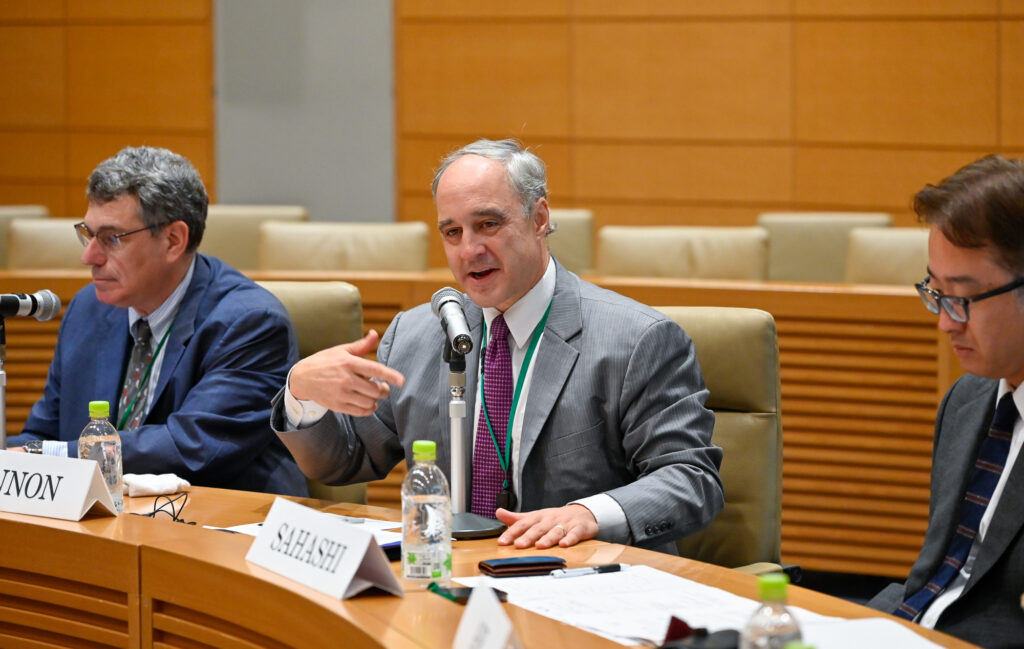
JCIE and Peace Winds America co-hosted an event bringing together members of Japan’s Diet, the media, and civil society organizations to discuss the recent US-Japan Foundation report, “America’s Foreign Aid Retrenchment: Implications for US–Japan Cooperation.” The report’s key findings were introduced by James Gannon, CEO of Peace Winds America, JCIE USA Senior Fellow, and one of the report’s authors, and Jacob Schlesinger, president of the US–Japan Foundation, which funded the report.
The discussion, held in conjunction with JCIE’s Democracy for the Future Project, examined the implications for Japan’s national interests and Japan-US development cooperation in light of the US administration’s cuts to foreign aid and the risk these reductions pose to the international community, particularly to democratic governance in the Indo-Pacific region.
Some of the main points raised included the following:
• Impact of US foreign aid reductions
The United States has long played a leading role in addressing global development challenges, particularly in areas such as health, food security, humanitarian assistance, governance, and support for civil society. In contrast, Japan has traditionally focused on request-based, government-to-government assistance, with strengths in infrastructure, human resource development, and economic development. Discussions highlighted that the sharp reduction in US foreign aid under the Trump administration has left many countries facing significant losses in personnel and capacity. As a result, concerns have been raised about emerging gaps in support, particularly in areas where Japan lacks the legal and institutional capacity to respond. The retreat of US assistance is also leading to the loss of shared development challenges that have underpinned Japan-US cooperation.
• Japan’s possible approaches
Participants suggested that Japan should reassess its approach to development assistance. While Japan’s official ODA budget has remained largely unchanged, its real value has declined due to the depreciation of the yen. Given these constraints, participants proposed focusing resources on selected priority sectors and prioritizing initiatives that can deliver high impact even at a small scale. Some also called for expanding support for Japanese civil society organizations through mechanisms such as the Japanese government’s Grant Assistance for Grass-Roots Human Security Projects and Grant Assistance for Japanese NGO Projects, and Japan Platform. With the United States scaling back its assistance, participants emphasized that Japan has an opportunity to strengthen its leadership in Asia through ODA. The importance of sustained political engagement was also highlighted, particularly from the perspective of Japan-US cooperation.
• Broadening public understanding of foreign aid
Participants stressed the need to better communicate why engagement with the international community benefits Japan. They emphasized the importance of explaining how foreign aid contributes to Japan’s national security and of increasing public awareness that foreign aid accounts for only a very small share of the Japanese government’s overall budget through education and outreach.