US Congressional Staff Exchange Alumni Interview with Kayleigh Nauman
July 31, 2026
JCIE USA’s alumni interview series features alumni of our US Congressional Staff Exchange Program. Since 1982, this program has taken bipartisan delegations of up-and-coming staffers on Capitol Hill to Japan each year, providing them with opportunities to deepen their understanding about Japan and US-Japan relations through a weeklong study tour in the country and post-trip activities.
The series aims to highlight the staffers’ work, their memories from the Japan study tour, and the lasting impact the program has had on both their personal and professional lives. Through these interviews, we hope to illustrate the value of legislative exchanges in strengthening and upholding the US-Japan alliance.
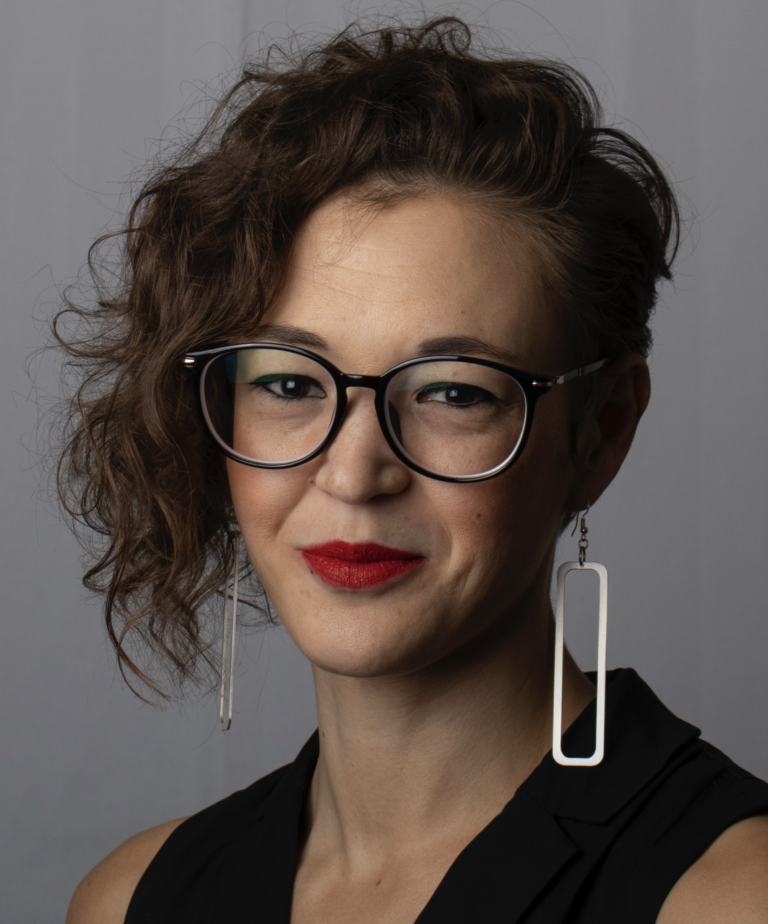
Kayleigh Nauman is an alumnus of our 2018 US Congressional Staff Exchange delegation, which visited Tokyo and Kyoto. As an American, Kayleigh has been serving as the United Kingdom Intellectual Property Offices’ first Intellectual Property Attaché to North America, at the British Embassy in Washington DC. In this role, she supports UK bilateral trade negations, facilitates government-to-government cooperation on IP issues, and advises the British government on policy developments in North America. Before joining the IPO, Kayleigh worked as a legislative assistant for Sean Patrick Maloney in the U.S. House of Representatives. Kayleigh has also worked in local and state government in her home state of Wyoming. She is a Fulbright Scholar and holds a Master of Philosophy from Emmanuel College at the University of Cambridge, UK.
Alumni Voices: Kayleigh Nauman
(Interview conducted July 2026)
What do you do now? What are your key responsibilities?
In my role, I support UK Free Trade Agreement (FTA) negotiations in the United States, Canada, and Mexico by providing insight into North American IP policies and IP stakeholder input. Another aspect of my role is building bilateral cooperation between the UK and the US, Canada, and Mexico on IP matters such as global treaties, simplifying international IP procedures, approaches to IP enforcement, and on emerging issues in technology, life sciences, and elsewhere. I also provide IP advice and support to UK businesses, particularly small and medium size enterprises (SMEs), operating in or trading with the US, Canada, and Mexico.
Please describe any work that you currently do that is related to Japan or US-Japan relations.
My work in the international space is largely focused on North America and the UK. However, I frequently have opportunities to work with staff from other embassies, including Japan’s IP Attaché to the United States. We collaborate on IP policy issues with a wide global impact, often in tandem with other attachés, US government staff, and other key stakeholders. I also support UK multilateral engagement at organizations such as the World Trade Organization (WTO) and World Intellectual Property Organization (WIPO).
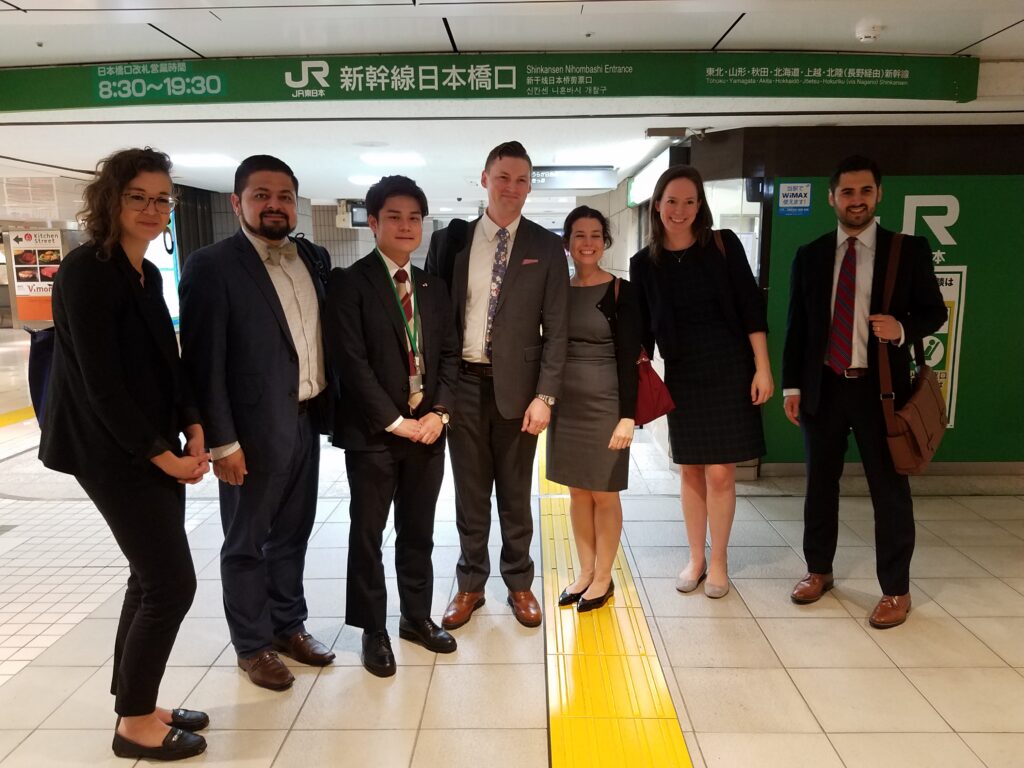
Briefing on Japan's High Speed Rail systems at Tokyo Station
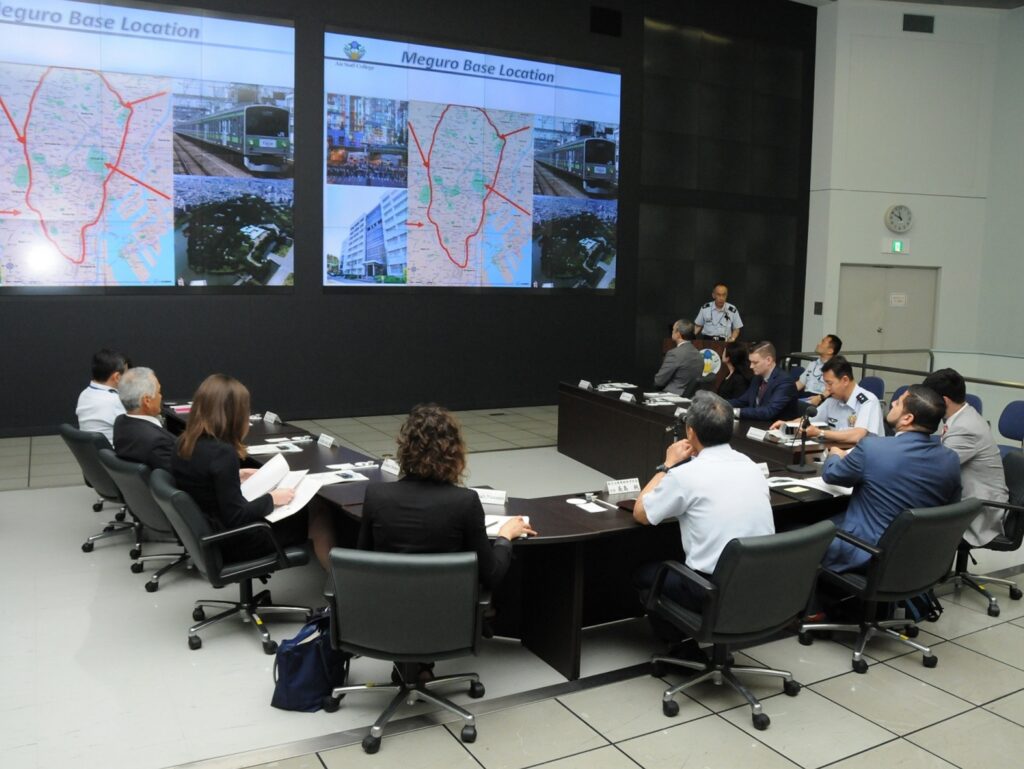
Briefing on Self Defense Force capabilities at the Air Staff College
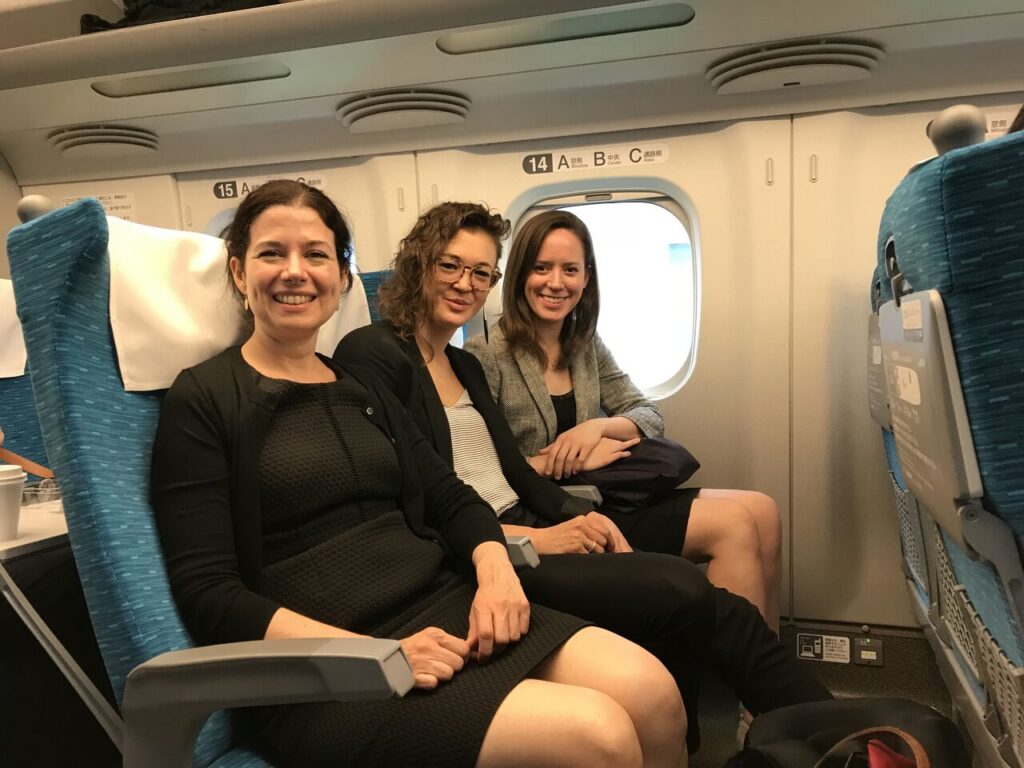
Experiencing a trip on a Shinkansen or "Bullet Train" firsthand
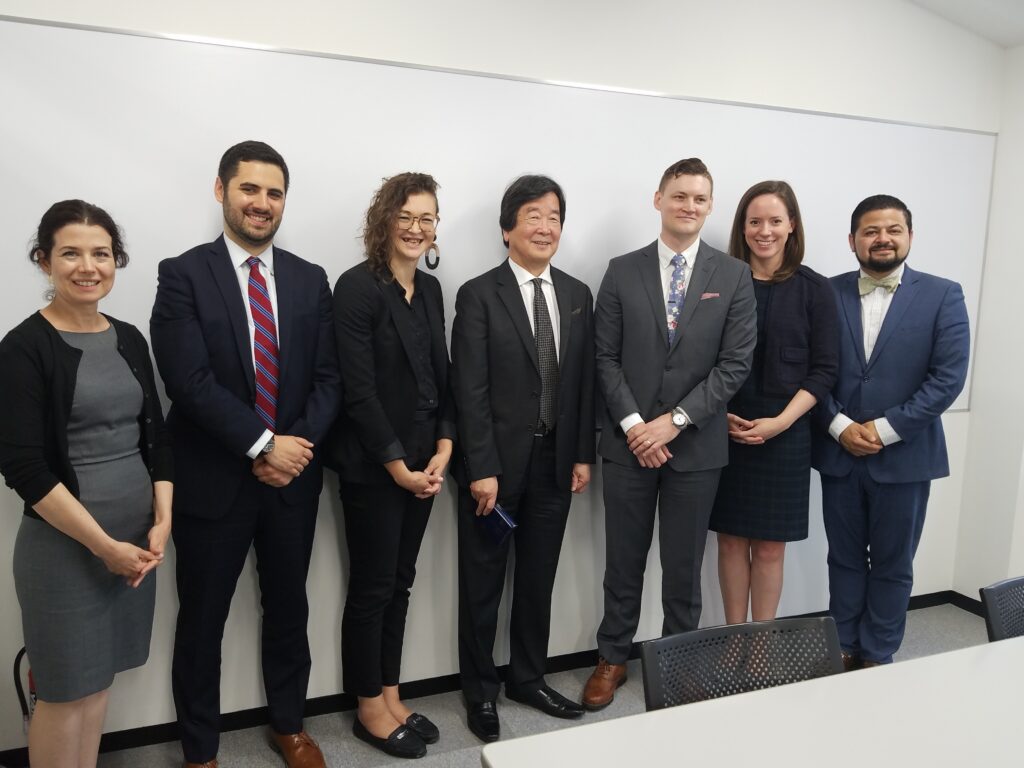
Meeting with Hitoshi Tanaka, former Deputy Minister for Foreign Affairs
What did you gain out of the trip, both professionally and personally?
I strongly believe that learning to work with people from other countries and cultures is crucial to succeeding not only in international relations, but in any professional role. Participating in a staff delegation, particularly traveling to a place you’ve never been with a language that you don’t speak, teaches the participants a level of adaptability that can’t be learned elsewhere. On the trip, the access that we were given to Japanese officials was excellent and allowed us to have substantive discussions on many issues.
How do you hope to contribute to US-Japan relations or apply what you gained from the trip in your work going forward?
In addition to being an American working for the British Embassy, I frequently work with staff from other embassies around the world. The JCIE trip provided insight into how foreign government officials receive information about US policy decisions and interpret them. Describing the process and politics around US government policymaking to foreign government officials is something I do on almost a daily basis. This frequently requires understanding a bit about that official’s culture so I can explain why things might be done differently in the US.
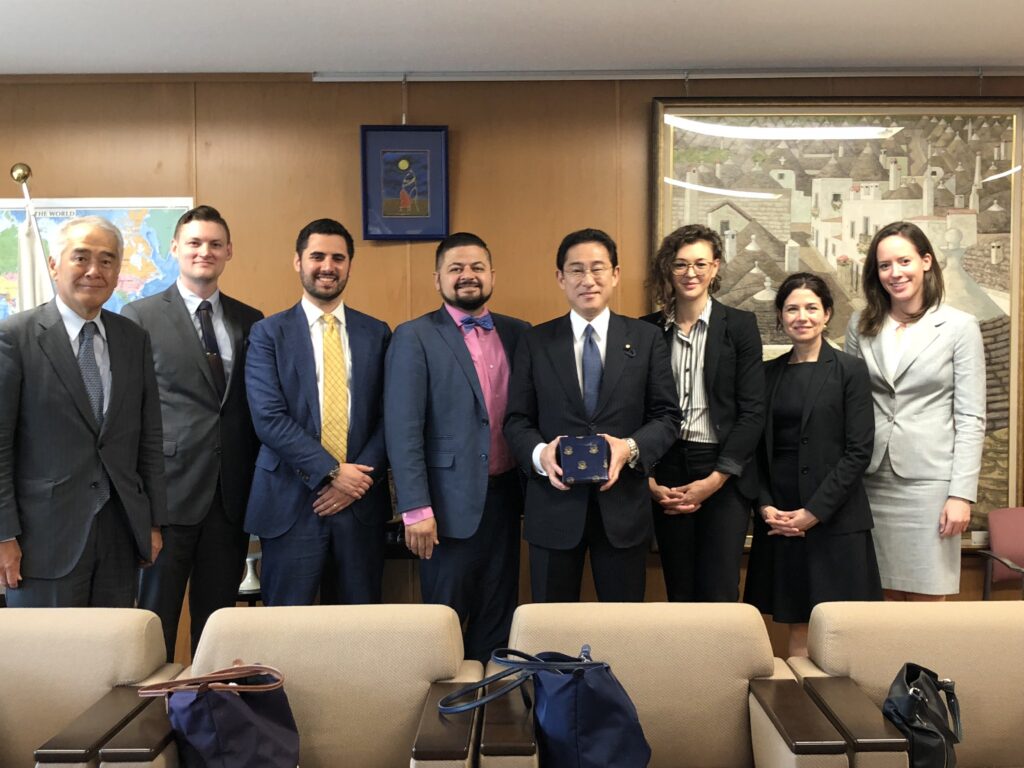
Meeting with Fumio Kishida, who would go on to become Prime Minister in 2021
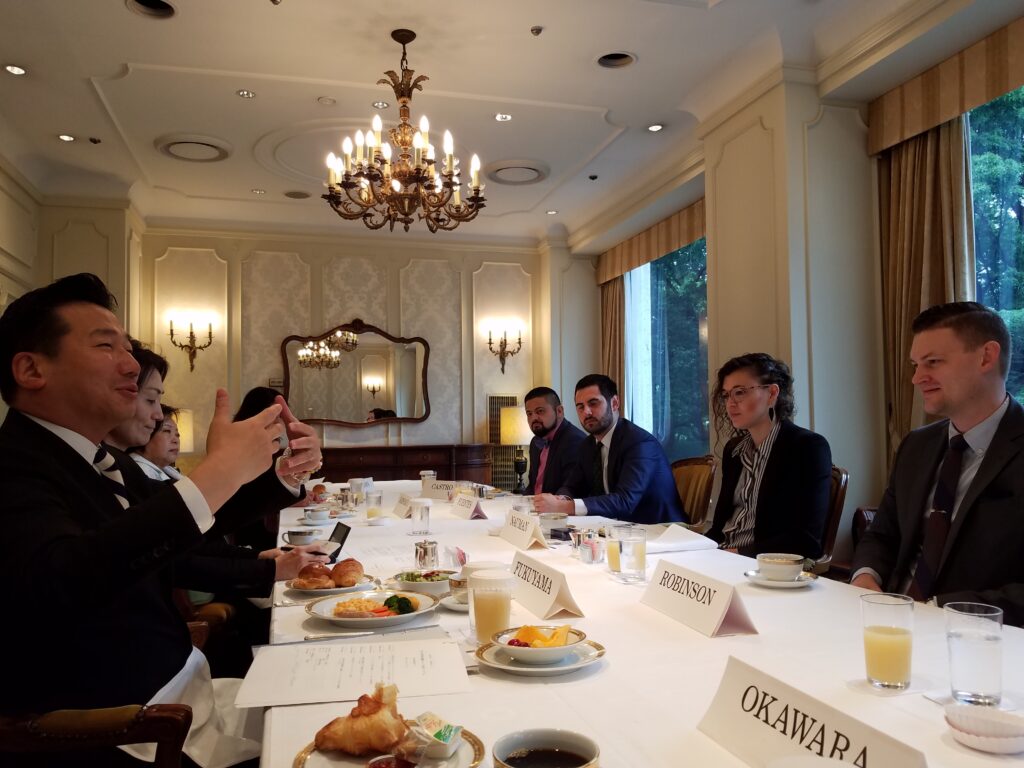
Upper House Member Tetsuro Fukuyama discusses social issues
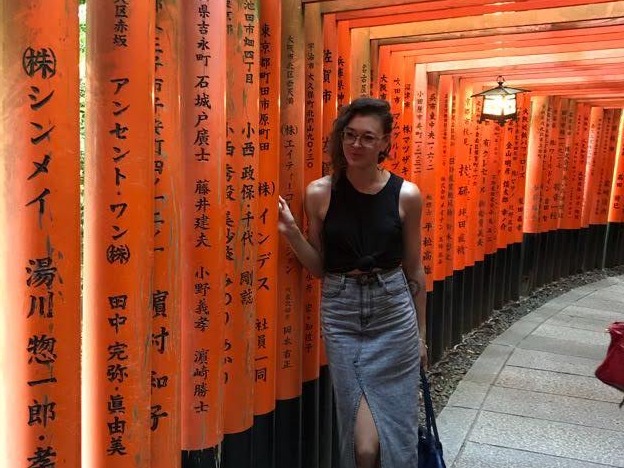
A brief visit to Fushimi Inari Shrine in Kyoto
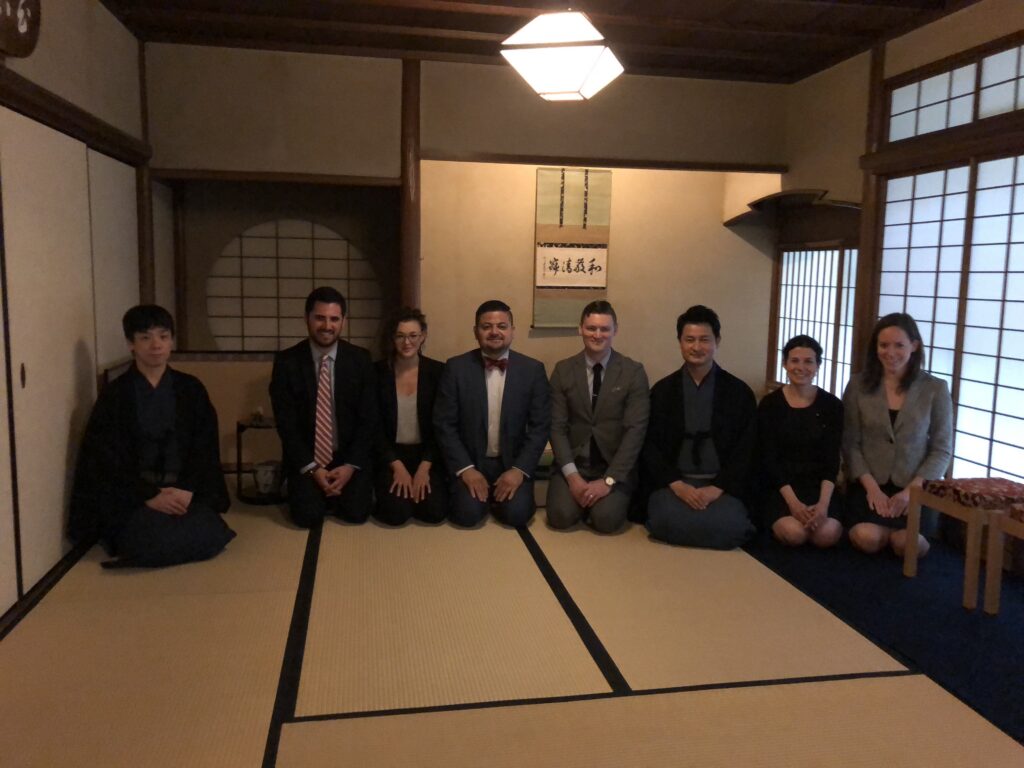
Discovering Japan's appraoch to cultural diplomacy through tea ceremony
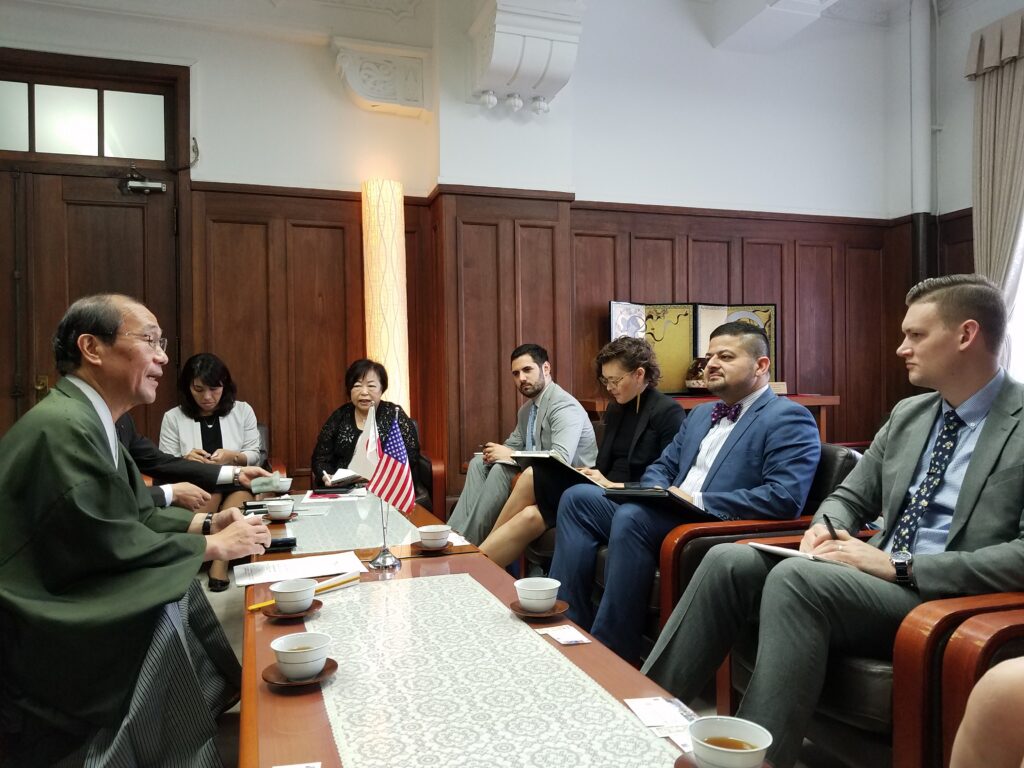
Discussing urban sustainability with Kyoto mayor Daisaku Kadokawa
What message do you have for staffers who are interested in joining JCIE’s exchange program and why should they consider it?
Go. Run, don’t walk. The JCIE program was incredibly valuable, not only in providing firsthand experience of Japanese political culture, but also in learning to effectively describe policy goals to representatives from a country with a different system of government. It was also valuable in connecting US Congressional staff who otherwise may not have interacted with one another.
For more alumni voices, check out other posts in this series below:
The US Congressional Staff Exchange alumni interviews were conducted by JCIE USA staff members Stephen McHugh (Chief Program Officer) and Kevin Bayes (Program and Administrative Assistant).