
Global Health Press Tour Program

In 2013, the Abe administration launched its Strategy on Global Health Diplomacy to promote efforts to achieve universal healthcare. JCIE’s Global Health and Human Security outreach program is offering the media opportunities to cover the state of healthcare in developing countries and allows journalists to report on the effects that investments in healthcare have on a country’s development.
Health, Resilience, and the Added Value of the Human Security Approach
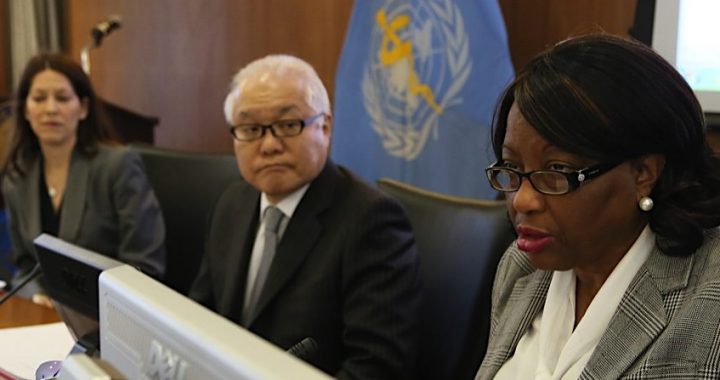
As part of the Global Health and Human Security Program, JCIE and the Pan American Health Organization/World Health Organization (PAHO/WHO) have collaborated on a project to analyze case studies of how the human security approach is being implemented on the ground and how it can contribute to broader goals of health, resilience, and development.
Human Security Approaches to HIV/AIDS in Asia and Africa
Starting in late 2005, a JCIE research team developed case studies of projects in Asia and Africa that take a human security approach to HIV/AIDS in order to better understand how these approaches work on the ground. Research was carried out in Tanzania, Thailand, South Africa, and Zimbabwe, and a workshop was held in Pretoria, South Africa on March 10, 2006, with aid workers and UN officials from around Africa.
Human Security in the United Nations
In 2003, JCIE was commissioned by Japan’s Ministry of Foreign Affairs to conduct an assessment of several projects funded by the Trust Fund for Human Security (TFHS), with a focus on how the human security concept has been incorporated and applied in TFHS-funded projects from the conception phase through the design and implementation processes.
Japan–World Bank Partnership Program on Universal Health Coverage
A Japan–World Bank Partnership Program on Universal Health Coverage (UHC) has been launched to examine lessons from Japan’s health system. The goal of the program, which focuses on financing and human resources, is to explore how these lessons can be applied to other countries that are trying to develop systems of universal health coverage.
Japan 101 Online Course: Understanding US-Japan Relations
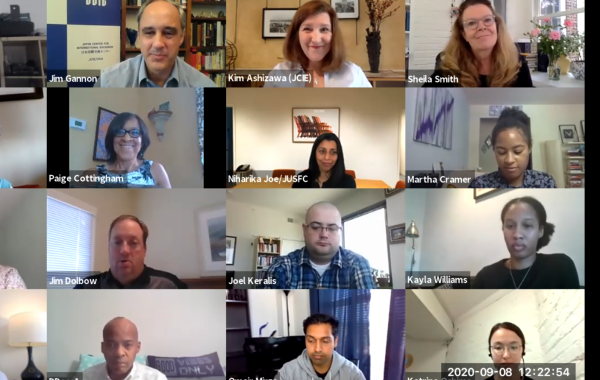
An online course for Congressional staff to bring them up-to-date on the US-Japan relationship and its importance in the US’s approach to Asia.
Global ThinkNet Fellows | Japanese Politics in the New Era
This project focused on the theme of “Japanese Politics in the New Era,” under the direction of Hideo Otake, professor of political science at Kyoto University and leading scholar on Japanese politics. The project reflected an awareness of the difficult constraints that domestic politics often place on effective Japanese participation and leadership in international affairs.
Global ThinkNet Fellows | Nonstate Actors in International Relations
Under the guidance of Professor Taizo Yakushiji of Keio University, a group of eight young scholars and researchers from various academic fields was formed to explore the role of non-state actors, such as multinational corporations, nongovernmental organizations, interest groups, and the mass media, in today’s international relations.
Global ThinkNet Fellows | The Future of Governance & the Role of Politicians
Under the guidance of Professor Gerald Curtis of Columbia University, six emerging political leaders conducted case studies in their respective areas of expertise in order to identify appropriate roles of politicians and new models for the policy-formation process.
Global ThinkNet Fellows | The Japan-US Alliance: New Challenges in the 21st Century
A group of six young scholars examined the elements that might affect the Japan-US alliance in coming decades, including domestic public opinion and politics, tensions between other countries, and cultural outlook. Their final papers were published by JCIE as an edited volume, Japan-US Alliance: New Challenges for the 21st Century.