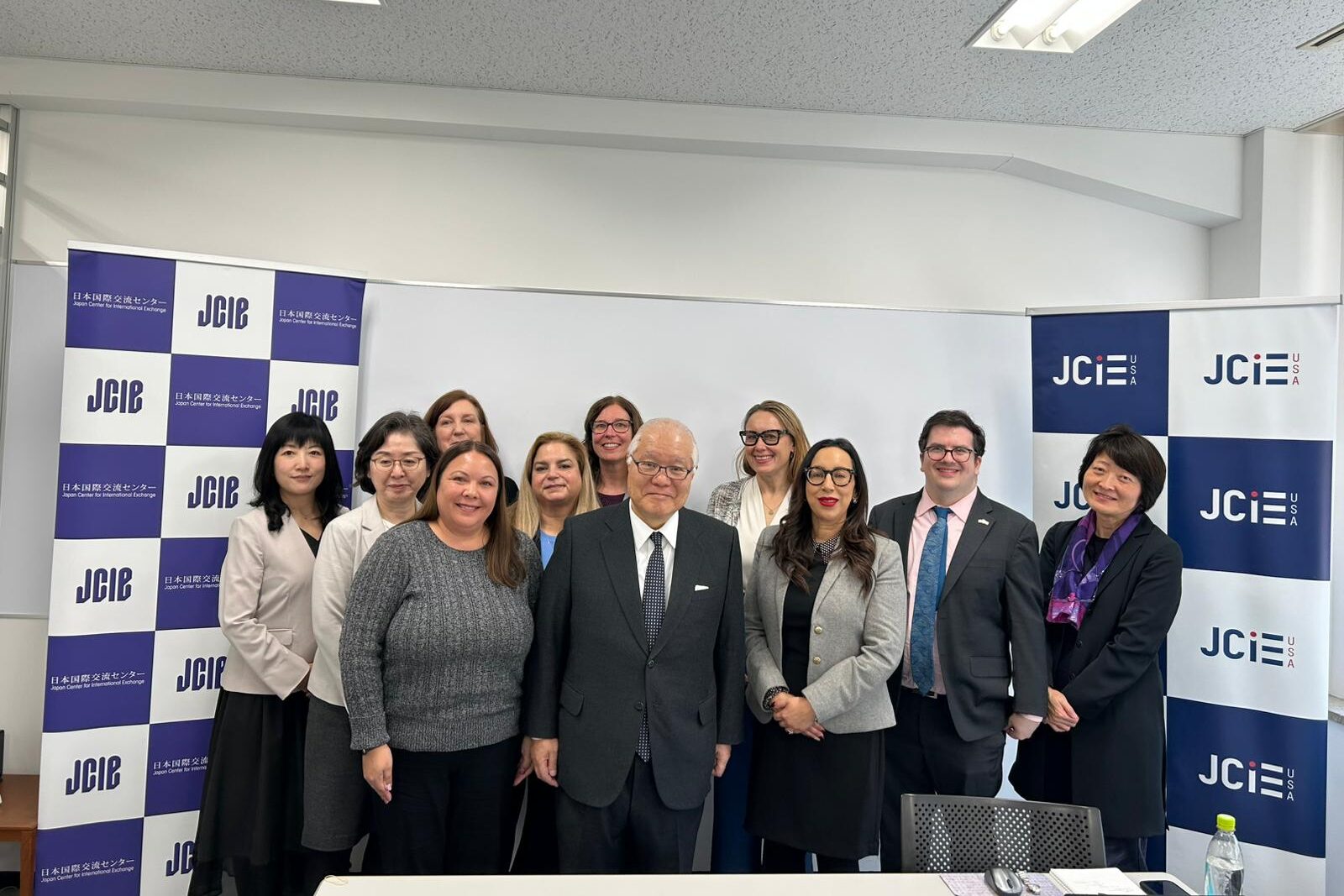
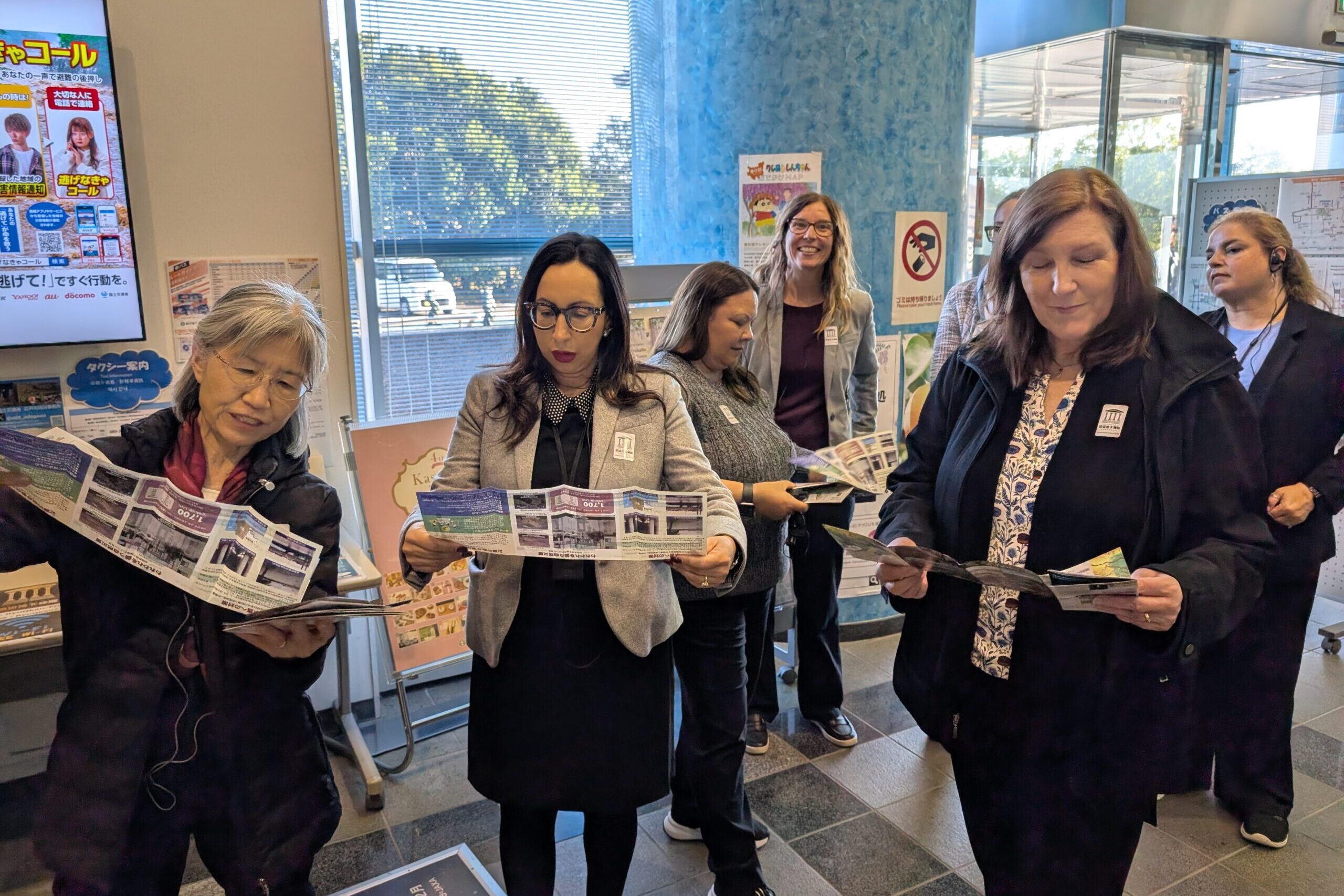
JCIE brought a delegation from San Diego County for a one-week study tour in Japan, focusing on ways in which both countries are working to address the shared challenges that come with population aging, particularly in disaster-prone regions. This program was the first leg of our second round of the exchange (the first having been between Columbus, Ohio, and Kanagawa Prefecture). The San Diego delegation was once again a multisectoral group with representatives from the county government—an elected official, the head of the area agency on aging, and the acting head of emergency management—as well as from academia and the nonprofit sector. The exchange provided a mutual learning opportunity focused on innovative initiatives to create age-friendly communities.
Tokyo Region Program
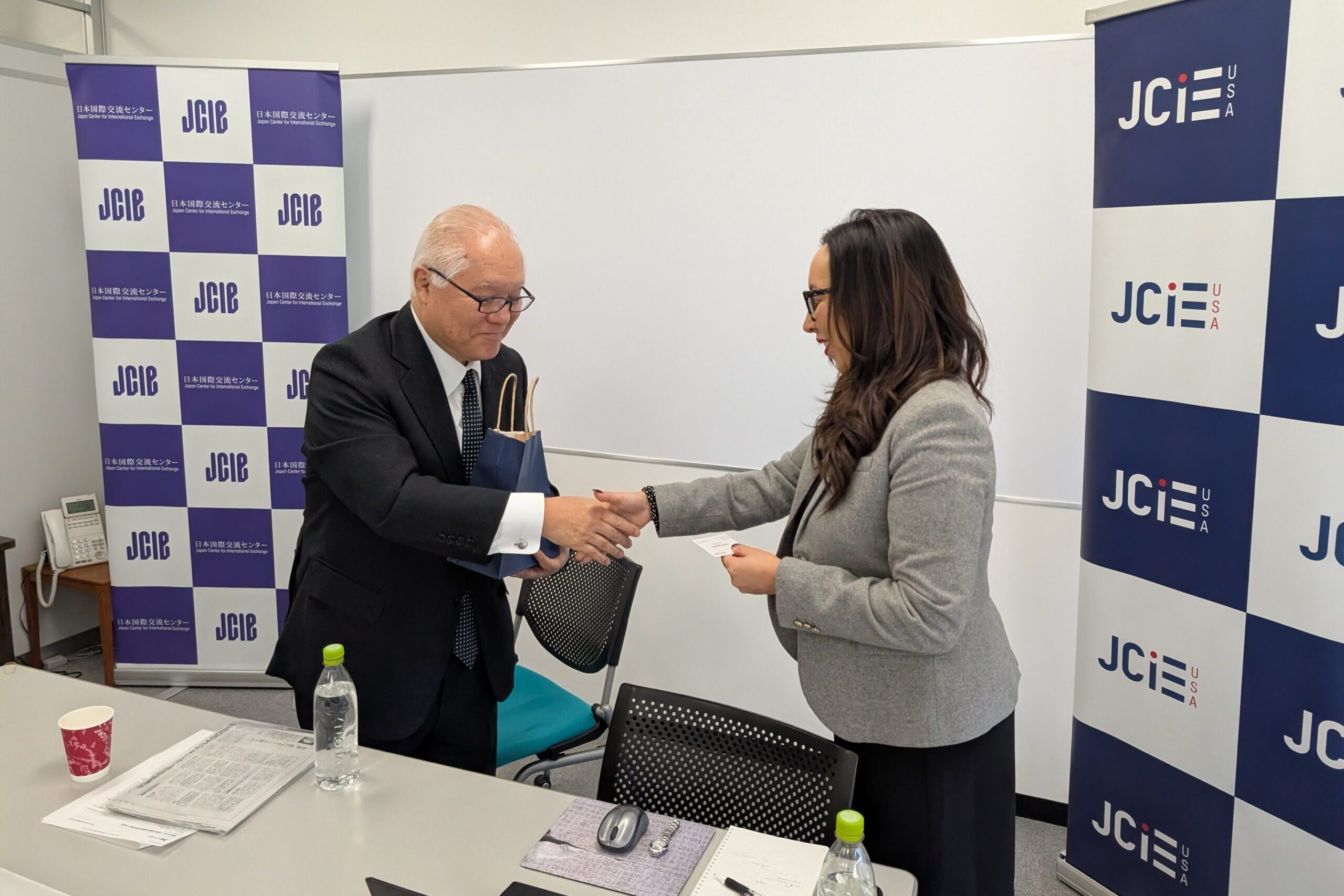
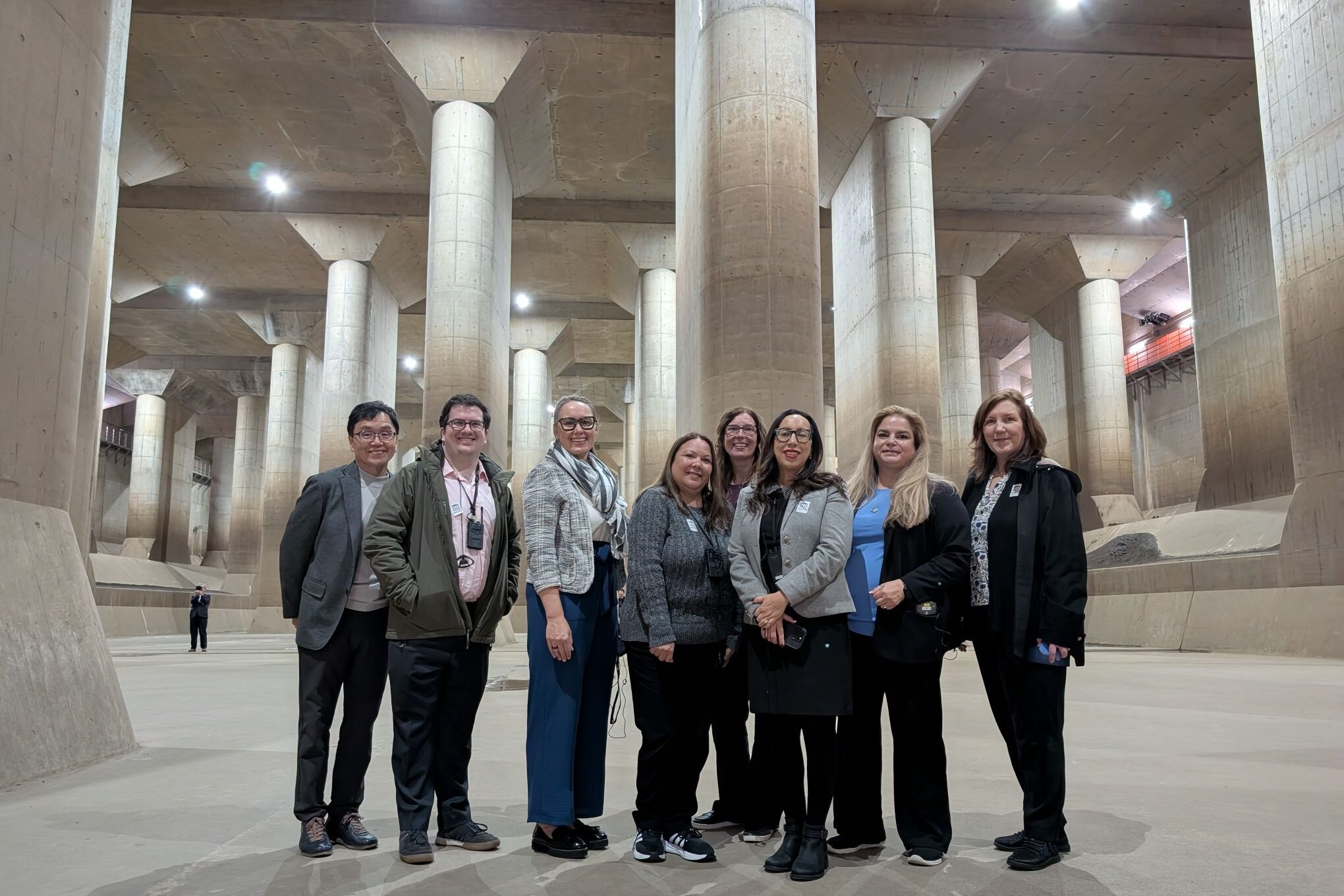
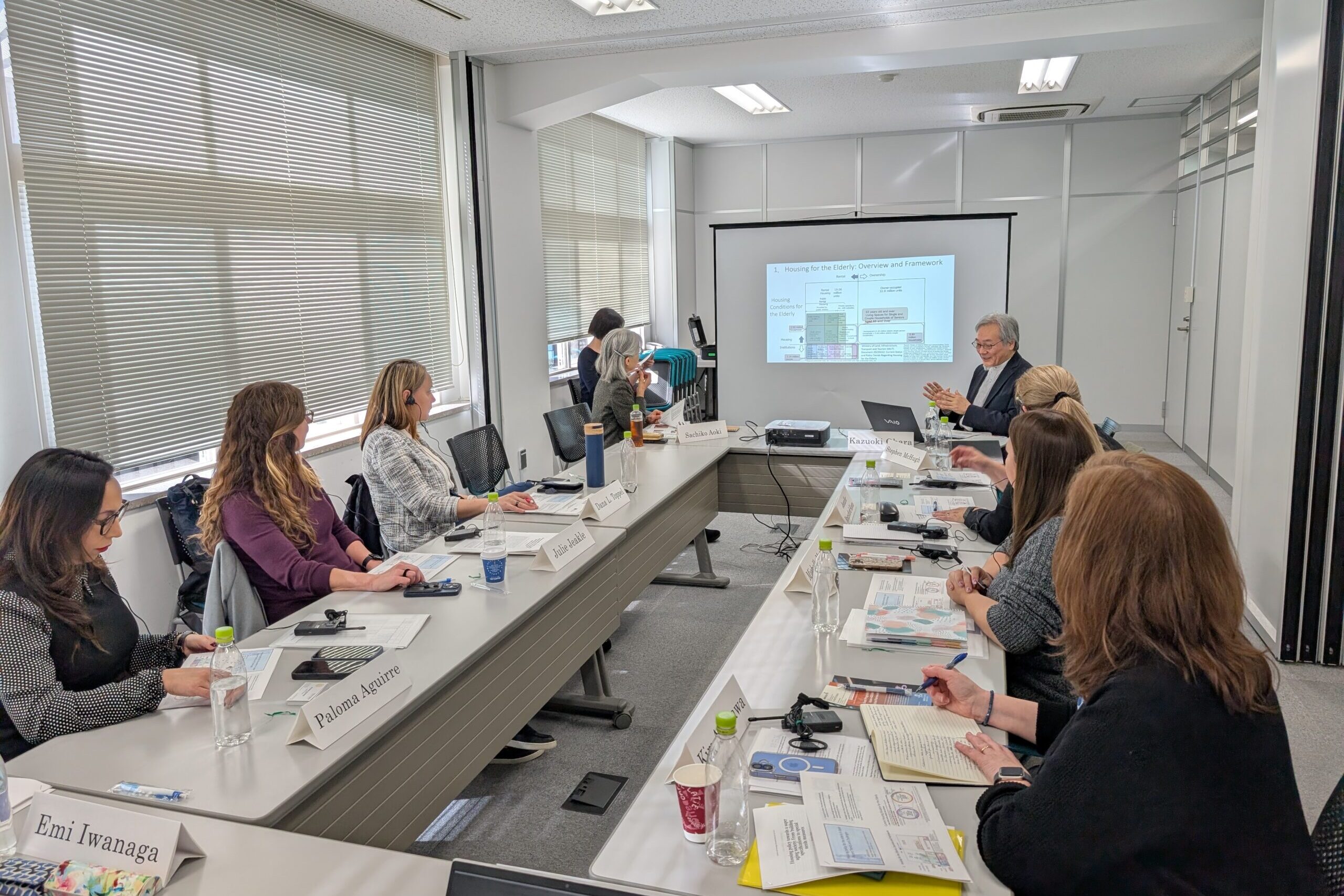
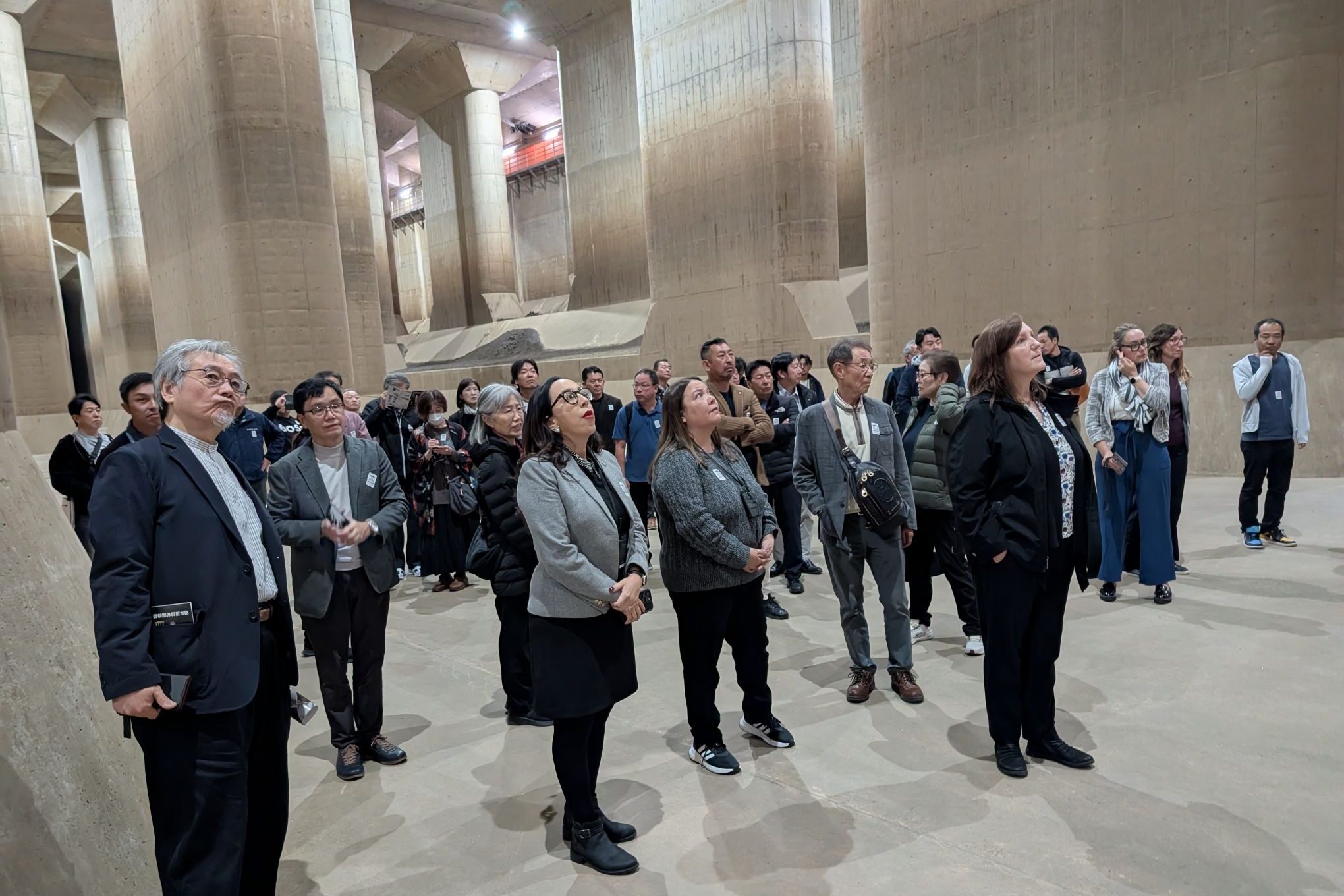
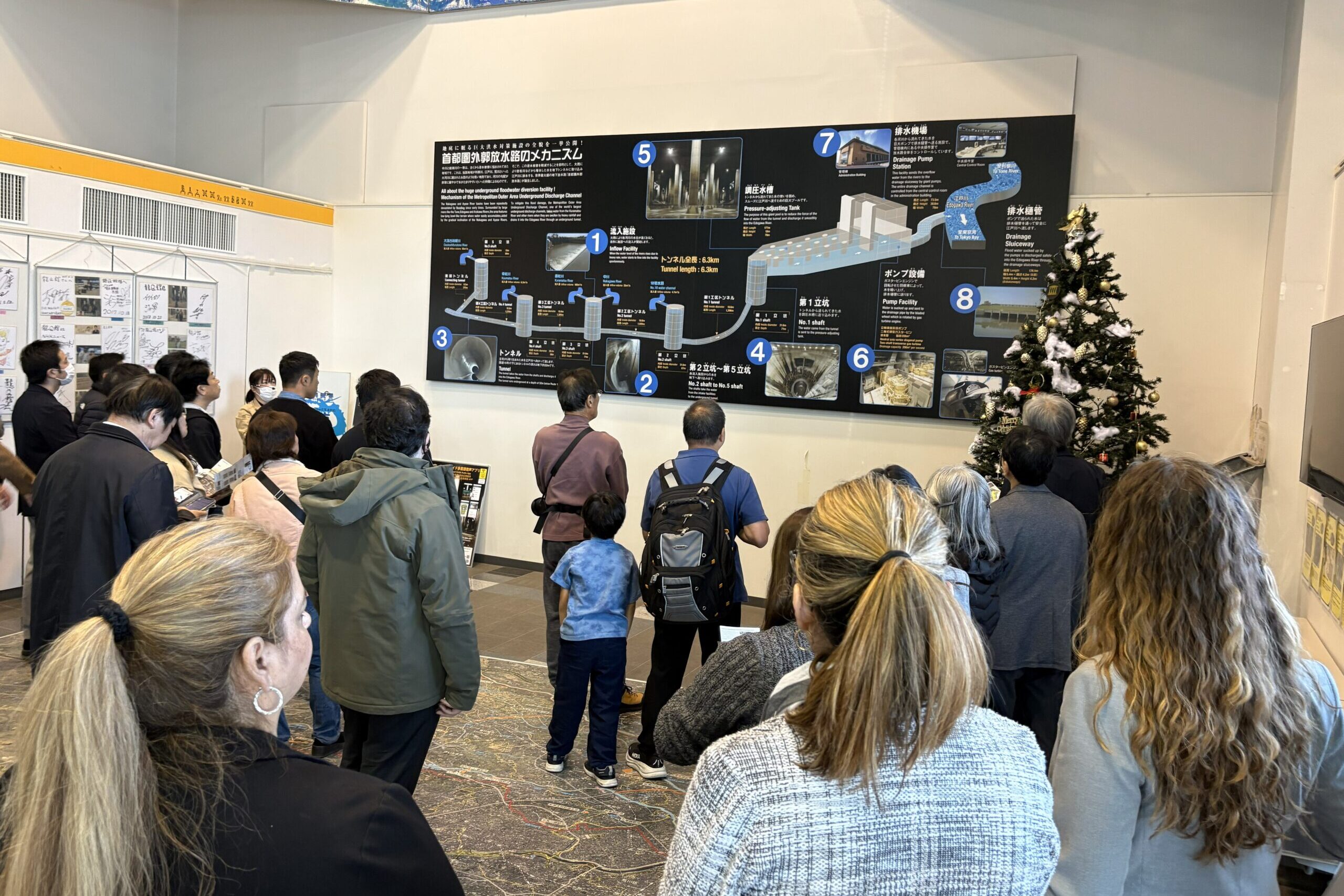
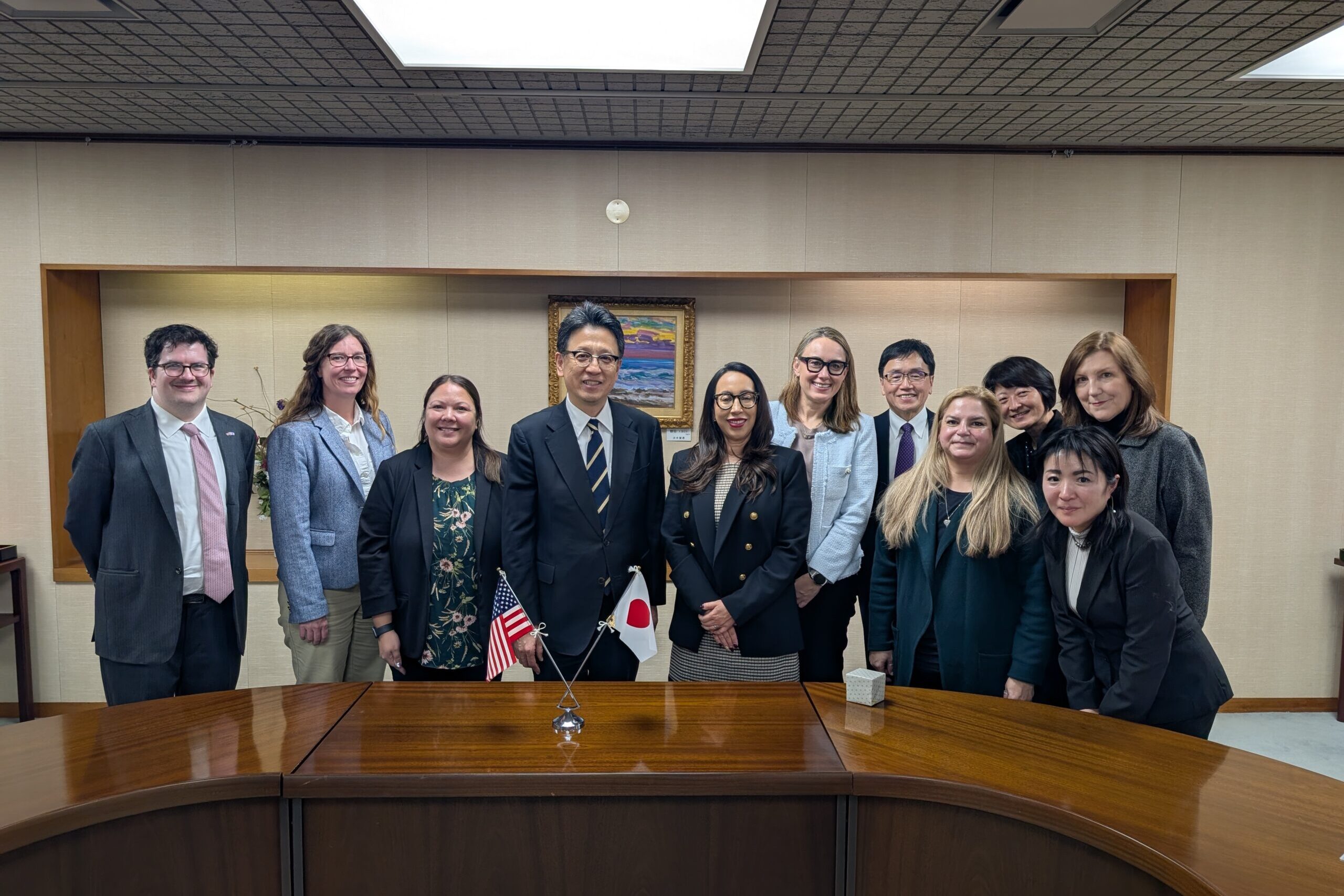
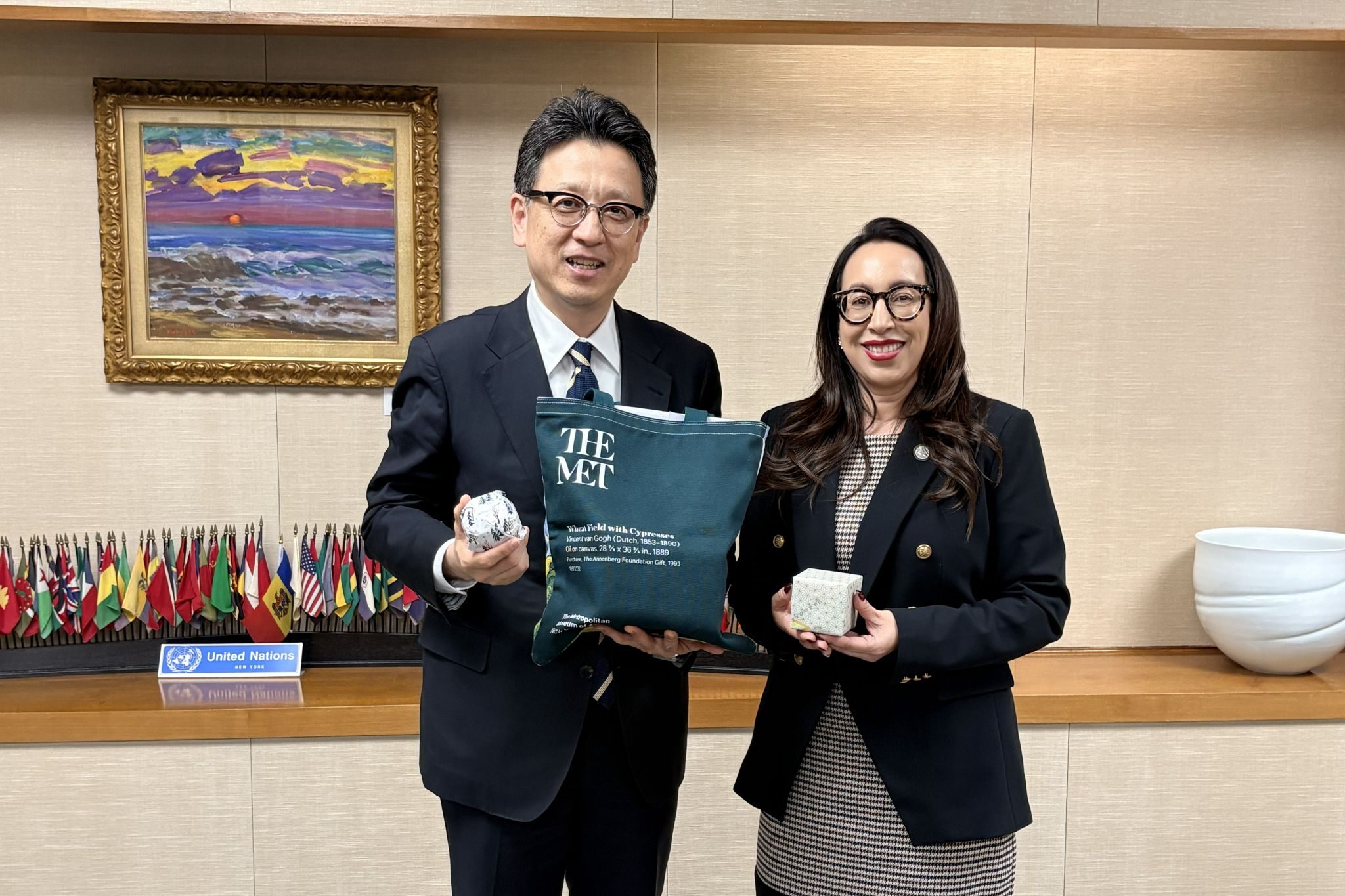
The program began with briefings at JCIE Japan’s office before participants met with Japan’s former Minister of Health, Labour, and Welfare, Hon. Keizo Takemi, who discussed Japan’s global health diplomacy and the challenges of social isolation for older adults in Japan. The group then received a briefing on Japan’s housing systems for older adults from Prof. Kazuoki Ohara, Professor Emeritus, Yokohama National University, who is an alumnus of our exchange program. Participants were particularly shocked to learn that Japan has a housing surplus yet faces challenges in providing housing that is appropriately designed to meet the accessibility needs of older people. The group then traveled to the Metropolitan Area Outer Underground Discharge Channel, where they learned about Japan’s systems for flood prevention.
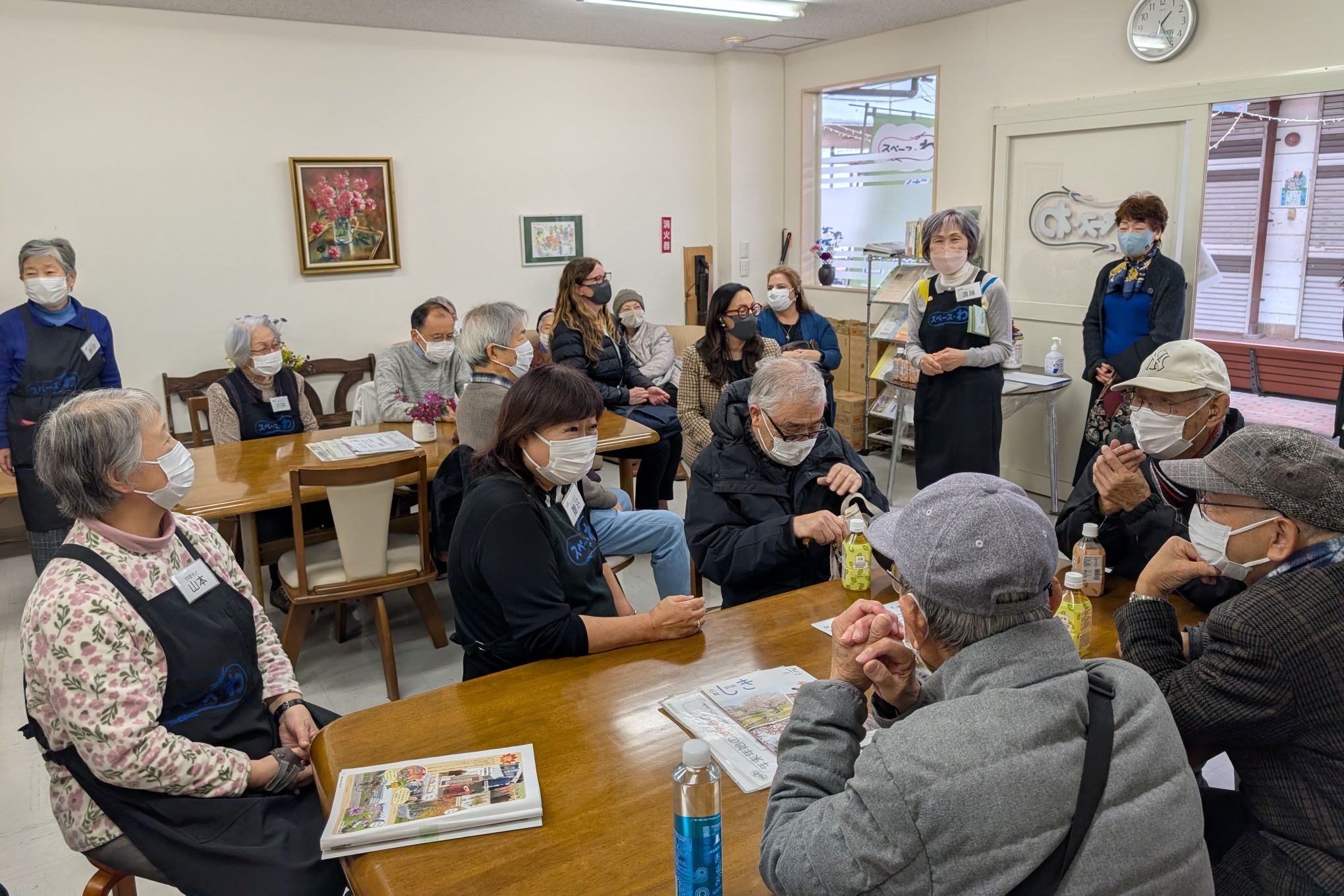
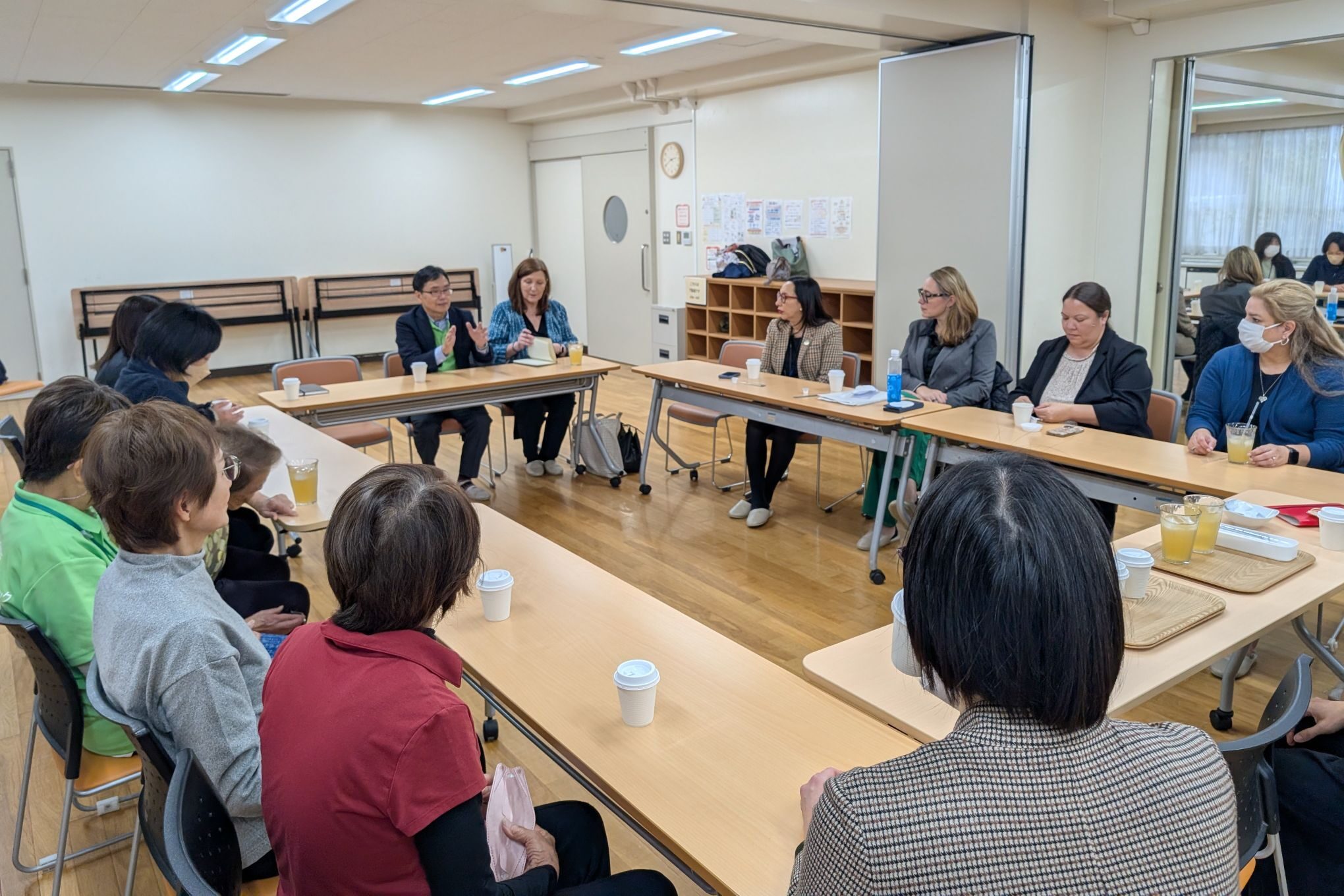
On the second day of the program, the group travelled to Shiki, where the participants had an opportunity to visit a community-based integrated support center, which acts as a hub to connect older adults with various services.
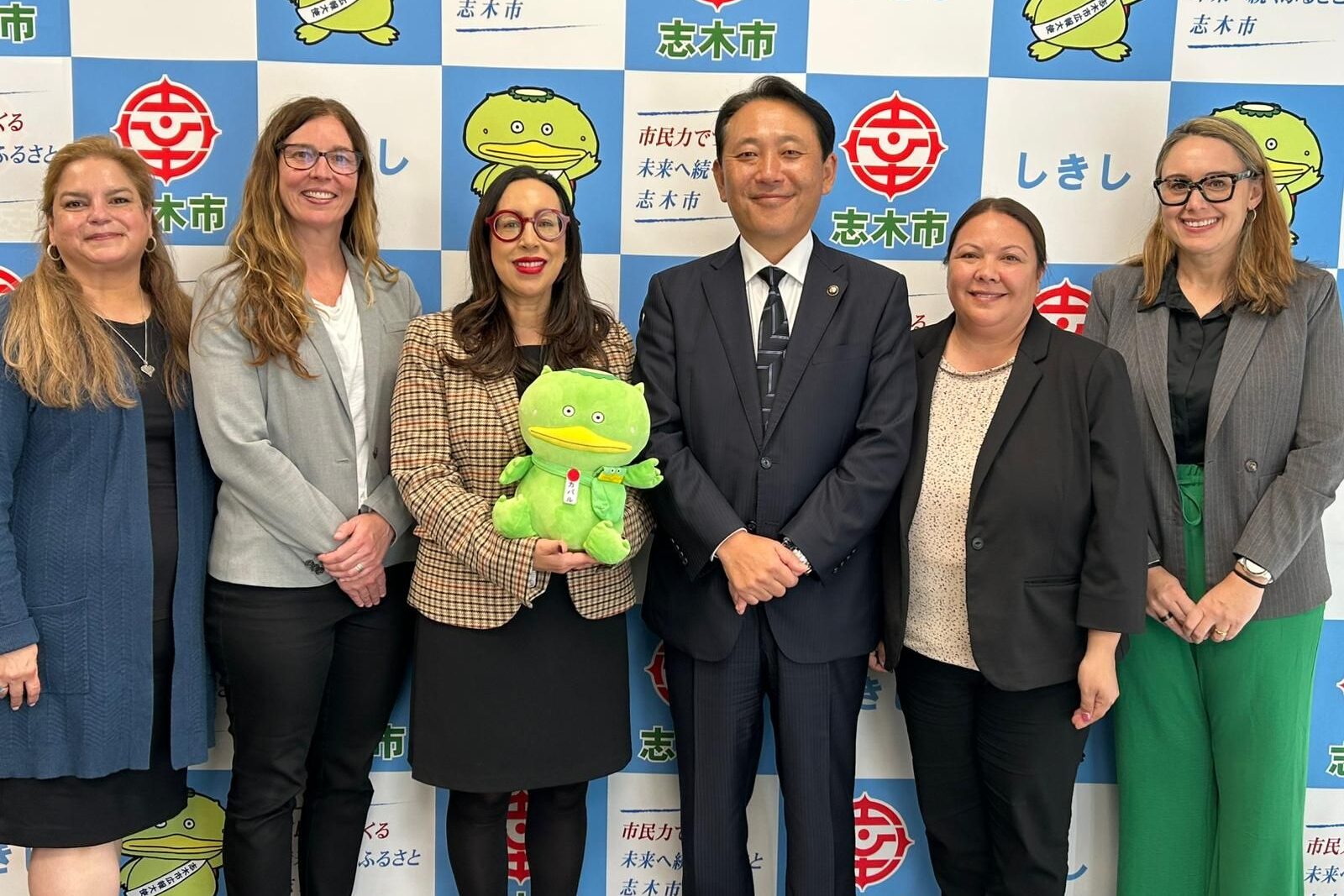
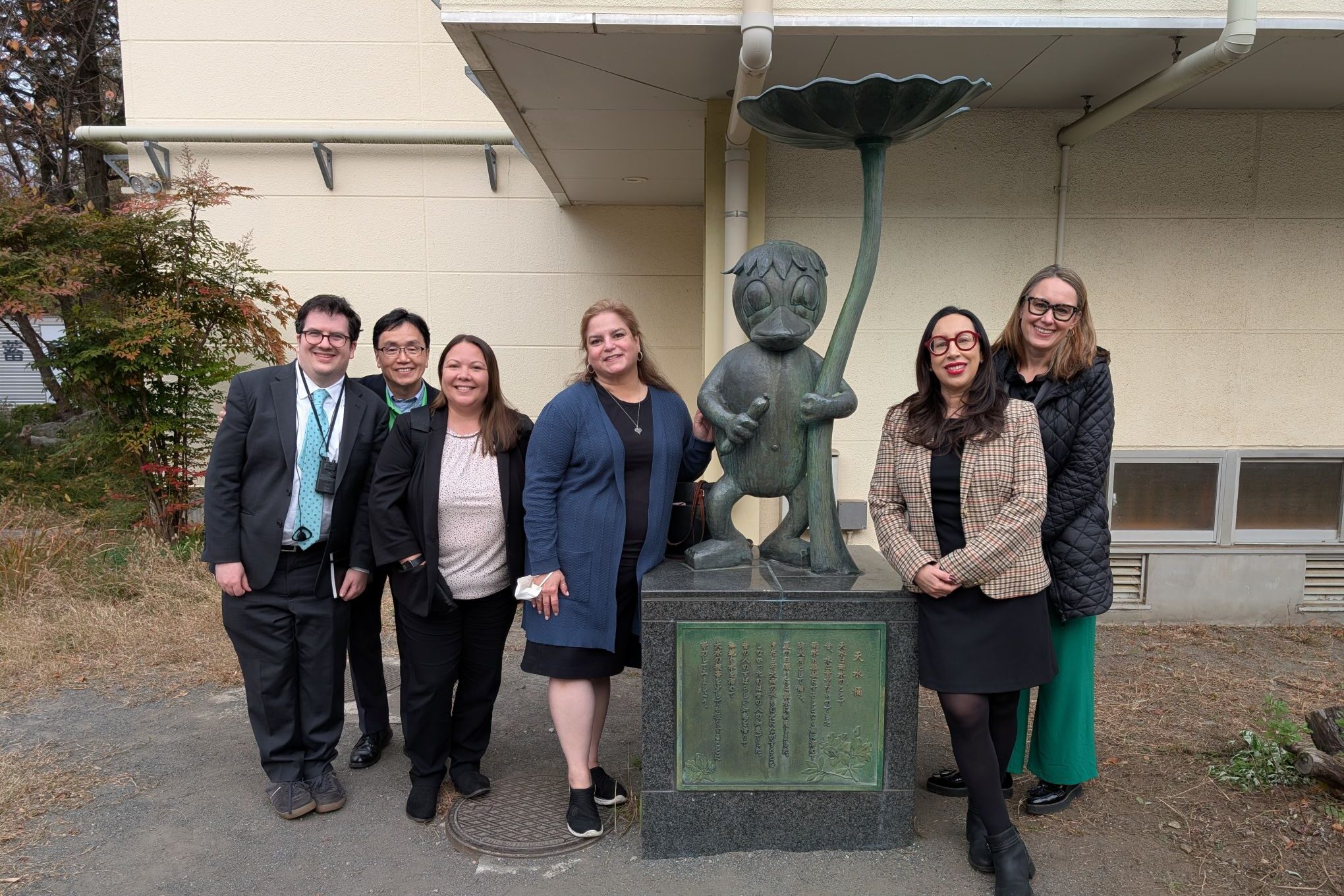
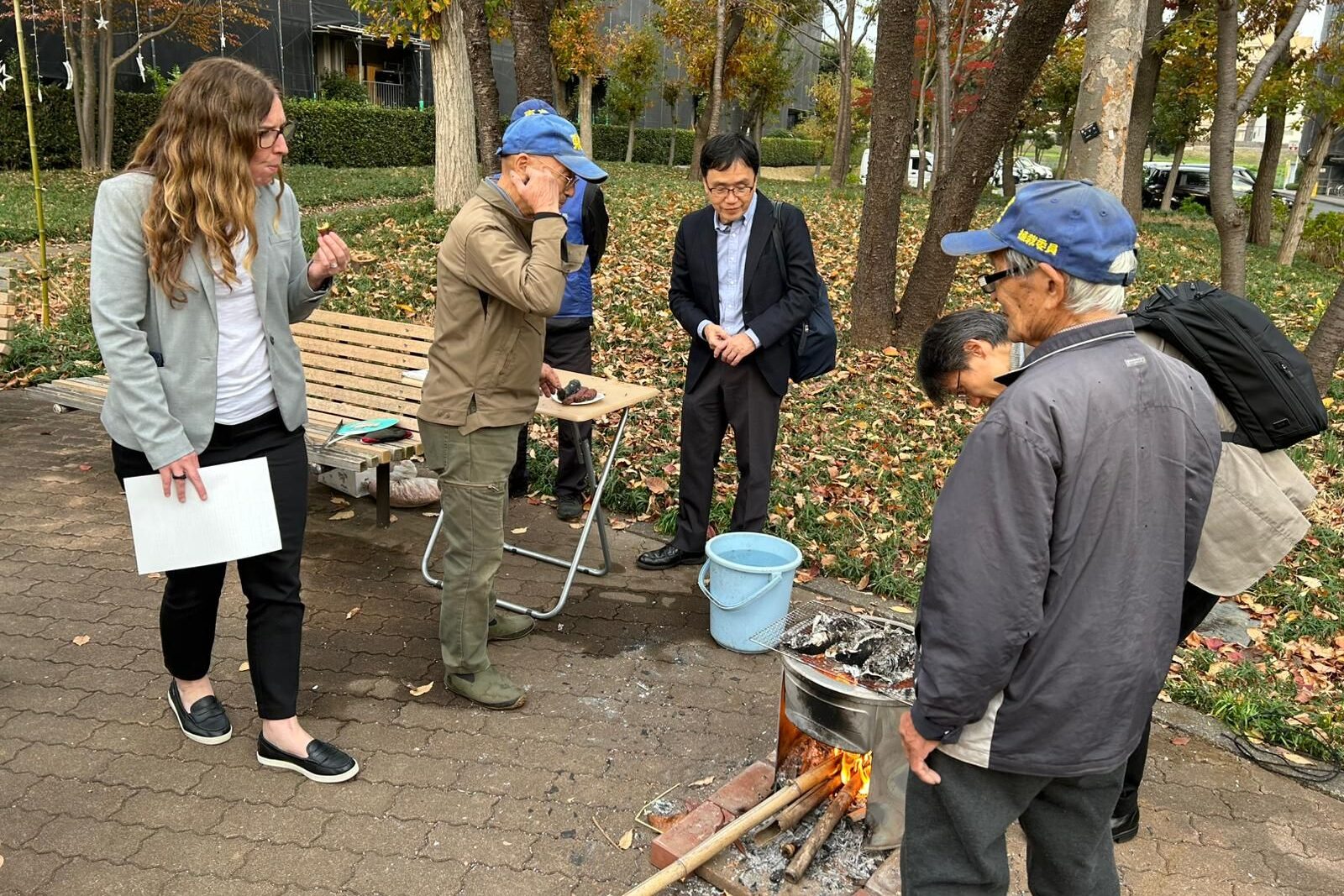
During a visit to Shiki City Hall, the participants heard about several city initiatives to promote healthy aging, including a program that provides pedometers to residents, which they can use to collect points and exchange them for goods at local shops, encouraging residents to stay active. The discussion also highlighted the important role that volunteer minseiin, or “commissioners for livelihood affairs,” play to support the community and coordinate evacuation plans in the event of a disaster. Finally, the group met with the Mayor of Shiki, Takefumi Kagawa, who welcomed the group’s enthusiasm for Shiki’s mascot “Kapal.”
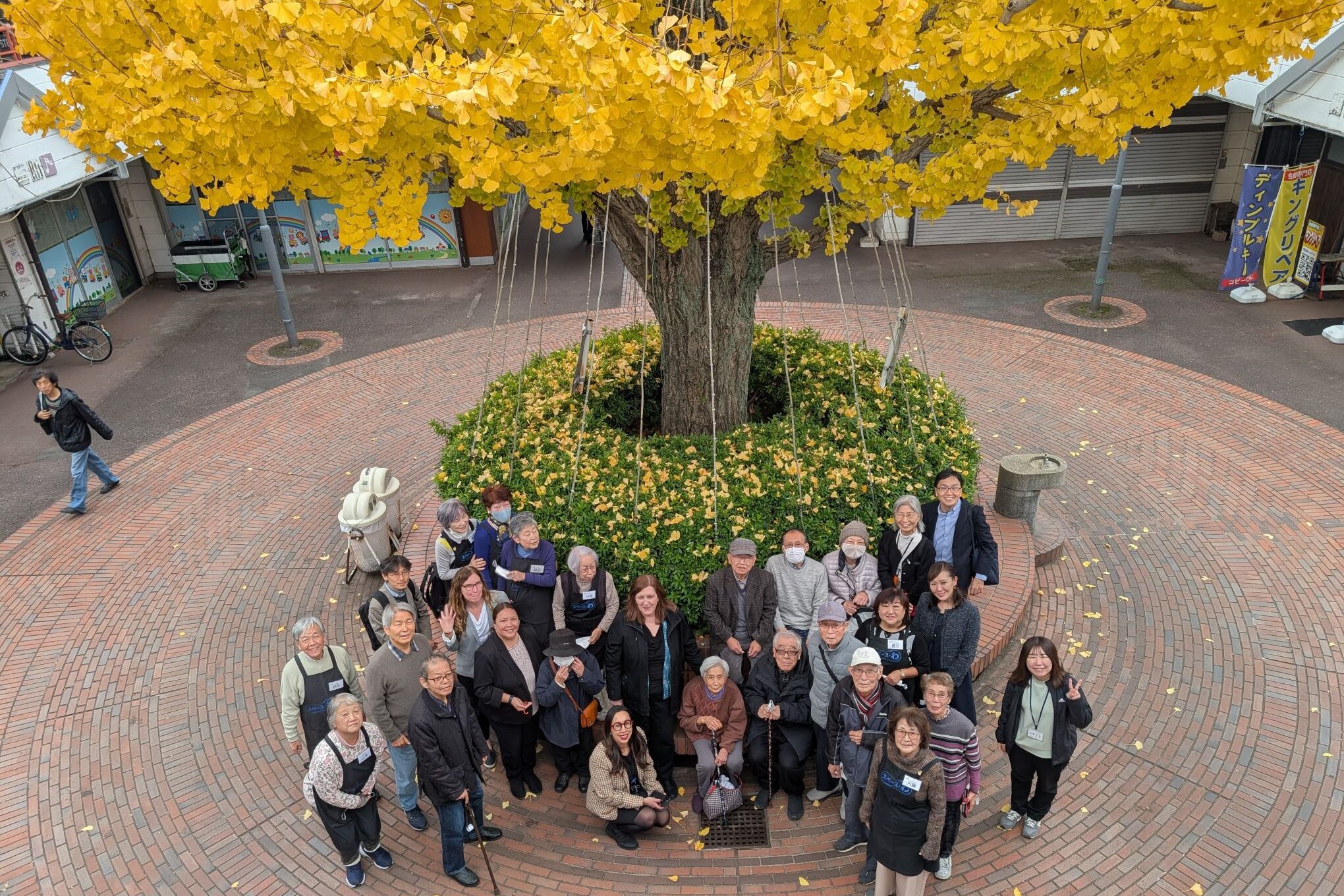
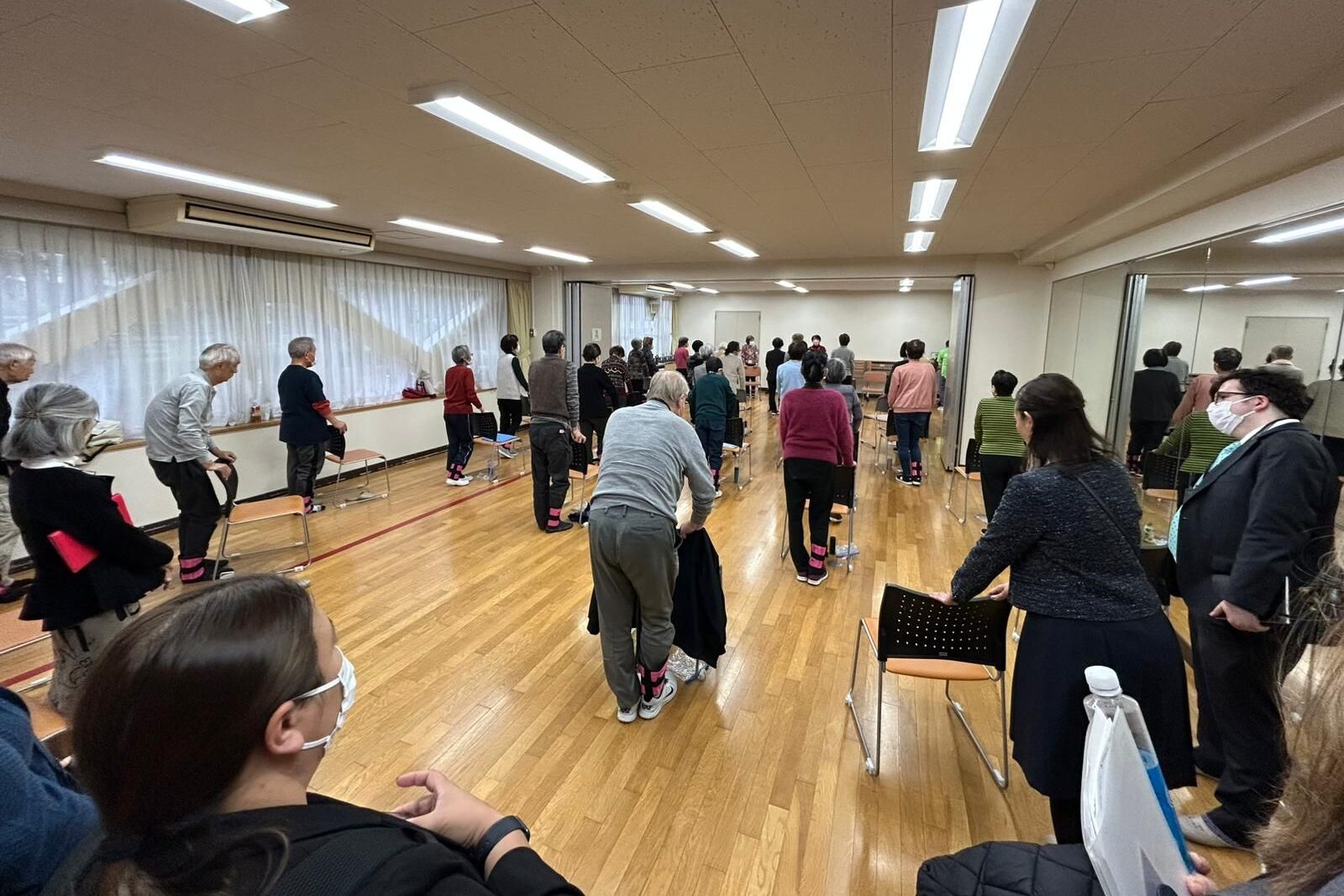
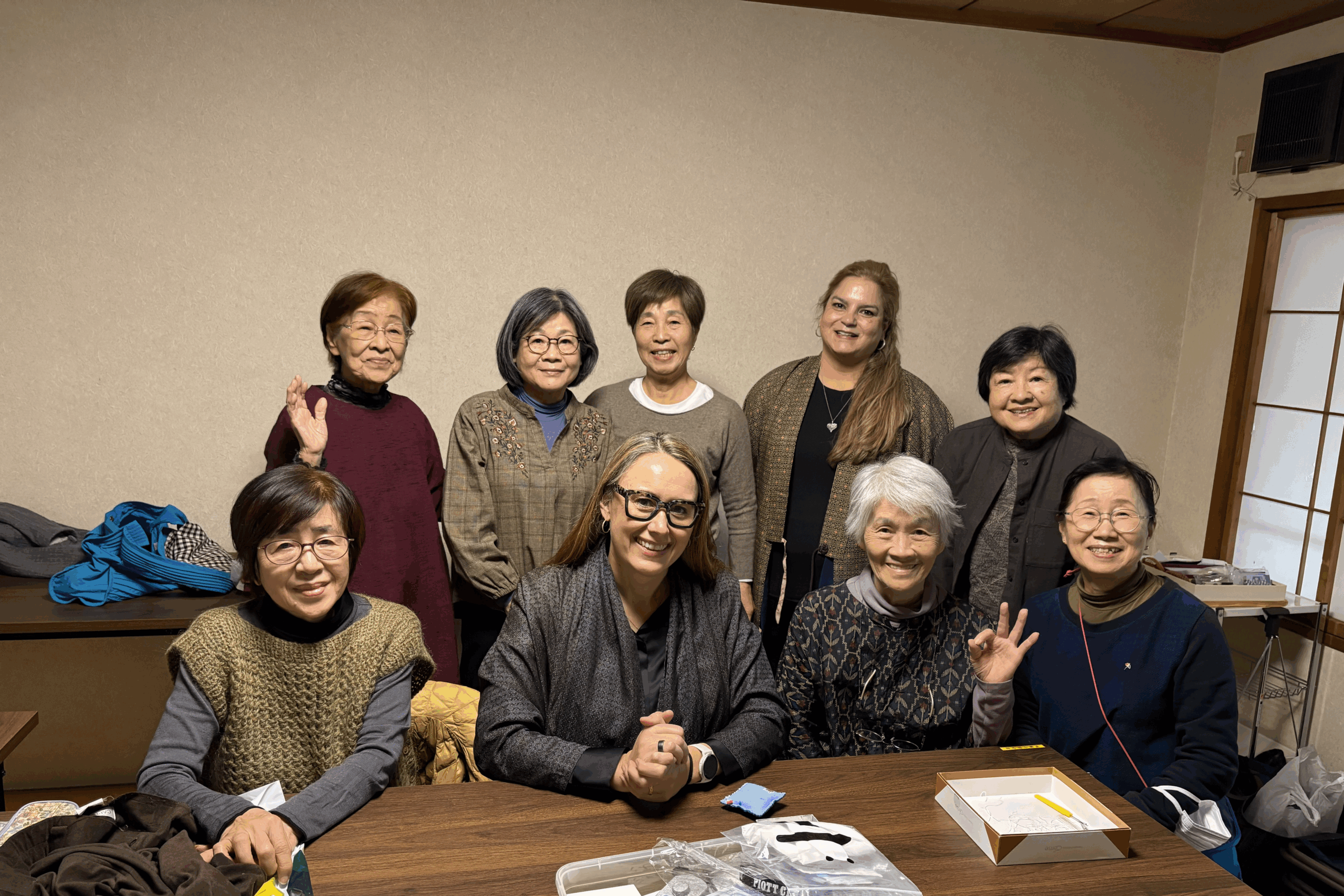
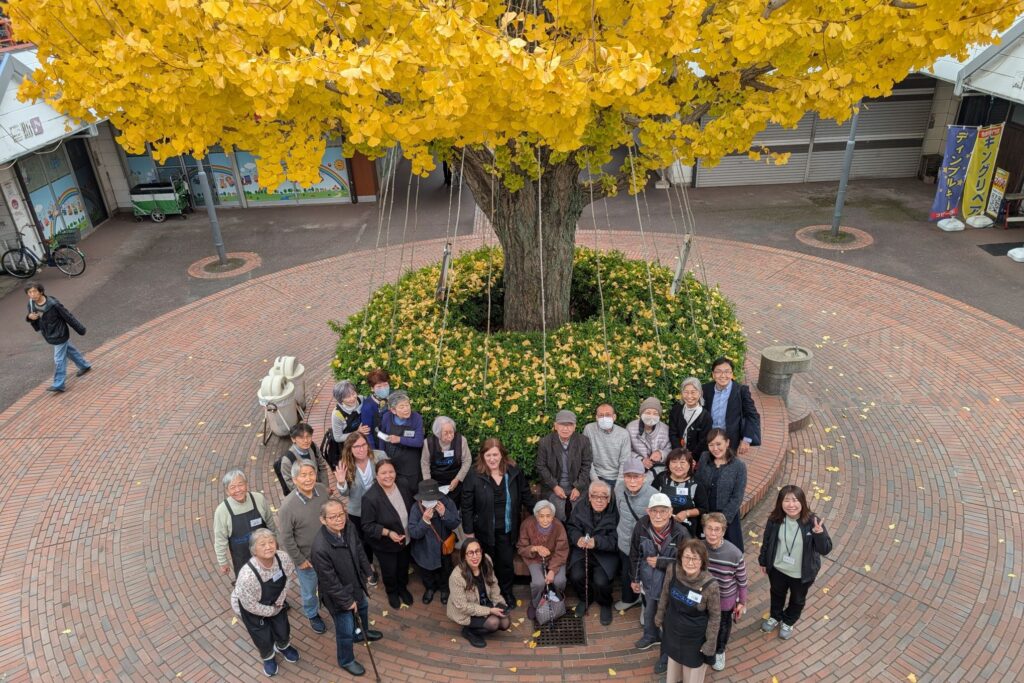
In the afternoon, participants had several unique opportunities to directly observe or participate in community-organized activities for older adults, such as a visit to a “kayoi-no-ba,” or local gathering place for older adults. They also observed some of the activities for a senior citizen’s association, including local gardening, a sewing club, and mahjong. Participants told us that these opportunities were one of the highlights of their trip, and they enjoyed hearing from older adults directly about the challenges they face and how they are engaging with the community.
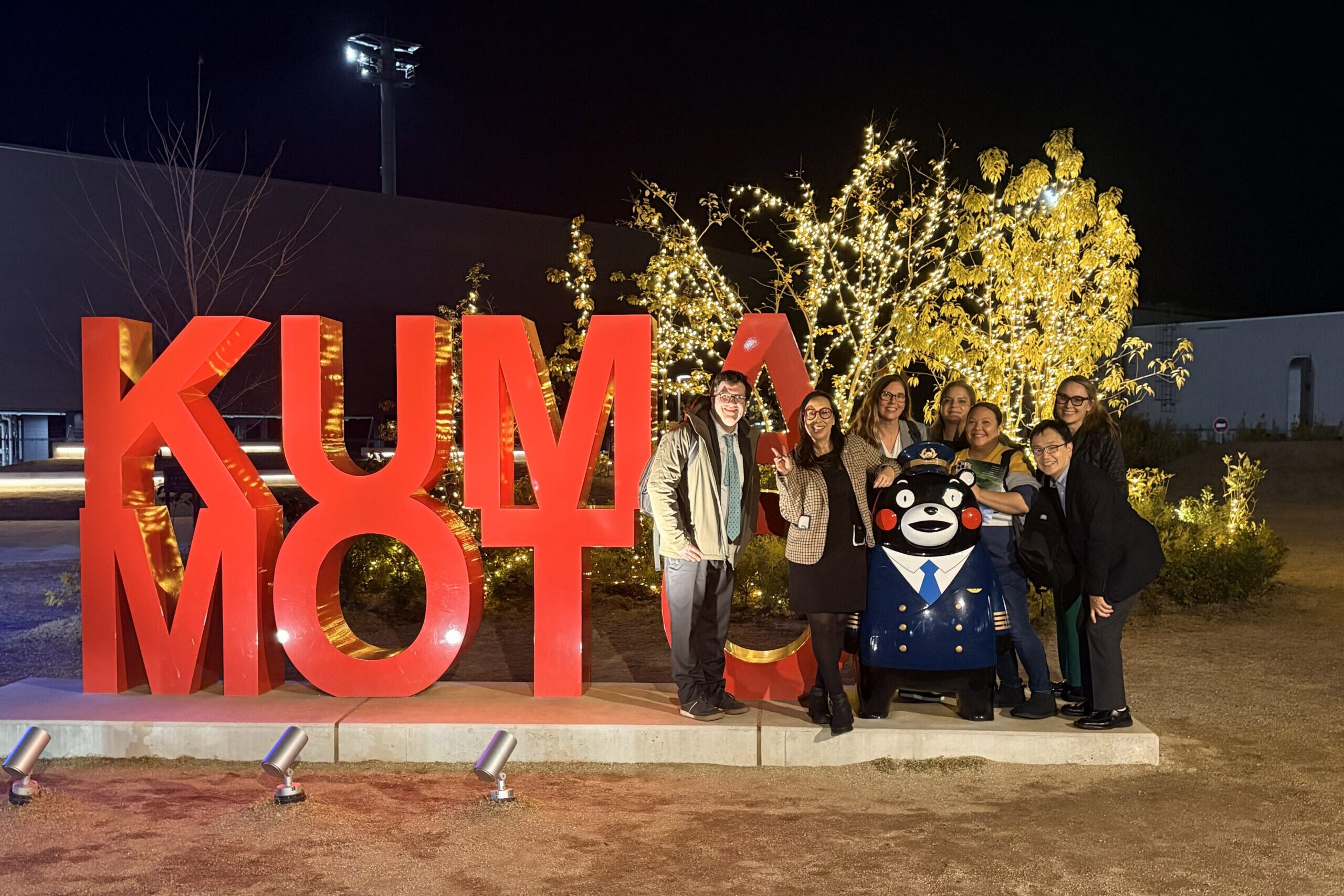
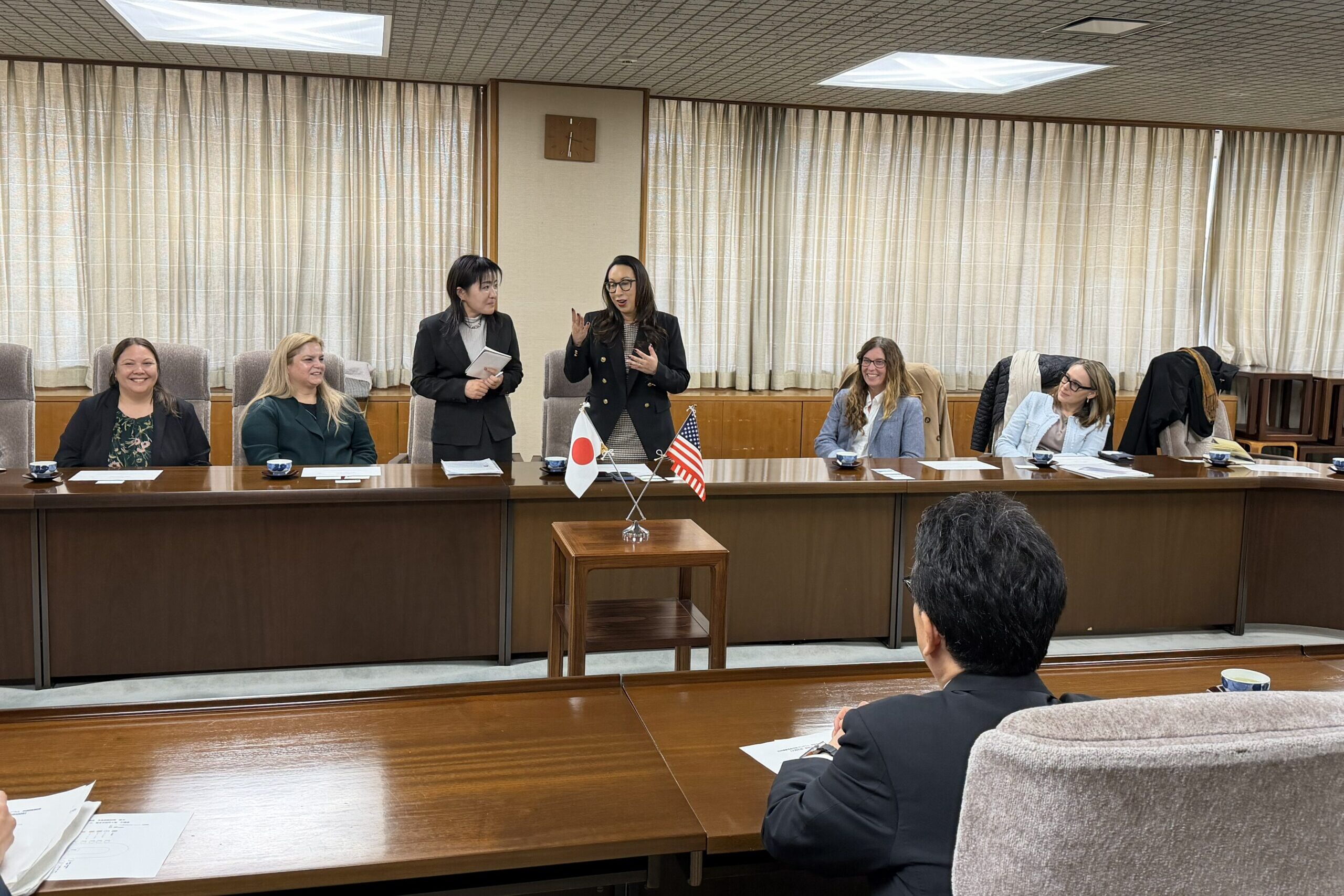
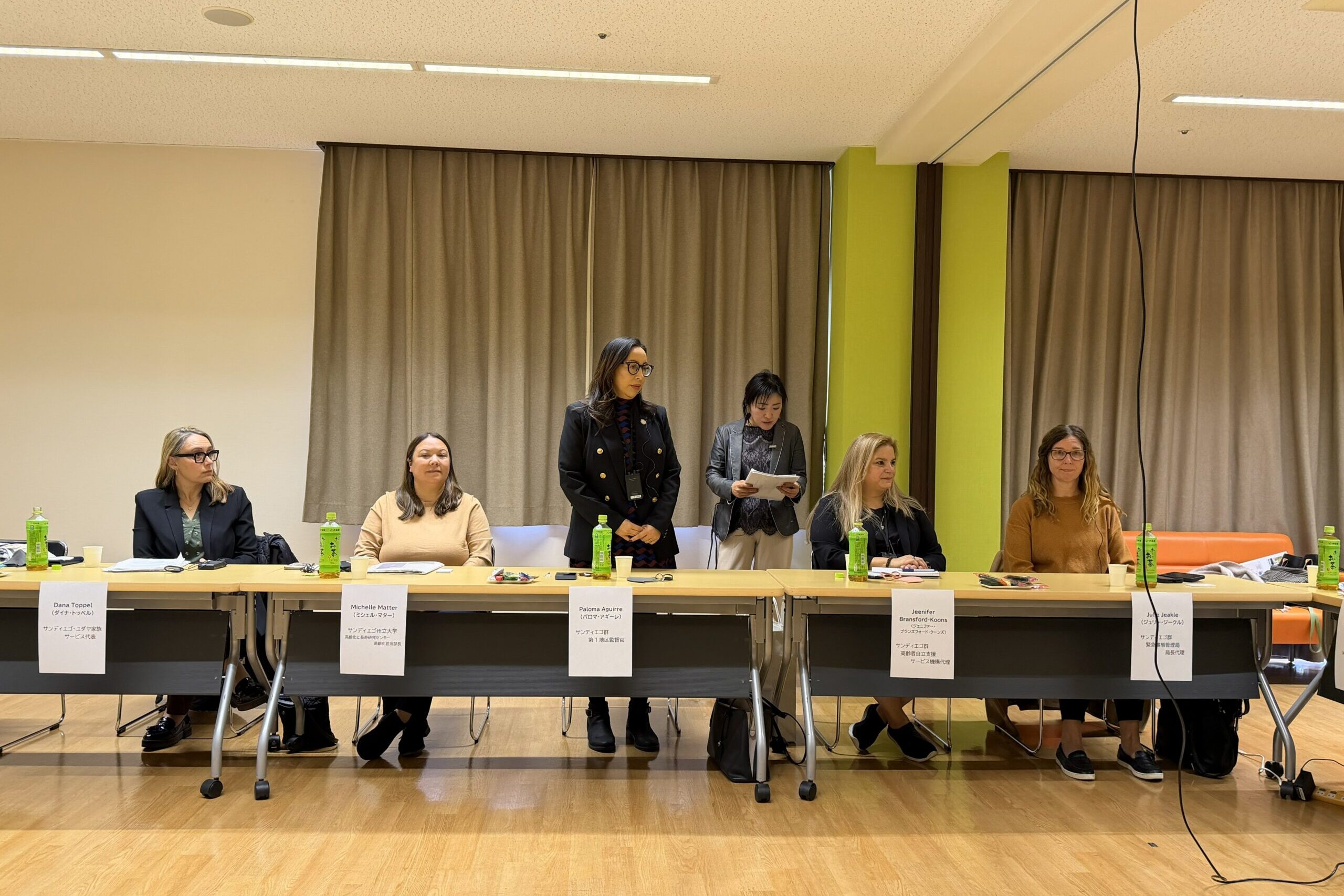
For the second leg of the program, the group travelled to Kumamoto City and the nearby township of Mashiki. Participants had a fruitful exchange with municipal and prefectural officials at the Kumamoto City Office International Exchange Center. Both sides were particularly interested in exchanging views on how to address the needs of immigrants or those who speak foreign languages, given San Diego’s diverse population and Kumamoto’s growing community of foreign residents, and on the challenges of transportation for older people, as both cities are largely car-based.
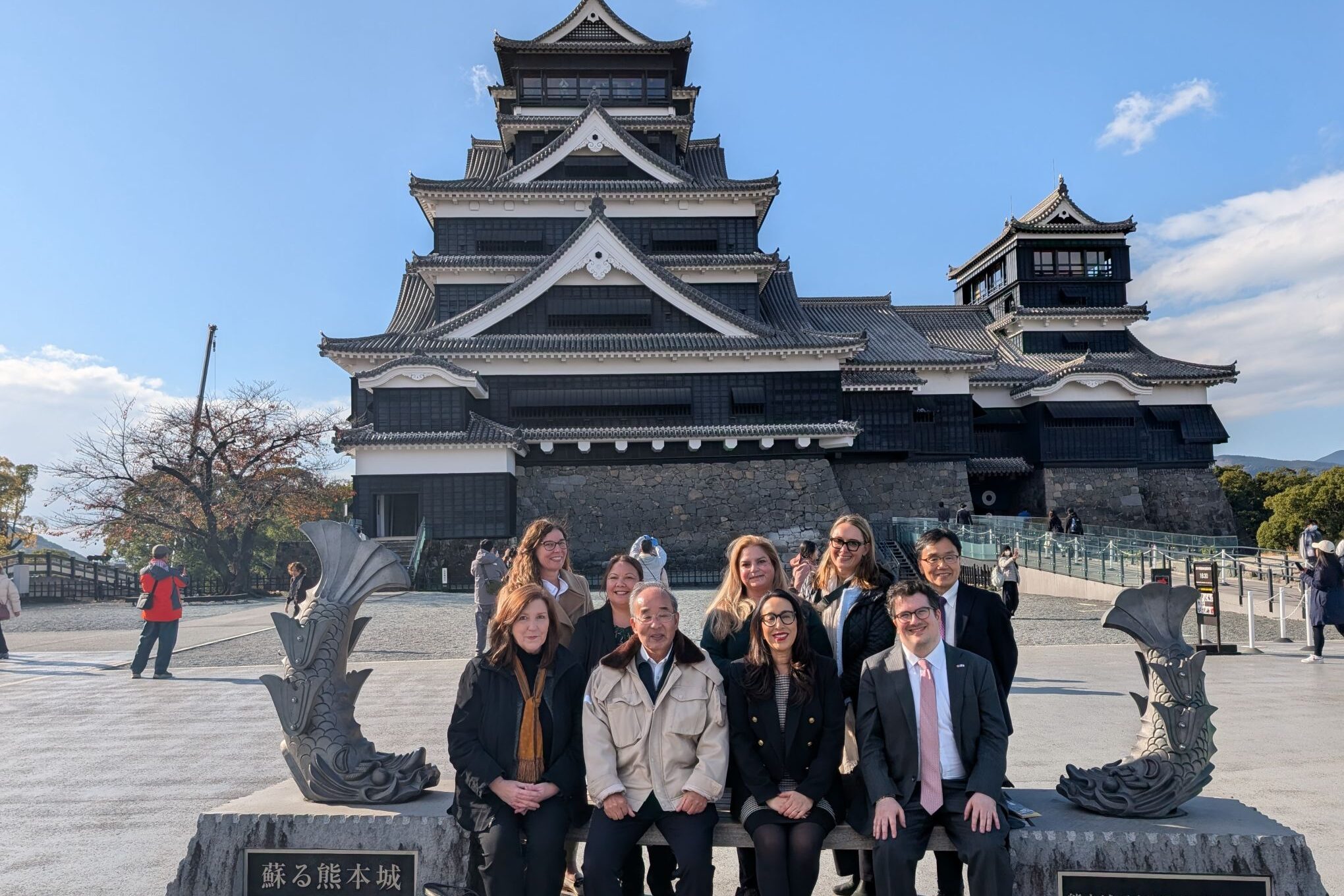
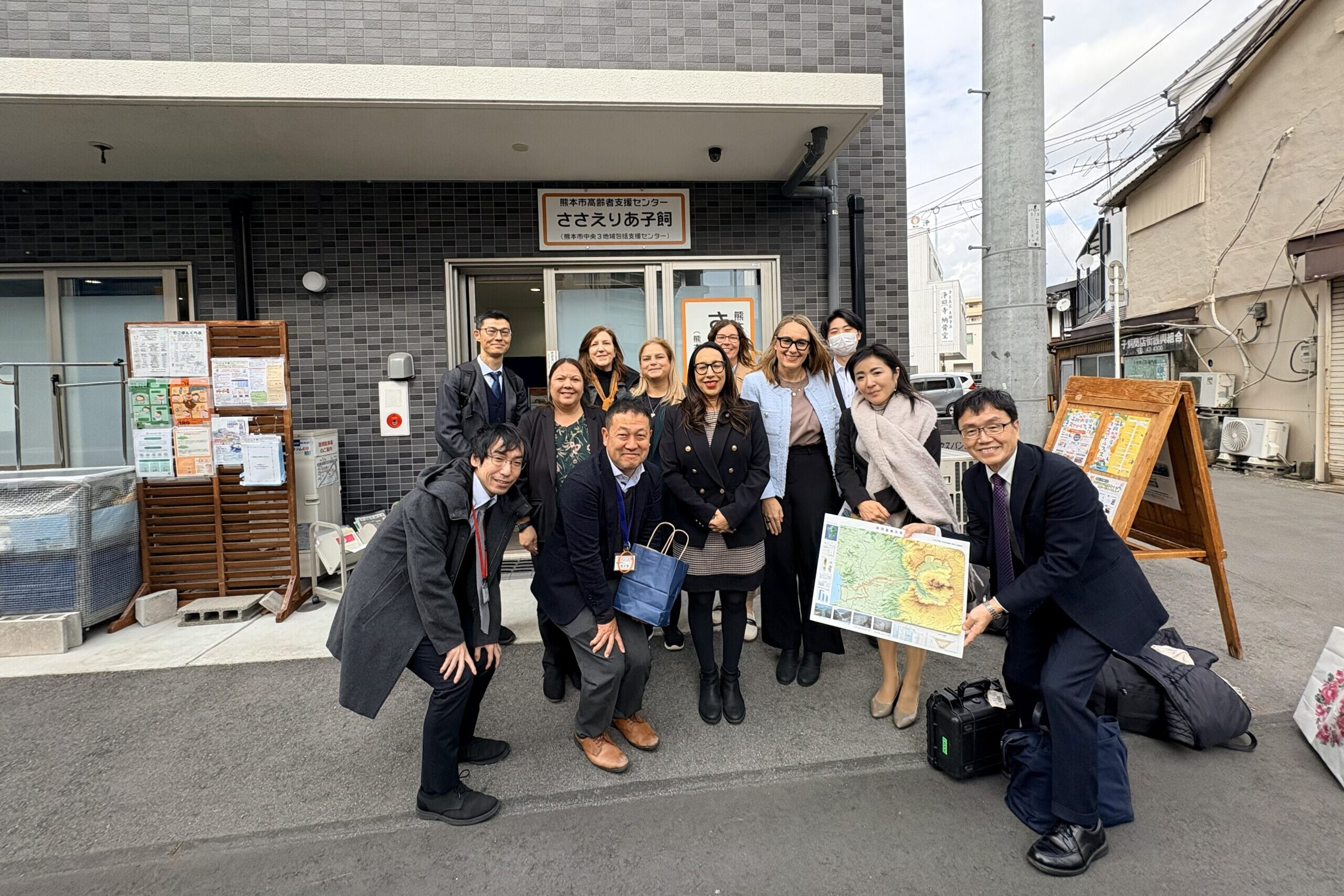
Participants then had the opportunity to hear from staff at Sasaeria, another community-based integrated support center, which allowed them to compare it with the similar center that they saw in Shiki and gain a broader understanding of the community-based integrated care model across Japan. This was followed by a visit to Kumamoto Castle, which was led by a local tour guide who explained about the damage of the castle from the 2016 Kumamoto earthquakes and the progress of ongoing reconstruction efforts.
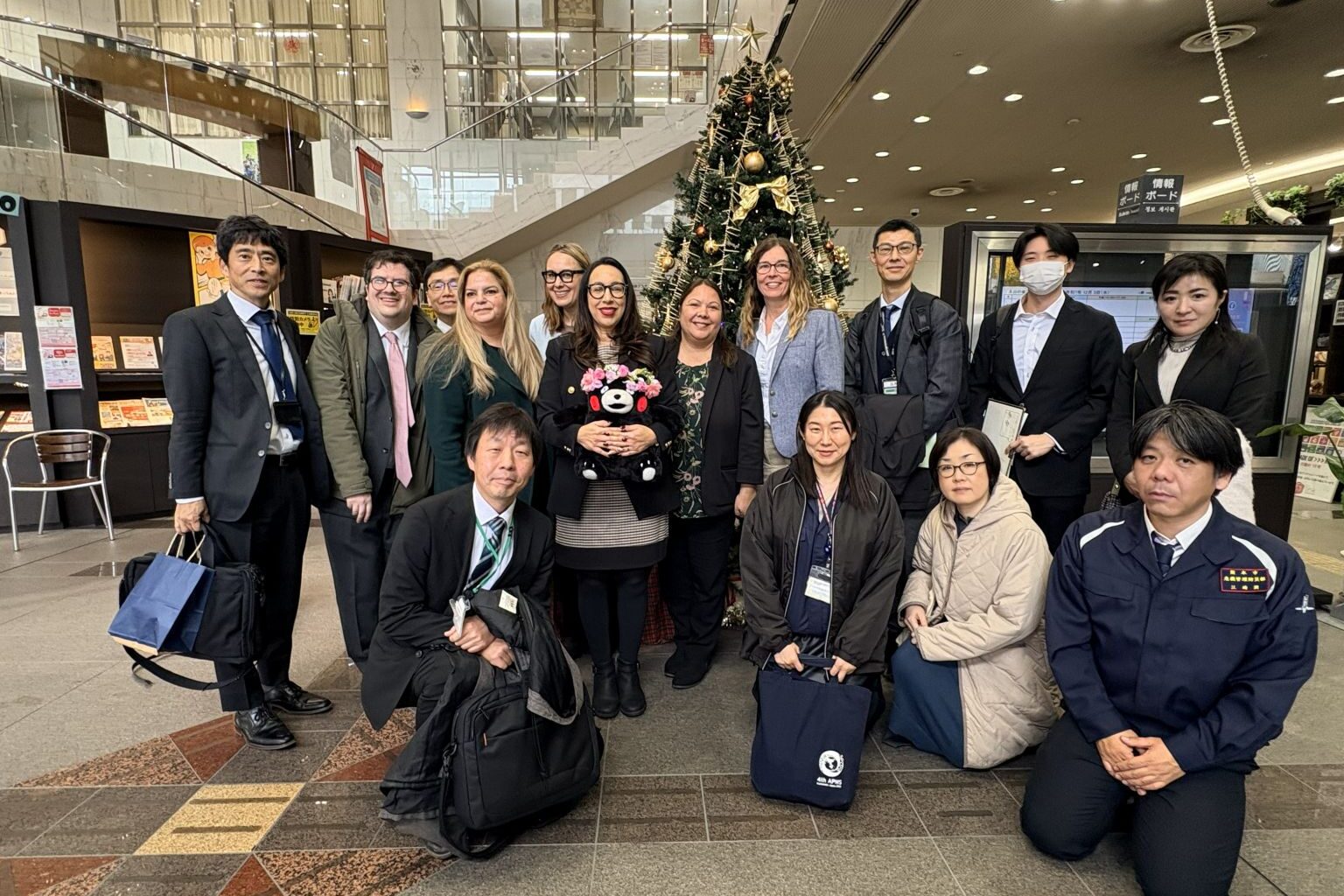
In the afternoon, the group paid a visit to Mr. Kazufumi Onishi, Mayor of Kumamoto City, who was interested in learning about challenges of transportation for older people and the use of innovations such as self-driving technology as a potential solution. The day concluded with a visit to the Kumamoto Prefectural Office, where participants learned about temporary housing constructed after disasters. They were struck by the ease with which this is constructed in Japan compared to the United States. They also learned about ways in which communities across Japan support one another by sharing expertise on responding to disasters.
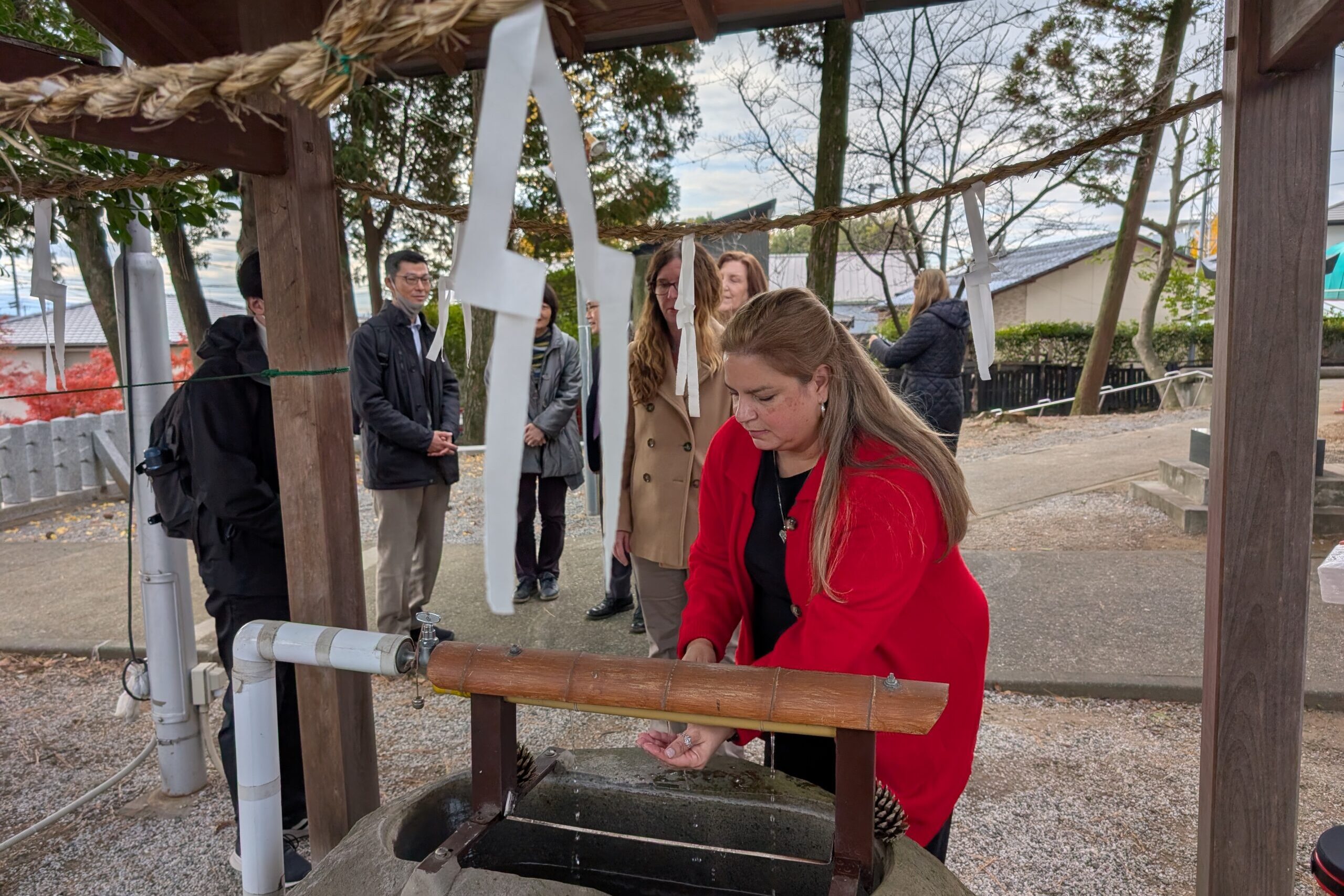
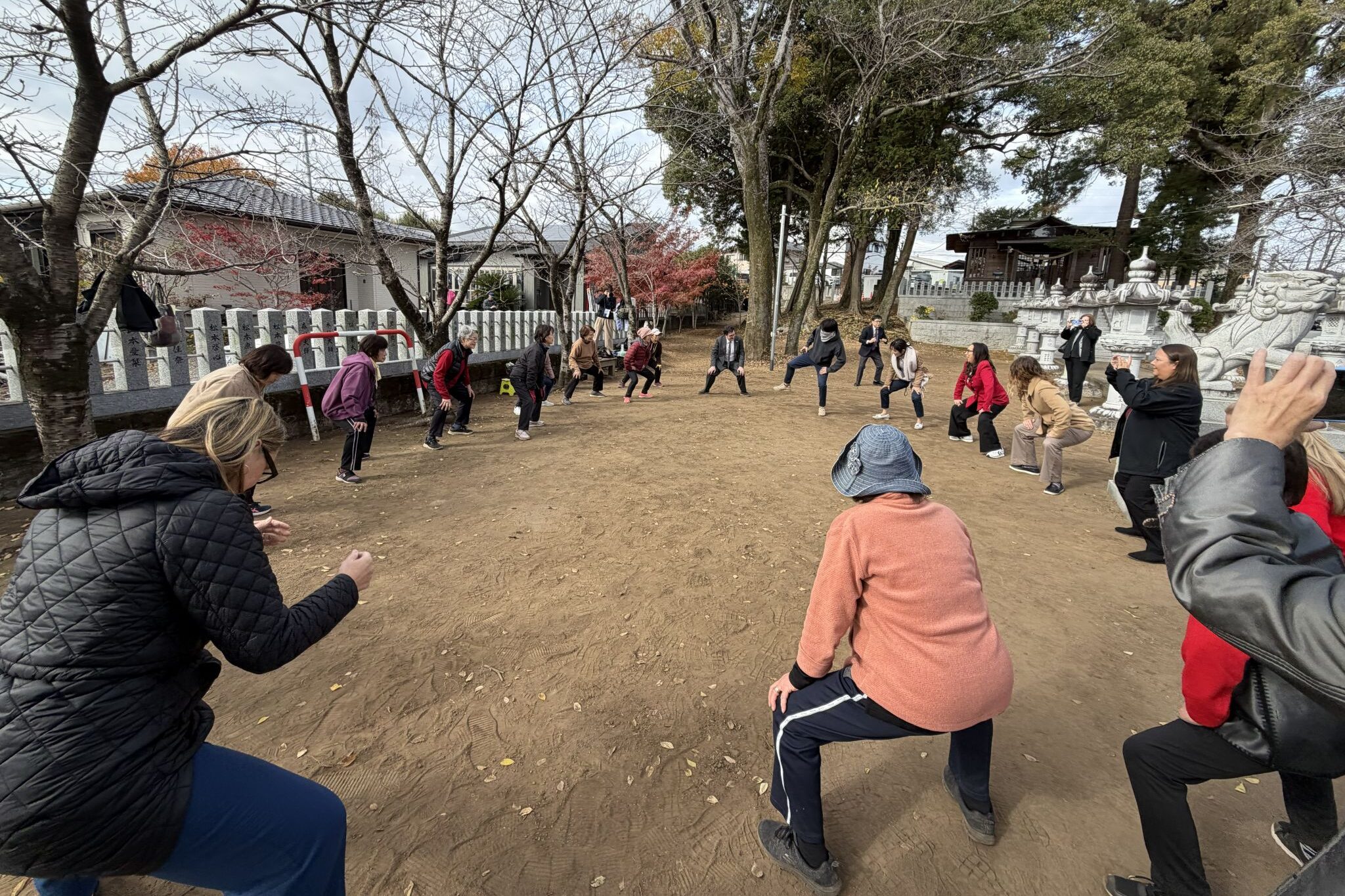
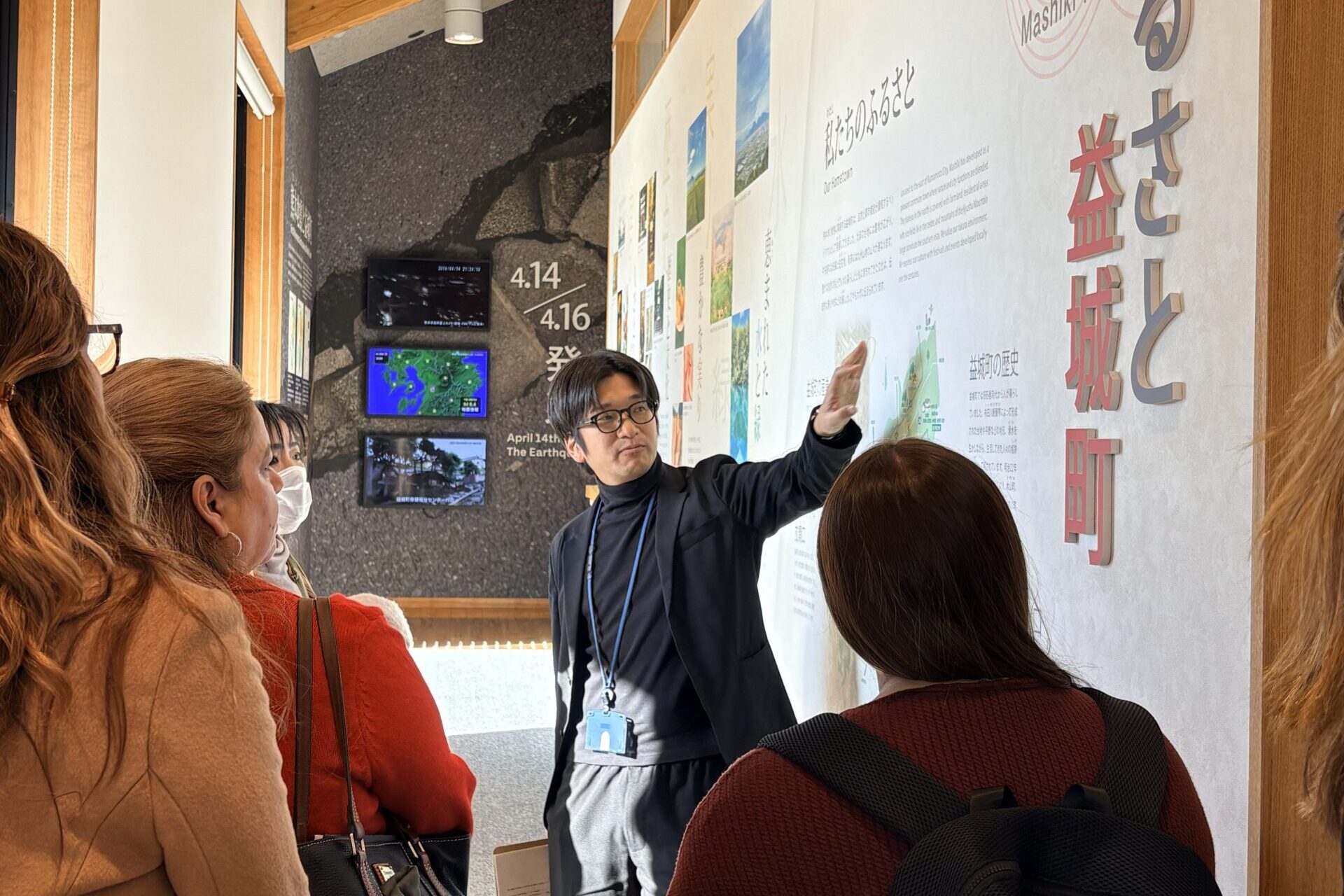
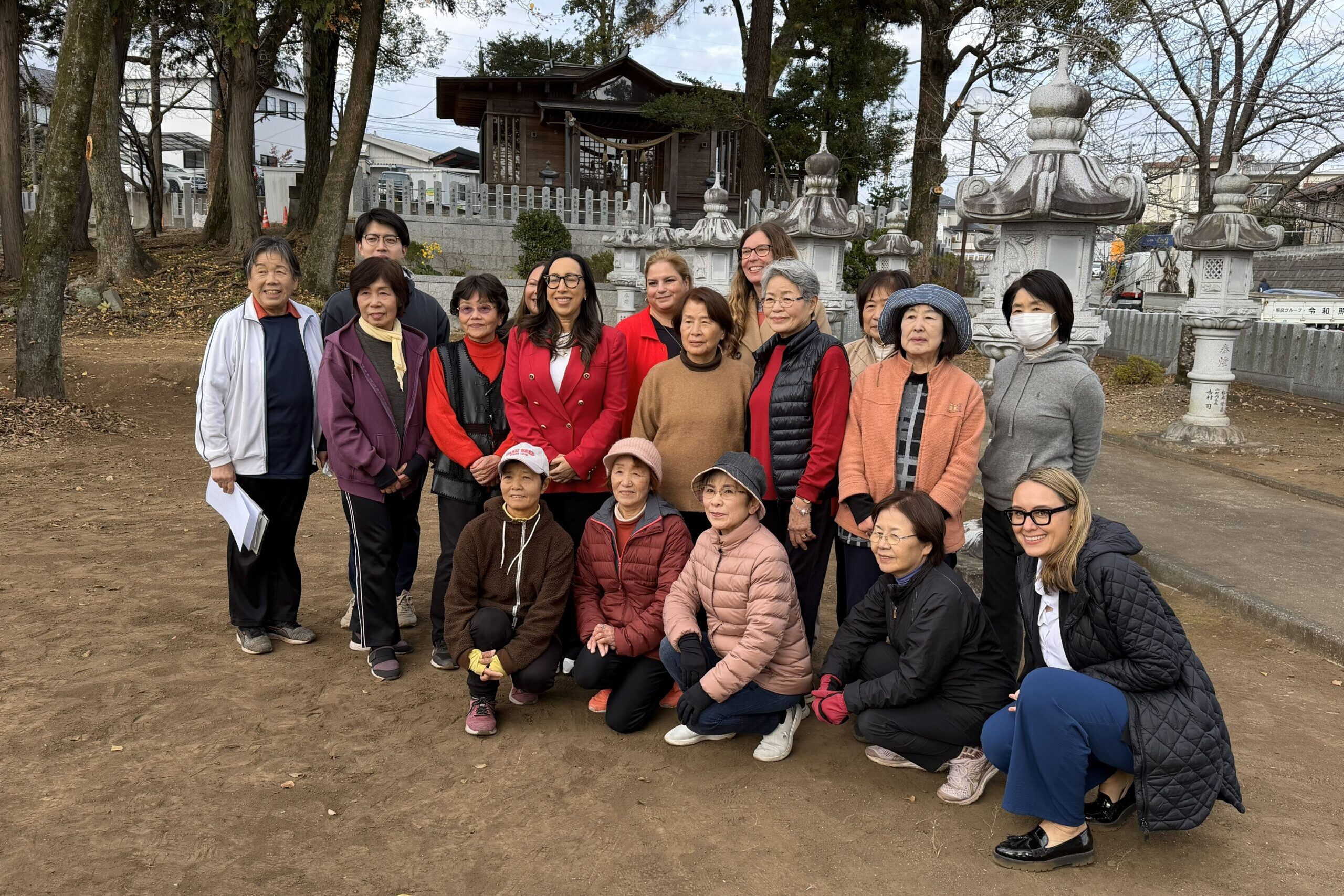
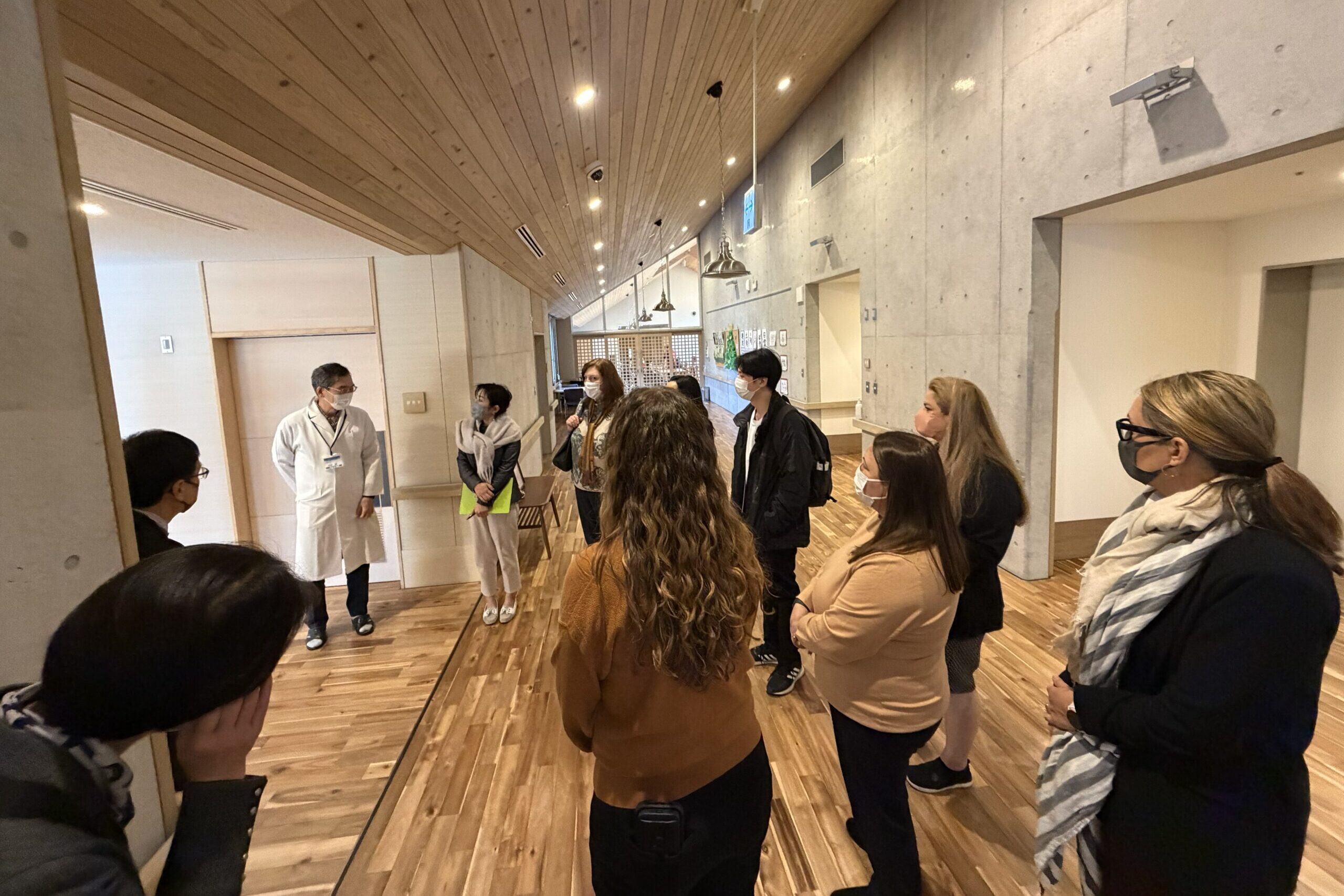
The delegation’s second day in Kumamoto featured a series of site visits in the town of Mashiki, which was near the epicenter of the 2016 Kumamoto earthquake. These visits were coordinated with the support of Jikoukai, a social welfare corporation that operates assisted living and other facilities for older adults. During these visits, participants had the chance to visit one such facility and were particularly impressed to learn about the staff-to-patient ratio of 1:3 and the extremely low costs compared to American facilities. The participants also joined older residents in their exercises intended to build strength and balance, which was carried out at a local shrine and organized through collaboration between Jikoukai and the nearby community-based integrated care support center.
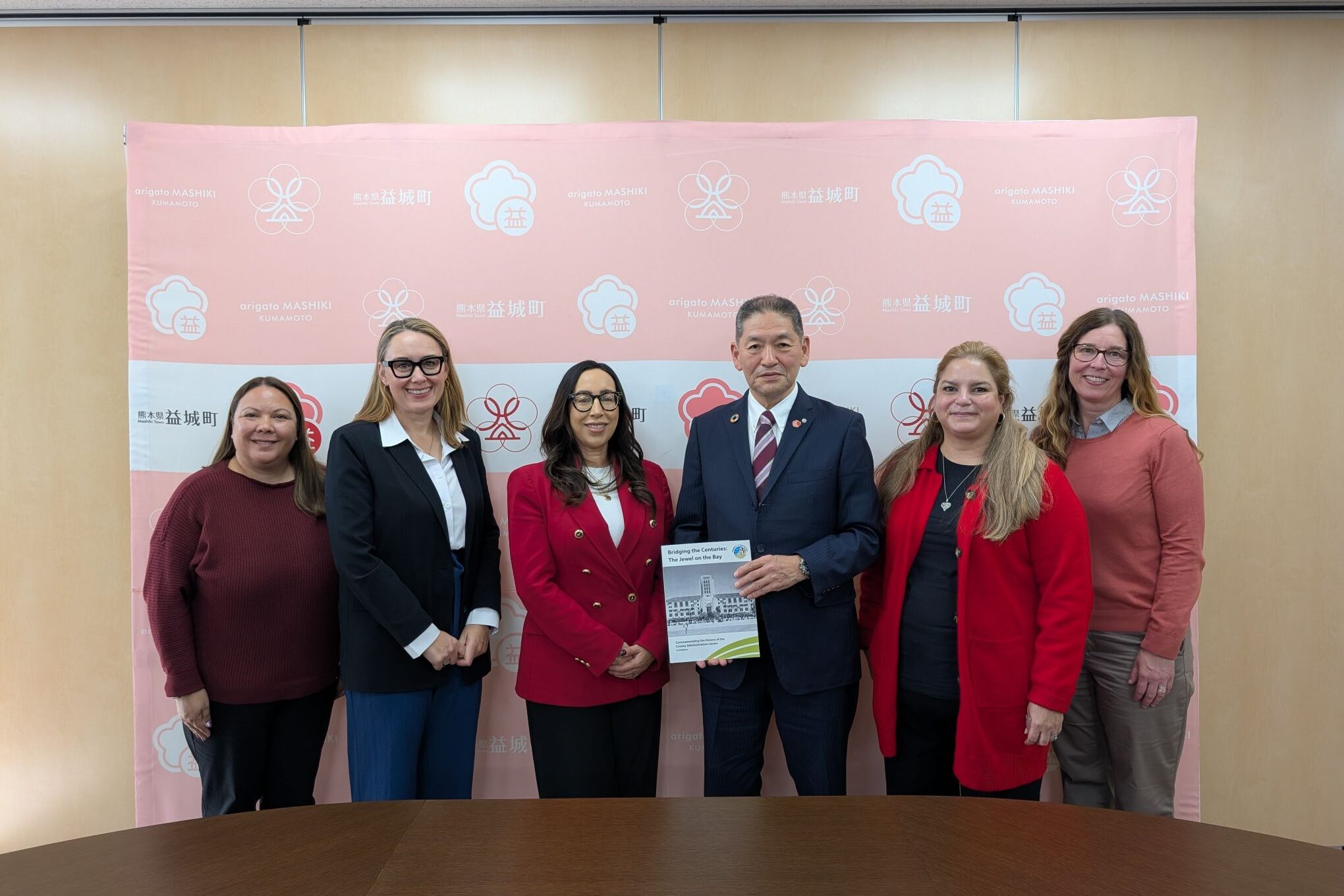
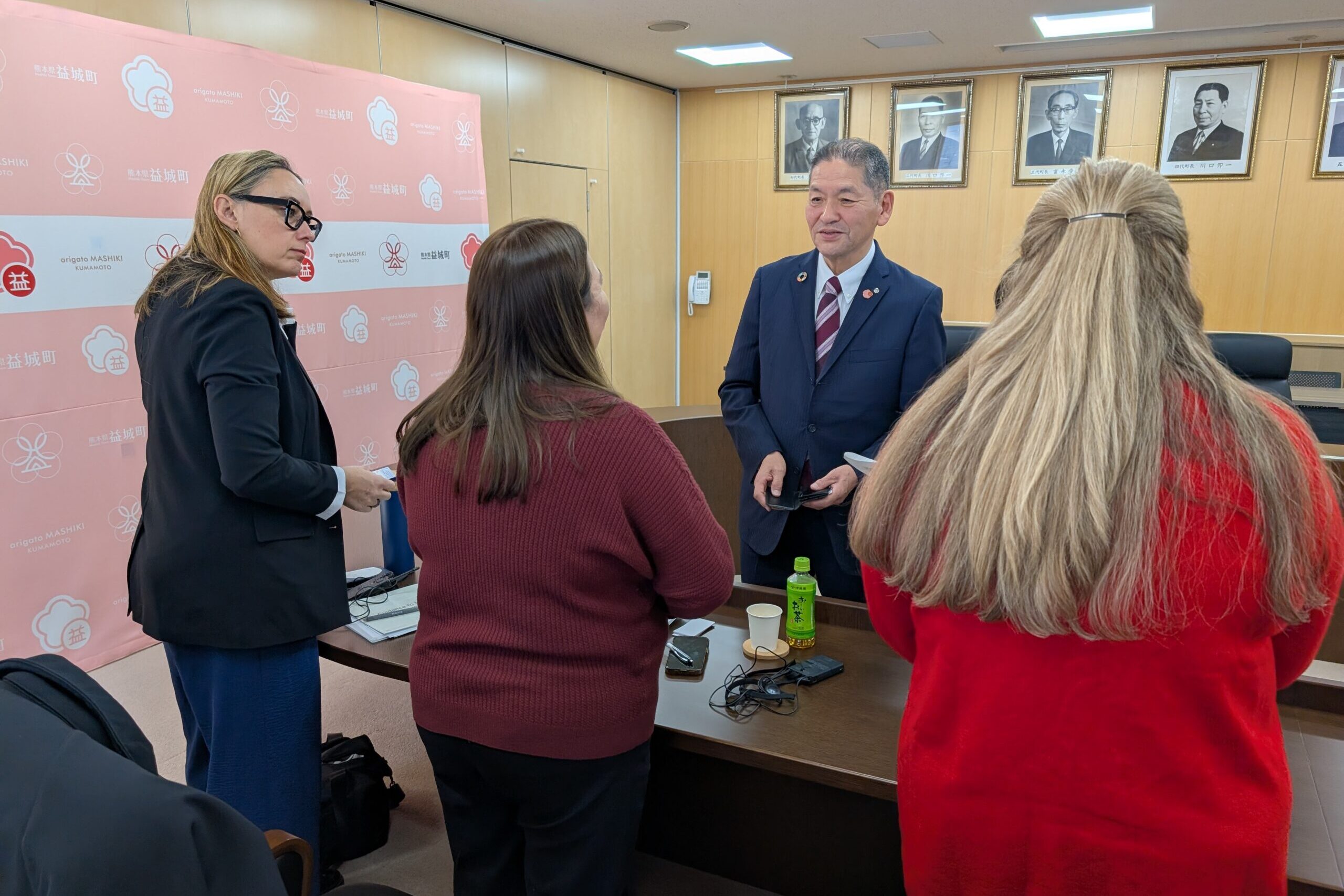
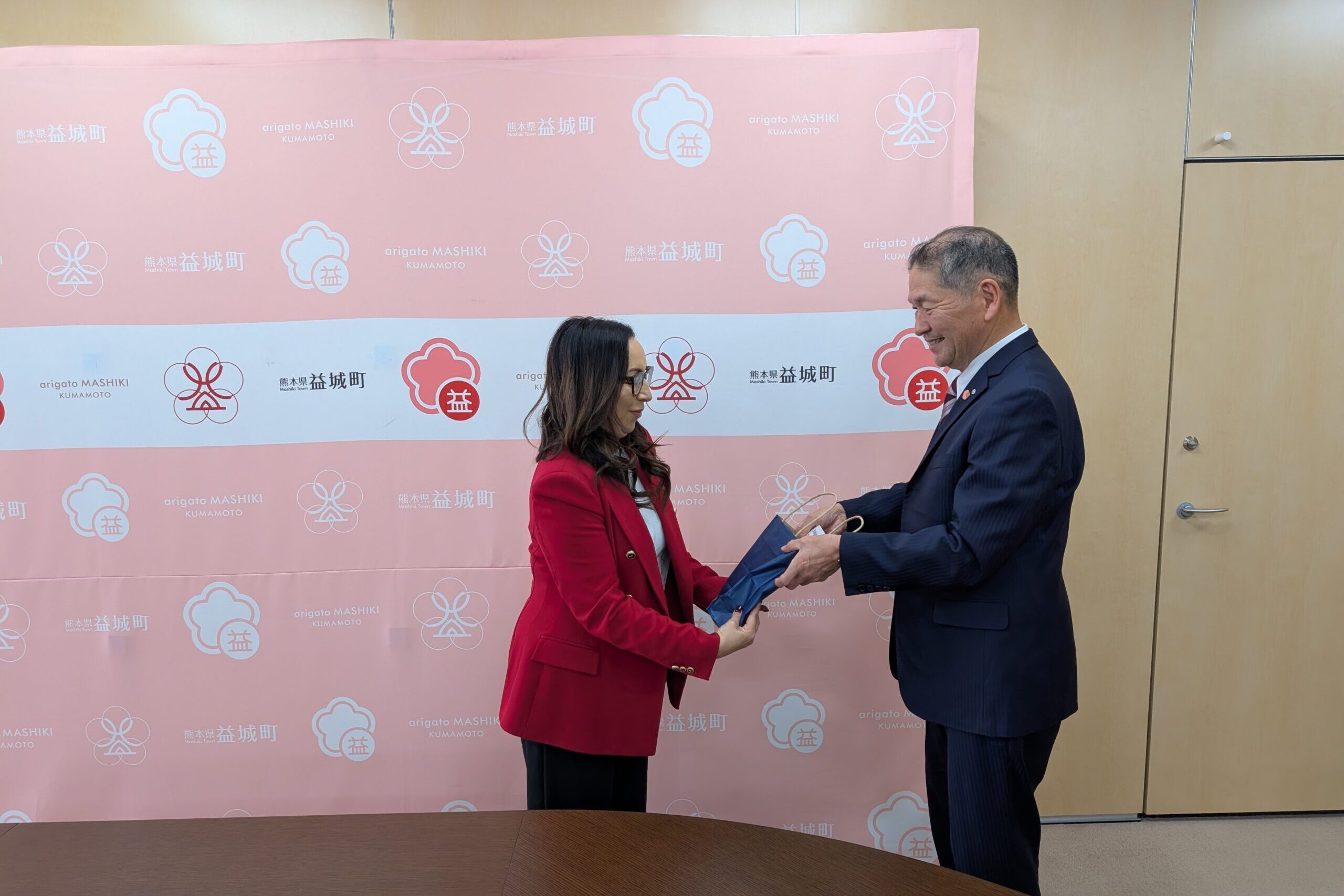
The group visited a community center right outside the Mashiki Town Hall, which was built as a gathering place, a location for remembrance of the 2016 earthquake, and a transportation hub for the town’s bus services. Then at the town hall they met with Mayor Hironori Nishimura, who engaged in a lively discussion with the group, emphasizing the important role of the community in the aftermath of disasters and in promoting healthy aging. Mayor Nishimura also discussed their challenge in engaging older men, given that many community activities only attract women participants.
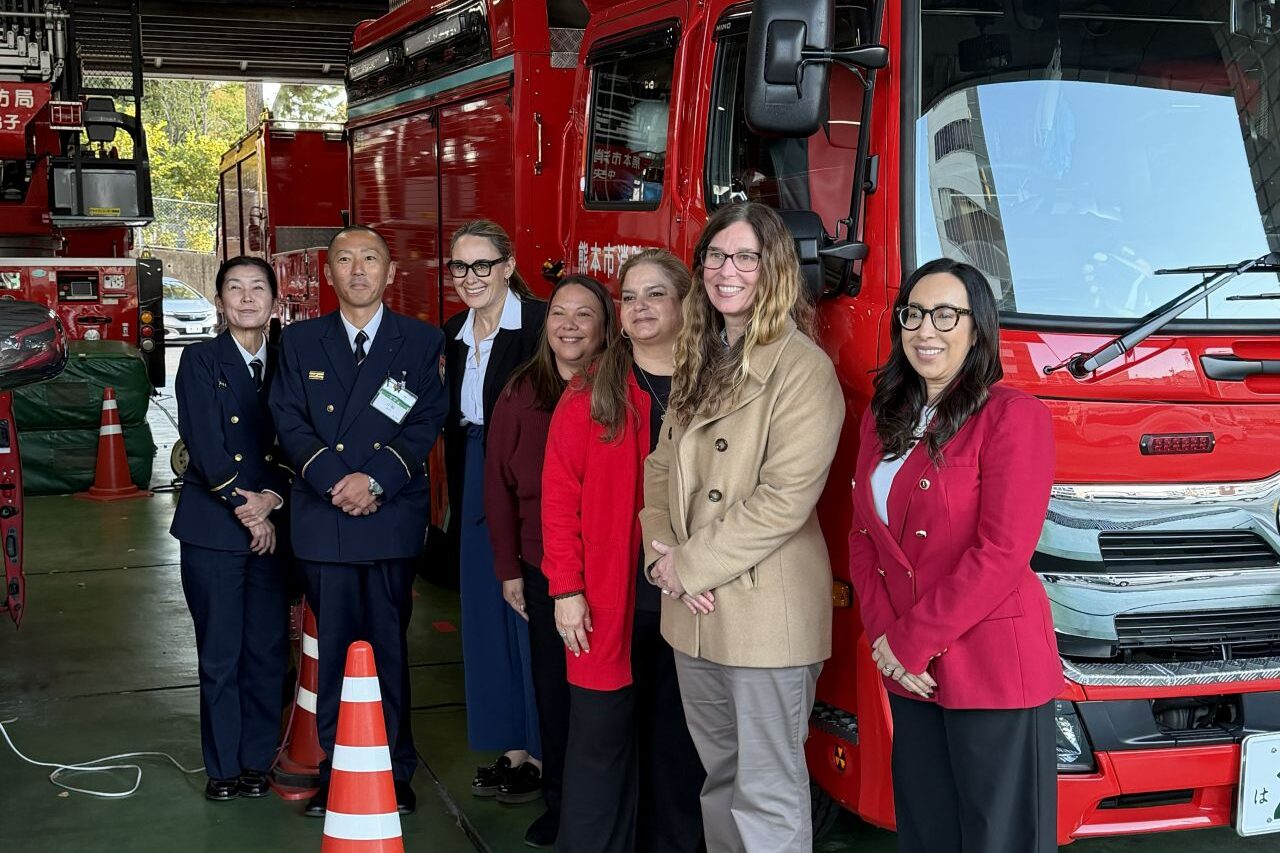
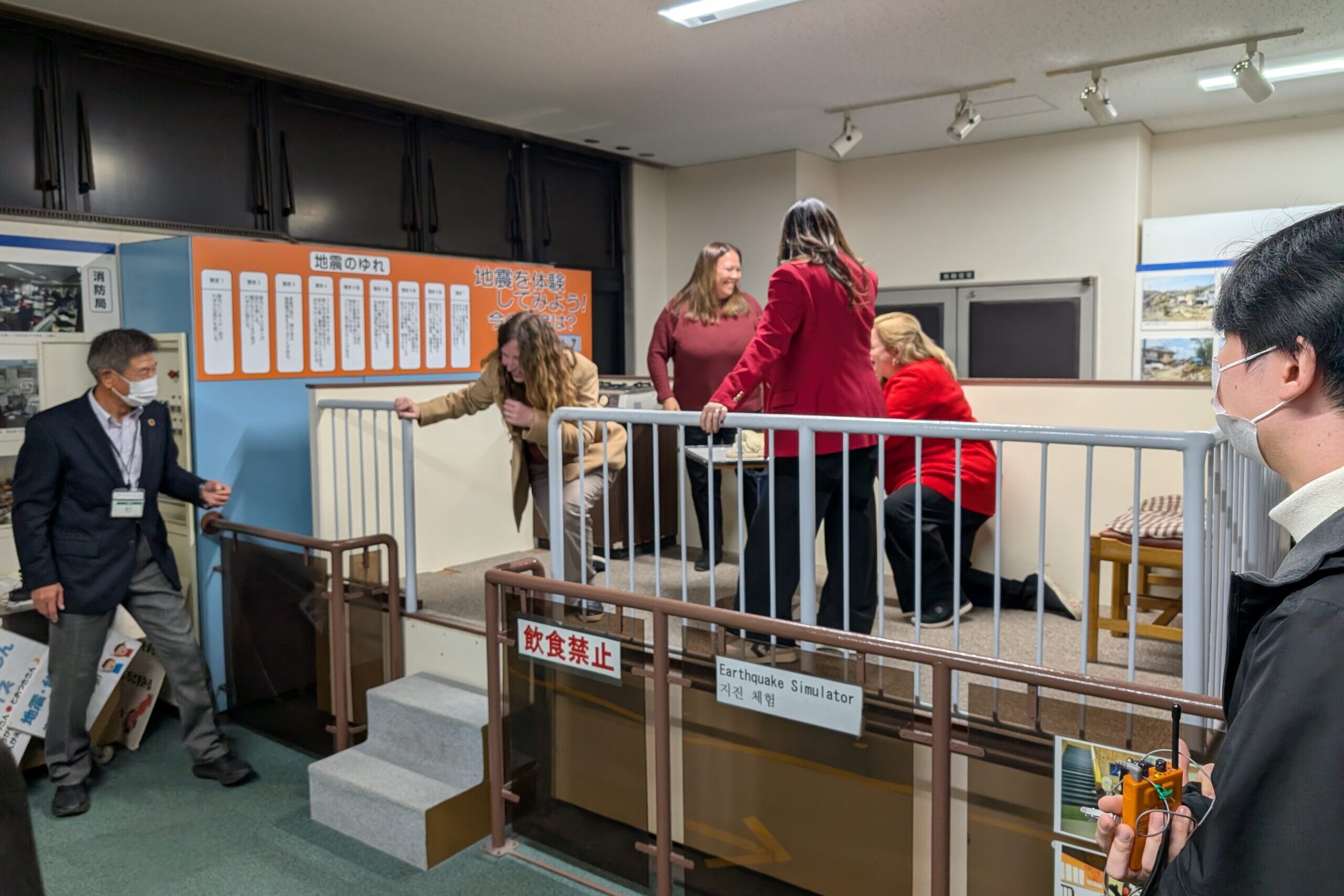
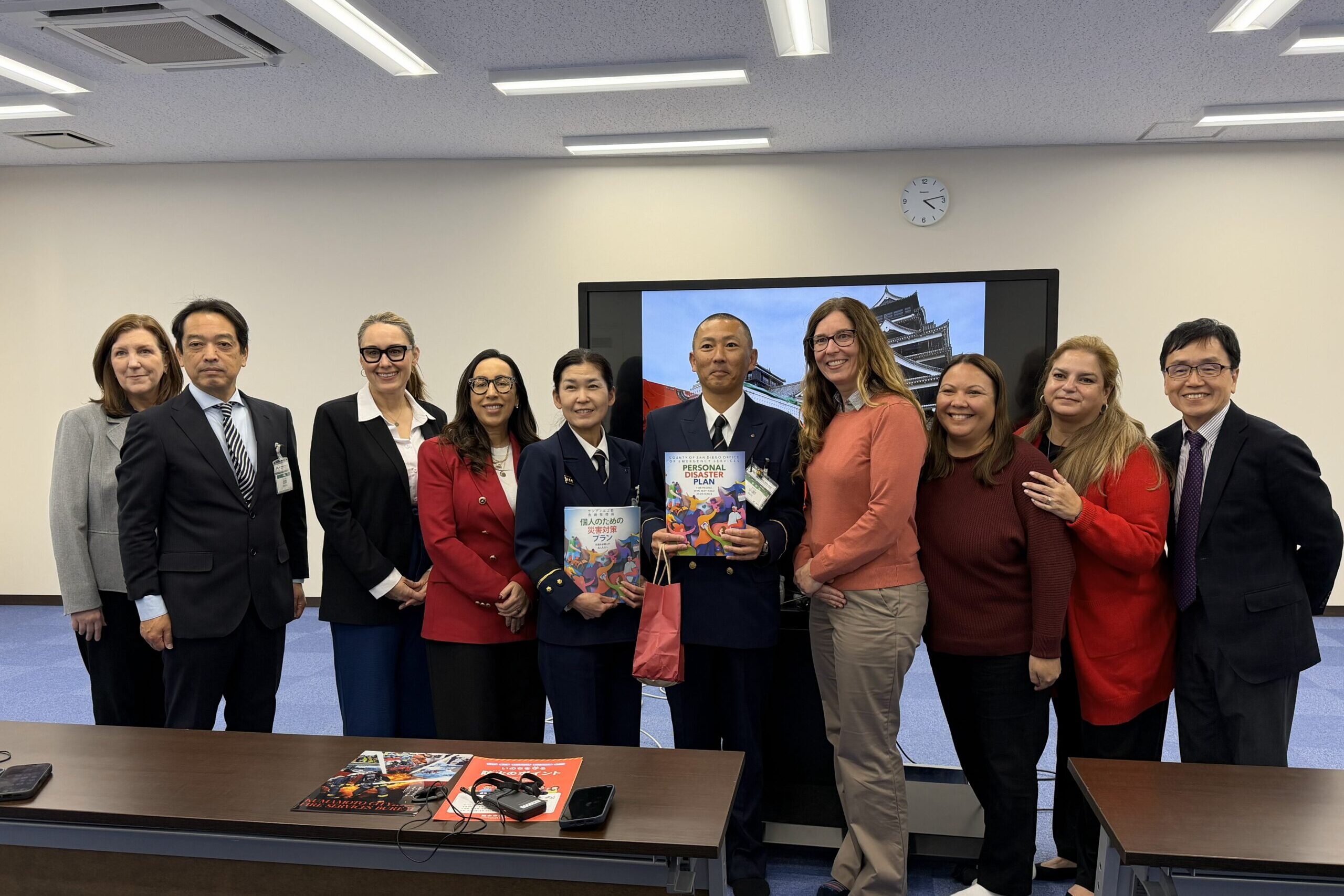
The group concluded their second day in Kumamoto with a visit to the Kumamoto City-Wide Area Disaster Prevention Center, where they had a number of hands-on experiences with protocols for earthquakes, typhoons, and fire evacuation. As the center is co-located with the fire department, the participants also learned how personnel responded during the 2016 earthquake. Participants also heard about the challenges that first responders face in Japan, including the limitations on the kind of medical care that they are able to provide.
On the final day, the group returned to Mashiki to visit other facilities they operate across the care continuum, including a group home for people with dementia. They also had an opportunity to exchange opinions with staff at Jikoukai and other local NPOs focused on community-building activities in the area, including the Kumamoto Living Lab. This prompted discussion about the role of NPOs in disaster response and challenges facing the nonprofit sector in Japan.
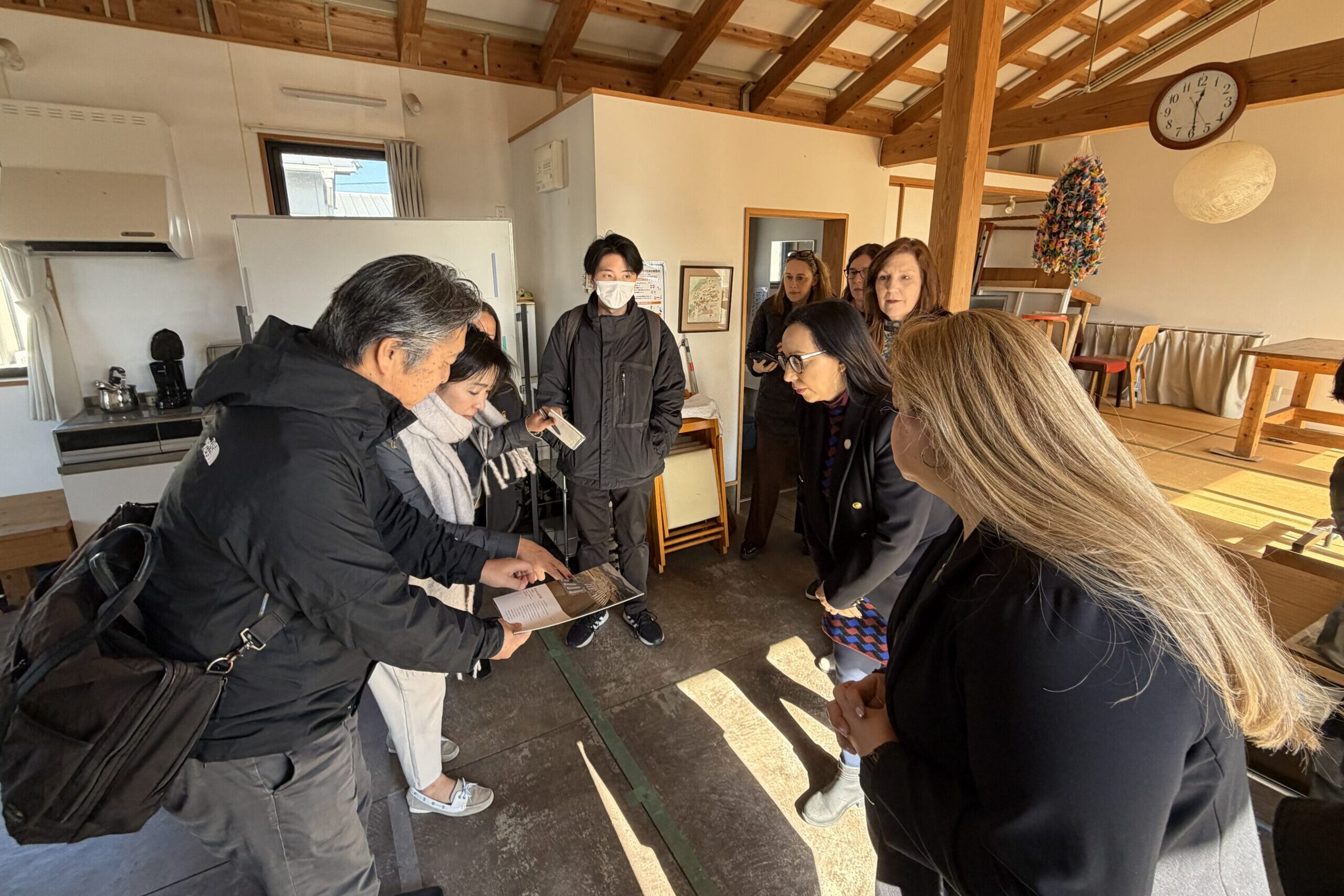
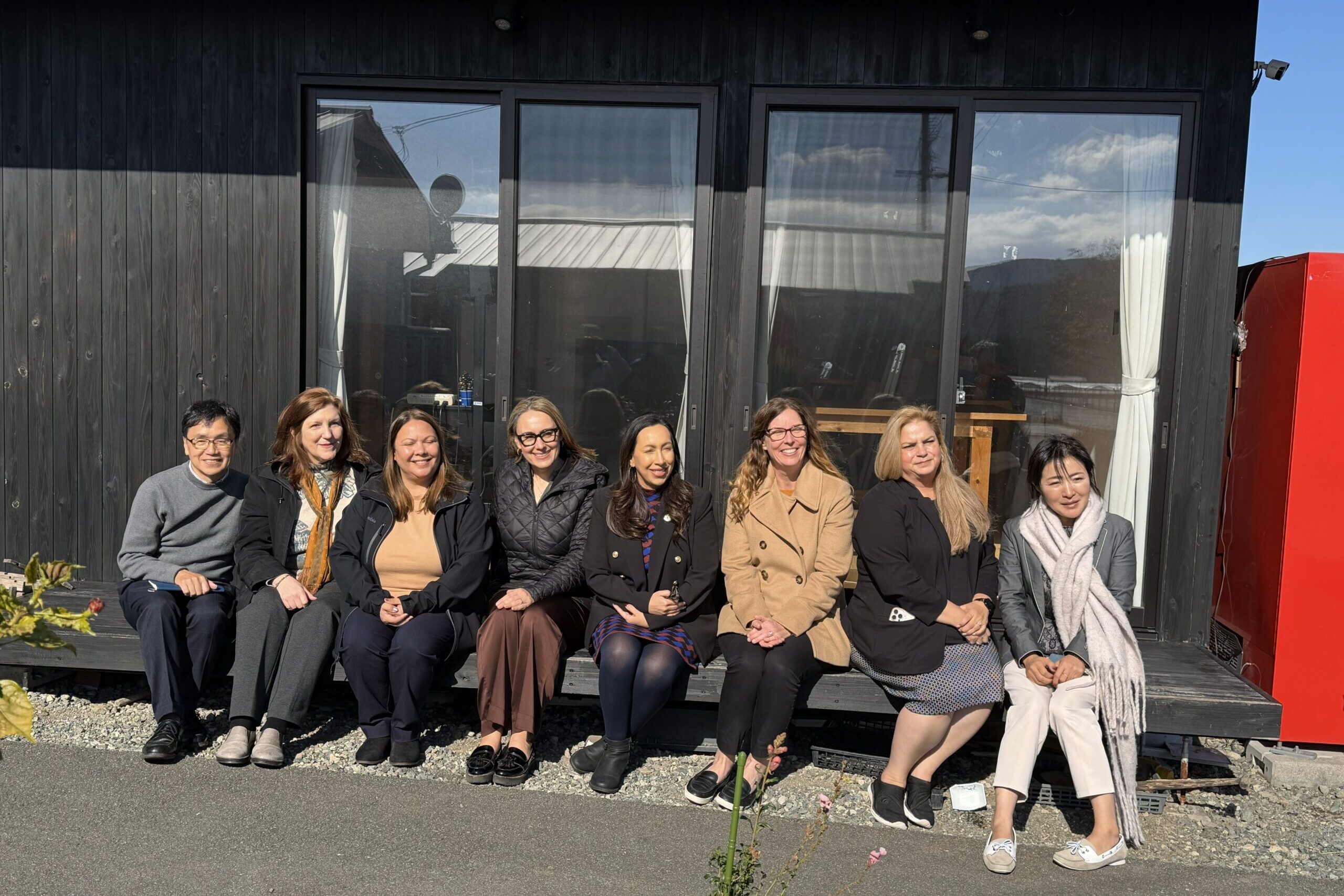
On the way to the airport to return to Toyko, the groups made a brief stop to see the temporary reconstruction housing that came up in the discussion with the Kumamoto Prefectural Office on day 3. They observed the community hub which was built using wood and tatami to make it feel more traditional and welcoming, and learned that some of this housing was now being repurposed as low-income housing.
PALOMA AGUIRRE, Supervisor, San Diego County Board of Supervisors San Diego County District 1
JENNIFER BRANSFORD-KOONS, Director, Aging & Independence Services (AIS), Public Administrator/Public Guardian, County of San Diego Health and Human Services Agency
JULIE JEAKLE, Acting Director, Office of Emergency Services County of San Diego Public Safety Group
MICHELLE MATTER, Ed.D, MBA, MA Director of Aging, Center for Excellence in Aging and Longevity (CEAL)
DANA L. TOPPEL, LCSW, MBA Chief Executive Officer, Jewish Family Service of San Diego
This program was made possible through a generous grant from the Japan Foundation, and with the advice and encouragement of AARP.