
Global Health Diet Roundtable | Vaccine Diplomacy and Japan: What Is Needed Now?

On April 5, JCIE hosted its 6th Global Health Diet Roundtable, which was held online and attended by seven Diet members across multiple parties. Speakers discussed the current status of COVID-19 vaccine development around the world, background information on the vaccine development delays in Japan, and issues in the global COVID-19 response that Japan should address.
Global Health Diet Roundtable | Update on the Regional COVID-19 Situation
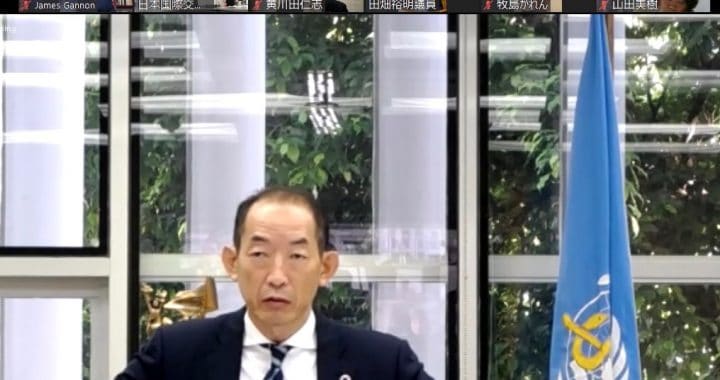
On April 21, JCIE held its Fifth Global Health Diet Roundtable where more than a dozen Diet members were briefed on the current global COVID-19 situation by World Health Organization (WHO) Western Pacific Regional Director, Takeshi Kasai. Dr. Kasai highlighted the importance of more well-thought-out testing strategies as well as the need for international cooperation on the global shortage of personal protective equipment (PPE).
Briefing on the ACT-Accelerator at the Special Session of the Executive Committee on Global Health and Human Security
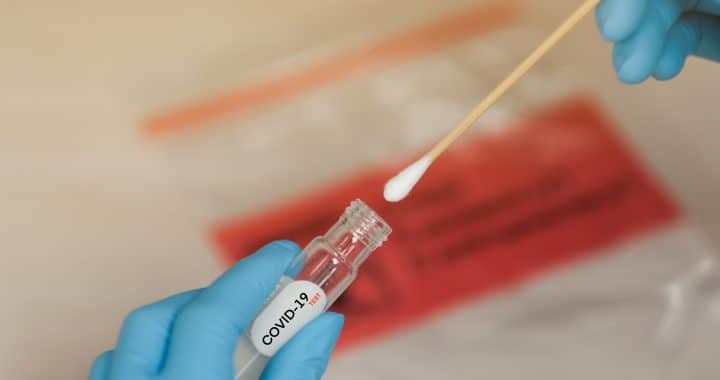
On May 19th, ten leaders of the global health organizations that comprise the Access to COVID-19 Tools (ACT) Accelerator, as well as Ambassador Carl Bildt, WHO Special Envoy for ACT-Accelerator, joined the Special Session of the Executive Committee to explain how this unprecedented global health partnership is helping develop and equitably distribute critical COVID-19 tools.
Bringing the GFF to the 34th Executive Committee Meeting

As a part of the 34th meeting of the Executive Committee on Global Health and Human Security, Dr. Muhammad Pate, Director of the Global Financing Facility for Women, Children and Adolescents (GFF) spoke to over 50 meeting participants, including legislators, senior government officials, academia, private companies, and civil society organizations in Japan. He explained the critical […]
Japan’s Global Health Strategy in the Post–COVID-19 Era Vol. 14 | Essential Medical Products during a Public Health Emergency of International Concern (PHEIC)
This article considers such questions as why the global disparity in access has occurred, whether international efforts to close those gaps have been successful, and what is needed for a fundamental solution to the problem.
Japan’s Global Health Strategy in the Post–COVID-19 Era Vol. 10 | Synergies between Universal Health Coverage (UHC) and Health Security
This brief outlines the PPR and health systems that many countries considered to be the gold standard that they should be aiming for, and how they turned out to be completely powerless in the face of this unprecedented pandemic.
Japan’s Global Health Strategy in the Post–COVID-19 Era Vol. 5 | The Scope and Limitations of a Pandemic Treaty—The Roles of the IHR, Proposed Framework Convention, and Other International Mechanisms
This brief considers a wide range of options for international frameworks, from IHR revision to the adoption of a convention or other mechanism based on Article 19 of the WHO Constitution, or other multinational conventions or mechanisms.
Japan’s Global Health Strategy in the Post–COVID-19 Era Vol. 4 | COVID-19 as a National Crisis: How Can We Prepare for Future Multiple, Simultaneous Outbreaks?
This article deciphers the question: why has it been so difficult to mount a cooperative response to COVID-19? Additionally, it discusses how we can prepare a robust response to the next crisis, and define the role that Japan will be expected to play.
Japan’s Global Health Strategy in the Post–COVID-19 Era Vol. 3 | Issues of UHC Strategy During and After the COVID-19 Era
This paper explores how we should view UHC both during and after the COVID-19 era, looking back at the changes in policy discourse on UHC, especially since the 2016 G7 Ise-Shima Summit, and taking into account what we have learned from COVID-19.
Japan’s Global Health Strategy in the Post–COVID-19 Era Vol. 2 | The Economic Impact of COVID-19 Countermeasures
This article summarizes the relationship between infectious disease countermeasures and the economy, and then discusses the current challenges that are being addressed scientifically.