
JCIE Publications | Discord in the Pacific

This volume contains articles that were prepared as background papers for the Third Japanese-American Assembly held in Shimoda, Japan, in June 1972 (the first two Shimoda assemblies were held in 1967 and 1969), as well as the final report on the Third Assembly.
Japan’s Foreign Policy and Global Health Diet Roundtable Series
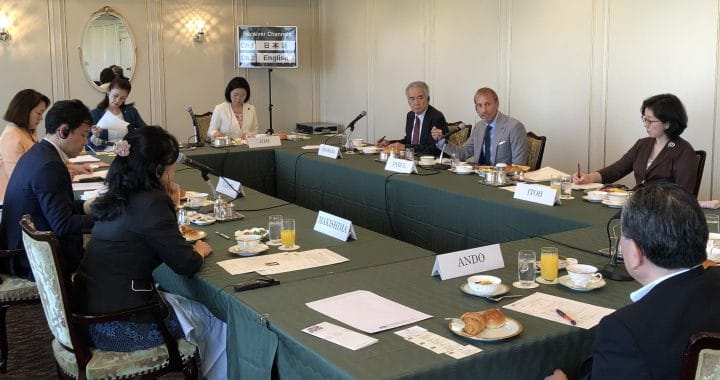
JCIE launched the “Global Health Diet Roundtable” series in 2018, followed by the “Japan’s Foreign Policy and Global Health Diet Roundtable” series in December 2023, as part of its Global Health and Human Security Program. The aim of these two series is to bring together a bipartisan assortment of Japanese parliamentarians and deepen their understanding of global health issues so that they can play a leadership role in the global health field.
Diet Policy Dialogue Program | 2024 Diet Delegation to Indonesia
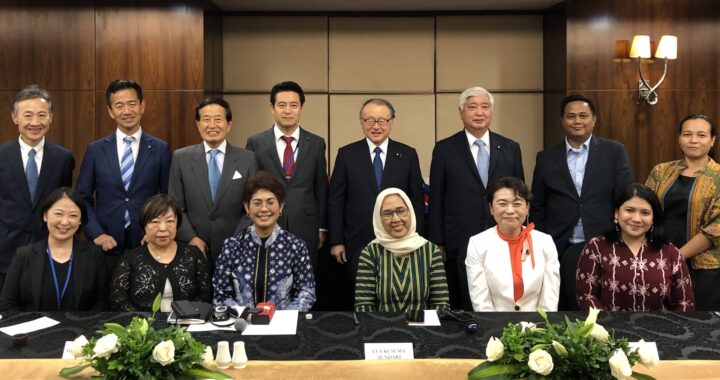
JCIE organized a bipartisan Diet delegation to Indonesia on July 22–June 25, 2024, as part of its Democracy for the Future program.
The Rise of China and the Changing East Asian Order

Under the joint leadership of three senior intellectual leaders in the region, a major research project was organized in 2002 to study the opportunities and challenges that the rise of China as a regional power presents for the task of regional community-building. The participants came together at the 8th APAP Forum in Kunming, China, on March 21–23, 2003, to present the main themes of their research.
Global ThinkNet Fellows
The Global ThinkNet Fellows program was launched by JCIE in 1996 in response to the need for more participation by Japanese scholars and researchers in international collaborative policy research and dialogue. The study group projects focused on such topics as the impact of coalition government on the political process in Japan, nonstate actors in international relations, and challenges facing the U.S.-Japan alliance in the 21st century.
Asia Pacific Security Outlook (APSO)
From 1997 to 2005, JCIE sponsored the Asia Pacific Security Outlook (APSO), an annual research project on regional security issues that produced a publication of the same name. The APSO project monitored changing perceptions of countries in the region in regard to their security environment, national defense issues, and contributions to regional and global security.
Japanese-German Forum
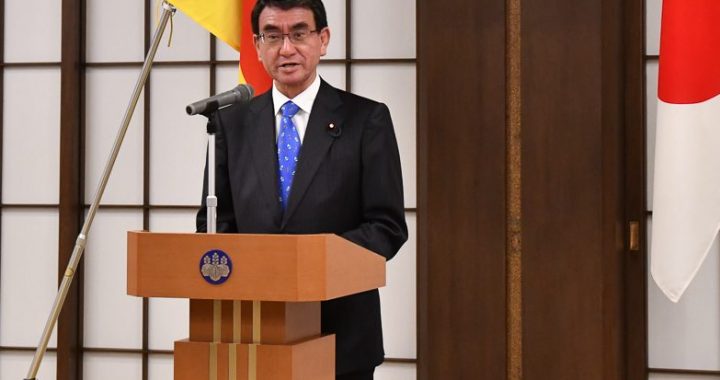
The Japanese-German Forum was created in 1993 as a private, bilateral dialogue designed to promote mutual cooperation and understanding.
Tadashi Yamamoto Memorial Seminar
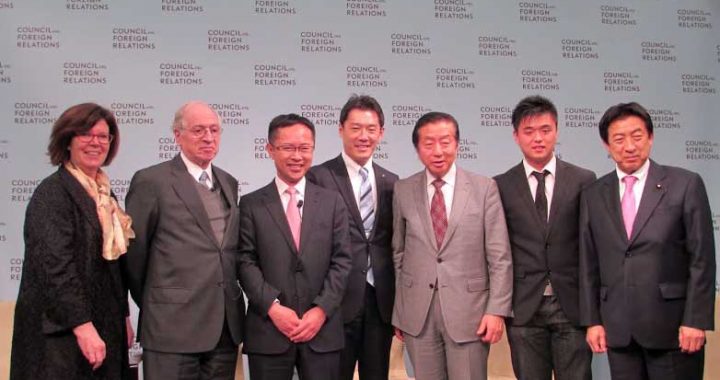
Throughout his career, JCIE’s founder Tadashi Yamamoto made a special effort to engage both senior and emerging leaders from politics, government, civil society, and other walks of life in the type of substantive policy dialogue that builds the foundations for greater international cooperation.
US-Japan Young Political Leaders Exchange
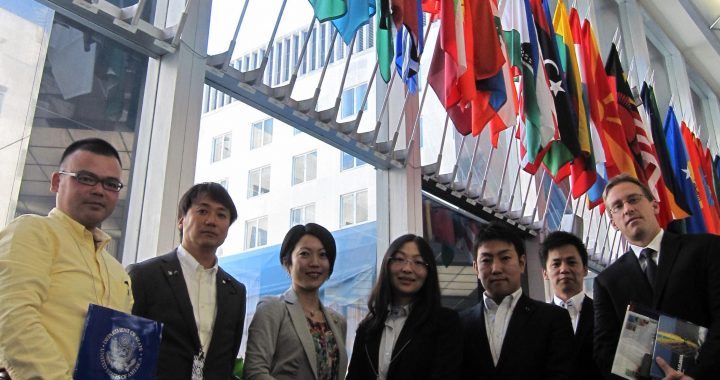
In 1973, JCIE and the American Council of Young Political Leaders (ACYPL) jointly launched the US-Japan Young Political Leaders Exchange Program, an annual bilateral exchange program designed to expose young leaders of each country to the politics and policymaking processes of the other country and to enhance their understanding of US-Japan relations.
A50 Caravan
In commemoration of the 50th anniversary of the signing of the San Francisco Peace Treaty, which formally brought World War II to a close, JCIE’s offices in Tokyo and New York, along with the National Association of Japan-America Societies (NAJAS) in Washington DC, organized an A50 Caravan. The Caravan featured 15 teams, each consisting of three Japanese participants who represented different generations and a broad spectrum of professions and backgrounds.