
Japan’s Response to the Spread of HIV/AIDS

In 2004, JCIE completed a survey report commissioned by the Open Society Institute (OSI) on Japan’s response to the spread of HIV/AIDS. This resulted in one of the first reports in English on how actors in the public and private sectors in Japan have been addressing the spread of the HIV/AIDS epidemic. The report was distributed at the international conference, Human Security Challenges of AIDS and Communicable Disease in Asia, held in Tokyo on March 22, 2004.
Global Health Press Tour Program
In 2013, the Abe administration launched its Strategy on Global Health Diplomacy to promote efforts to achieve universal healthcare. JCIE’s Global Health and Human Security outreach program is offering the media opportunities to cover the state of healthcare in developing countries and allows journalists to report on the effects that investments in healthcare have on a country’s development.
Health, Resilience, and the Added Value of the Human Security Approach
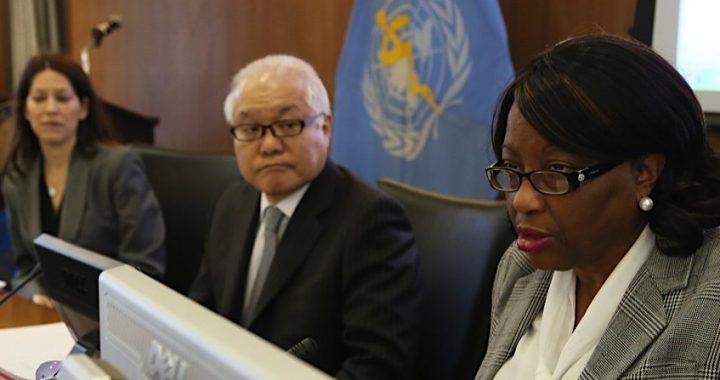
As part of the Global Health and Human Security Program, JCIE and the Pan American Health Organization/World Health Organization (PAHO/WHO) have collaborated on a project to analyze case studies of how the human security approach is being implemented on the ground and how it can contribute to broader goals of health, resilience, and development.
Human Security Approaches to HIV/AIDS in Asia and Africa
Starting in late 2005, a JCIE research team developed case studies of projects in Asia and Africa that take a human security approach to HIV/AIDS in order to better understand how these approaches work on the ground. Research was carried out in Tanzania, Thailand, South Africa, and Zimbabwe, and a workshop was held in Pretoria, South Africa on March 10, 2006, with aid workers and UN officials from around Africa.
Japan–World Bank Partnership Program on Universal Health Coverage
A Japan–World Bank Partnership Program on Universal Health Coverage (UHC) has been launched to examine lessons from Japan’s health system. The goal of the program, which focuses on financing and human resources, is to explore how these lessons can be applied to other countries that are trying to develop systems of universal health coverage.
COVID-19 Solidarity Response Fund for WHO
JCIE has teamed up with the UN Foundation and the WHO Foundation as the Japan partner of the COVID-19 Solidarity Response Fund for WHO. This fund enables Japanese companies, organizations, and individuals to donate to support the work of the WHO, CEPI, UNICEF, WFP, and other international organizations in their fight against the pandemic.
Levi Strauss Foundation Donor Advised Fund of JCIE
From 1997–2004, JCIE joined forces with Levi Strauss & Co. to undertake a new form of corporate-NGO partnership, the Donor Advised Fund. Under this arrangement, the Levi Strauss Foundation provided a grant to JCIE, which served as an intermediary organization, redistributing the funds to NGOs in Japan.
Strengthening Nongovernmental Contributions to Regional Security Cooperation
JCIE conducted a study from 2009–2015 to explore how such nongovernmental initiatives can concretely contribute to regional security cooperation in East Asia.
TICAD Ministerial Meeting Thematic Event | Global Health Financing to Achieve UHC

The Japan Center for International Exchange (JCIE) and Save the Children Japan organized the final thematic event, “Global Health Financing to Achieve Universal Health Coverage UHC in Africa: How to Promote Partnerships to Maximize Results” on the sidelines of the TICAD9 ministerial meeting.
Reflections on the 2023 G7’s Global Health Commitments
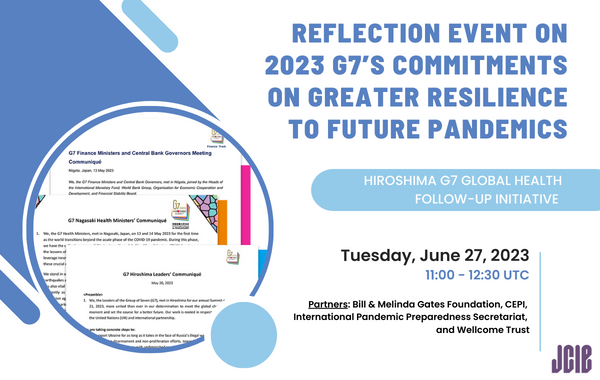
This webinar is a kick-off for the Hiroshima G7 Global Health Follow-up Initiative, and aims to reflect on the 2023 G7 communique and past G7 commitments.