
AHWIN Forum | Achieving Healthy Aging in Asia—Envisioning Better Care for Older Adults
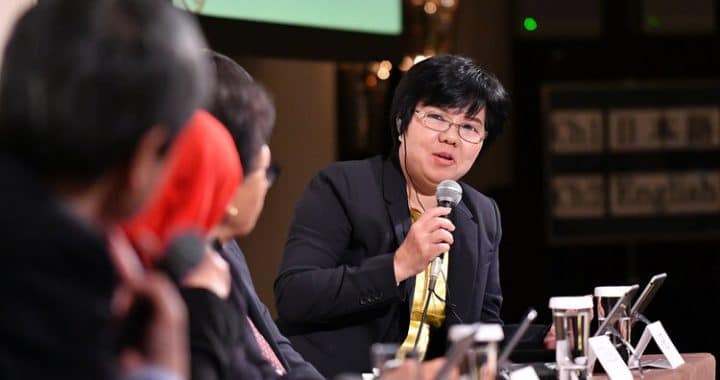
Capitalizing on this year’s gathering in Japan of health ministers and government officials for the G20 Health Ministers’ Meeting, JCIE worked with the Government of Japan and ERIA to co-organize the 2019 AHWIN Forum as part of its program on Healthy and Active Aging in Asia.
A Multistakeholder Approach to Healthy and Active Aging
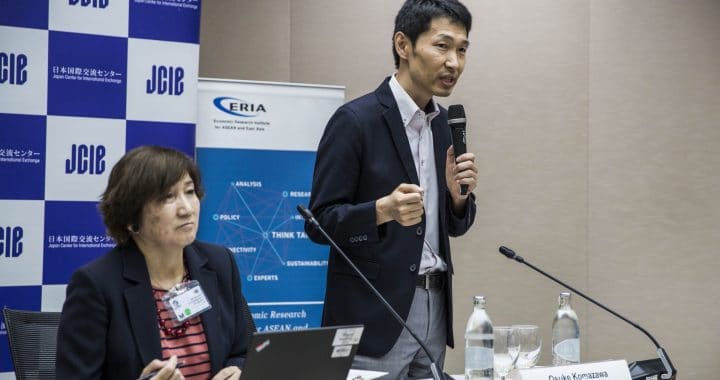
At this side event co-organized by JCIE, groundbreaking innovations and community-based approaches from Japan and Thailand were introduced as a way to promote discussion on healthy and active aging. This event was carried out as part of the Asian Health and Wellbeing Initiative (AHWIN). As part of its program on Healthy and Active Aging in Asia.
AHWIN Forum on Technology for Healthy Aging in Asia
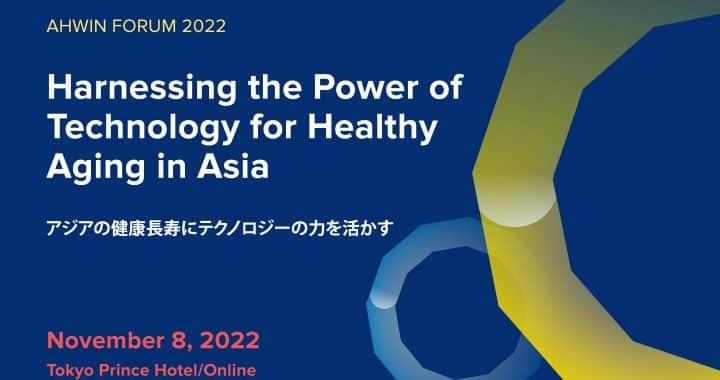
The 2022 AHWIN Forum focused on regional efforts to translate data and innovations into better policies, products, and programs for healthy aging and care for older persons, and discussed best practices in designing age-friendly cities that enable people to stay active and connected and foster solidarity among generations. Winners of the 2022 Healthy Aging Prize for Asian Innovation were also recognized at a ceremony following the Forum.
Winners of 2022 Healthy Aging Prize for Asian Innovation Announced

The winners of the 2021 Healthy Aging Prize for Asian Innovation have been announced!
Japan Elderly Care Services Drawing Interest from Thailand, Other Asian Nations

“In early November, three older people with dementia were cleaning a park in Kamakura, Kanagawa Prefecture. A group of nine visitors from Thailand, Vietnam, China and Singapore observed the way the three, who receive the services of a nearby daycare center, were contributing to their community. The visitors included representatives of civil society organizations that provide support for the elderly. The Japan Center for International Exchange, which aims to help other Asian countries in dealing with issues related to population aging, was among the organizations that invited the visitors to learn about Japan’s elderly care services.”
WEBINAR | Public Symposium Towards a Safer Transnational Migration—Bringing Together Multiple Stakeholders’ Perspectives
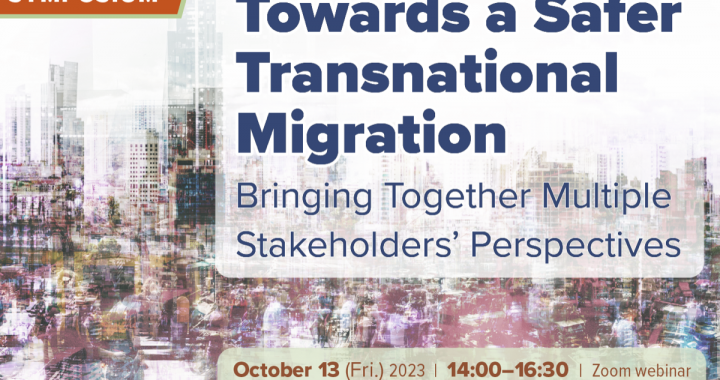
JCIE will hold an online public symposium, ” Towards a Safer Transnational Migration: Bringing in Migrants’ Perspectives,” to enhance information access for foreign migrants and promote accountability by comparing the experiences of individuals from Nepal and Myanmar in Japan and Korea.
Inaugural US-Japan Healthy and Resilient Aging Exchange
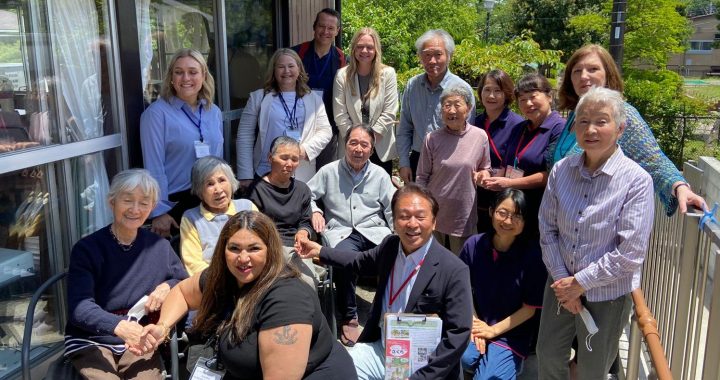
JCIE brought community leaders from Columbus, Ohio—a leader in age-friendly community-building in the United States—to meet with counterparts in Tokyo and in various age-friendly cities in Kanagawa Prefecture to share best practices and insights into the shared challenge of better coping with aging populations.
JCIE/Japan’s Toshihiro Menju Writes on Japan’s Immigration Policy
“At a recent event…, Prime Minister Kishida Fumio told attendees that, ‘we must imagine a society in which we can live together with foreigners’ in light of Japan’s demographic decline. The prime minister should also explain to the Japanese people in a concrete and clear manner that coexistence with foreigners is essential for Japan’s future. […]
JCIE Managing Director Toshihiro Menju Speaks on Japan’s Foreign Technical Trainee Program
“An organization that supports foreign technical trainees in Japan says it received more than 23,000 complaints in fiscal 2021. This comes amid reports about various problems, such as trainees not being paid or being unjustly dismissed. Japan has a program for trainees from developing countries. The individuals are able to learn about technology and acquire […]
JCIE Staff Conduct Site Visit to Aging-Related Organizations in South Korea
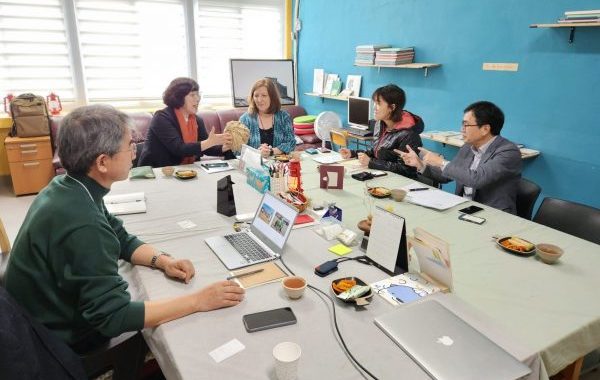
Members of the aging program team from JCIE traveled to South Korea for a series of site visits and meetings in Busan and the rural province of Hadong, where the team learned how the rapid declining birthrate and aging population in South Korea has become a social issue of the highest priority, and witnessed how the government, welfare facilities, and civic groups are actively addressing this issue.