
JCIE USA’s 50th Anniversary Celebration featuring Professor Gerald L. Curtis: Defining a Path Forward for US-Japan Relations in Turbulent Times
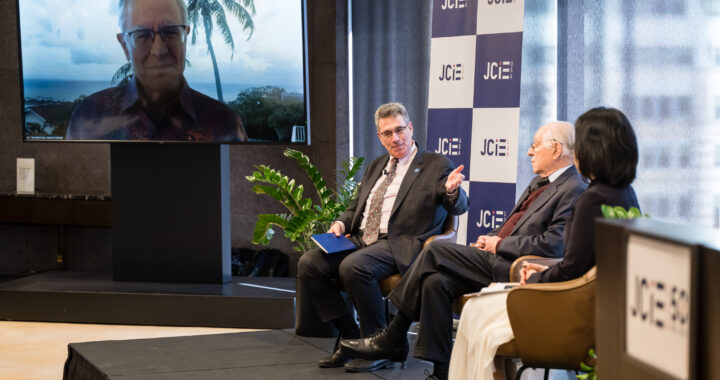
JCIE USA will celebrate the 50th anniversary of its efforts to strengthen US-Japan relations with a conversation featuring Professor Gerald L. Curtis, moderated by Jake Schlesinger with Charles E. Morrison as a discussant. The discussion will seek to define a path forward for US-Japan relations, including the roles that lawmakers, corporations, NGOs, and others can play during challenging times.
Exploration of a Potential ASEAN-Japan Health Dialogue
JCIE and the Nagasaki University Graduate School of Planetary Health DrPH Program examined the possibility of establishing a multistakeholder dialogue platform that brings together governments, researchers, civil society, and the private sector to promote the co-creation of solutions to common health challenges between Japan and ASEAN. The discussion focused on a survey that was commissioned on what themes should be prioritized in cooperation between Japan and ASEAN on health issues.
San Diego County Delegation Participates in US-Japan Healthy and Resilient Aging Exchange
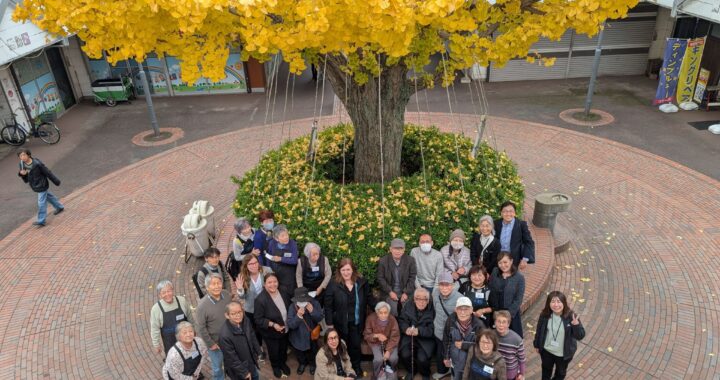
Community leaders from San Diego County visited counterparts in Tokyo and Kumamoto Prefecture to share best practices and insights into the shared challenge of better coping with aging populations, with a special focus on disaster prevention, response, and resilience for older people.
OPEN FOR APPLICATIONS | 5th Healthy Aging Prize for Asian Innovation
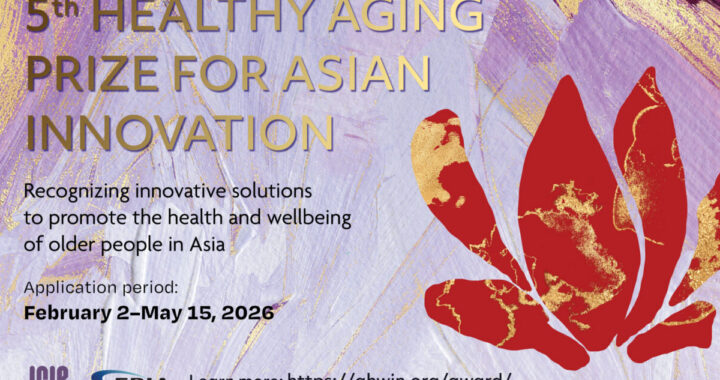
Now accepting applications for the Healthy Aging Prize for Asian Innovation (HAPI), which seeks to recognize and amplify innovative policies, programs, services, and products that address these and many other challenges facing aging societies.
JCIE/USA Roundtables & Special Events
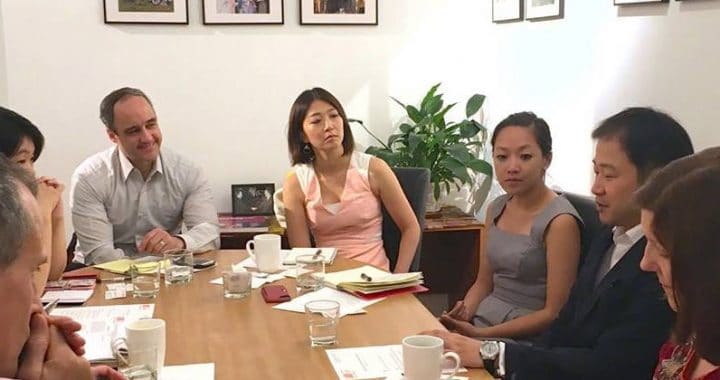
JCIE/USA holds occasional roundtables, offering an opportunity for visiting scholars and experts to engage in initimate discussions with a select group of relevant stakeholders from the New York area. It also convenes roundtables that target the US-Japan Journalism Fellows and holds additional events for the business community.
Roundtable with Japanese Diet Members on Sustaining Health Programs for Infectious Diseases in Africa
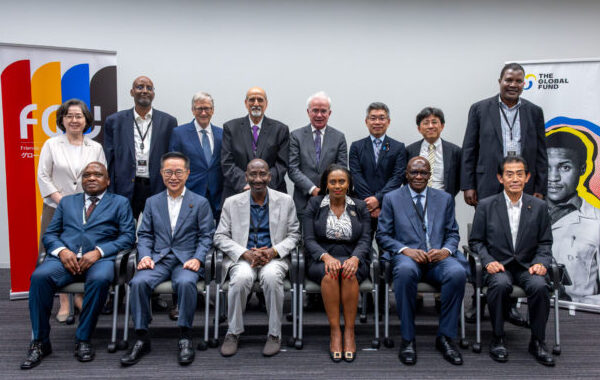
Ahead of the 9th Tokyo International Conference on African Development (TICAD9), FGFJ convened a roundtable with Japanese Diet members on “Fighting the Good Fight: Sustaining Health Programs for Infectious Diseases in Africa.” The meeting welcomed Bill Gates (Gates Foundation), Dr. Abdoulaye Djimdé (5th Hideyo Noguchi Africa Prize Laureate), Peter Sands (Global Fund), and others.
Asahi Shimbun Covers JCIE Statement on Reduced Japanese Government Funding to Fight Infectious Diseases

The Japan Center for International Exchange issued a statement on Japan’s major reduction in its contribution to the Global Fund, warning that the sudden drastic reduction “undermines Japan’s long-standing credibility in international cooperation.”
Bipartisan Group of US Congress Members Introduce Resolution Recognizing Launch of Japanese Diet “Caucus for Universal Values in the Indo-Pacific”
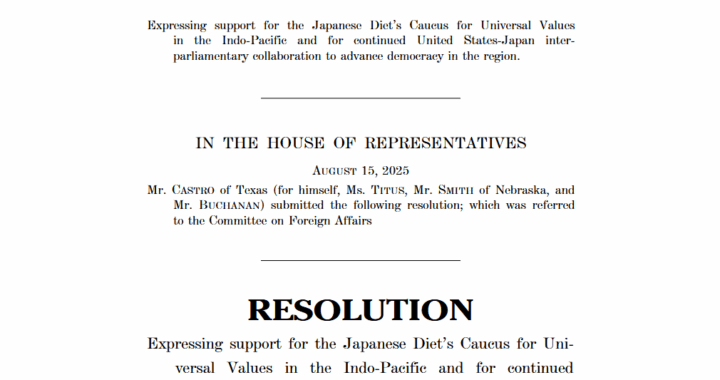
On August 15, a bipartisan group of US Congress Members, led by Representative Joaquin Castro (D-TX), introduced a resolution recognizing and commending the launch of a new “Caucus for Universal Values in the Indo-Pacific” in the Japanese Diet, as well as JCIE’s work through its Democracy for the Future Program
FGFJ TICAD9 Thematic Event | Sustainable Health Financing in Africa: From Commitments to Action

The Global Fund to Fight AIDS, Tuberculosis and Malaria and the Japan Center for International Exchange (JCIE)/Friends of the Global Fund, Japan (FGFJ) co-organized a thematic event titled “Sustainable Health Financing in Africa: from Commitments to Action” on the occasion of the Ninth Tokyo International Conference on African Development (TICAD 9), held in Yokohama in August.
National Network for an Inclusive Future (NANIF)

JCIE has launched the National Network for an Inclusive Future, which aims to support the establishment of regional platforms to discuss the acceptance and settlement of foreigners throughout Japan. With support from the Toyota Foundation, JCIE will work with local governments, councils, NPOs, companies, media, and other Japanese organizations tackling obstacles to foreign talent and multicultural coexistence in local communities.