
Global ThinkNet Fellows | Japan’s Foreign and Security Policy Options

This project was launched in June 1996 as the first of the study groups organized to promote policy-related contributions from Japanese researchers under the Global ThinkNet Fellows Program. Under the guidance of Professor Masashi Nishihara, six young and promising political scientists examined Japan’s foreign and security policy options for the 21st century.
International Advisory Group on Global Health
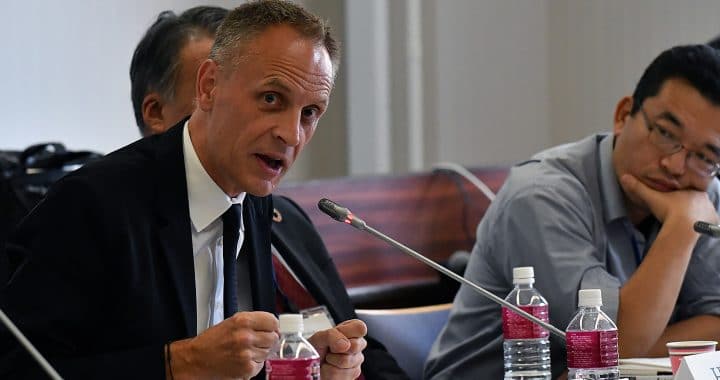
In 2019 and 2020, Japan hosts a range of critical international meetings, from the G20 Summit to the 7th Tokyo International Conference on African Development (TICAD 7), and the Nutrition for Growth Summit (N4G). In order to help the Japanese government make strategic use of these events in advancing global health, in April 2018 the Japan Center for International Exchange (JCIE) convened a half-year consultative process in collaboration with five key Japanese government agencies.
Japan’s Response to the Spread of HIV/AIDS
In 2004, JCIE completed a survey report commissioned by the Open Society Institute (OSI) on Japan’s response to the spread of HIV/AIDS. This resulted in one of the first reports in English on how actors in the public and private sectors in Japan have been addressing the spread of the HIV/AIDS epidemic. The report was distributed at the international conference, Human Security Challenges of AIDS and Communicable Disease in Asia, held in Tokyo on March 22, 2004.
Japan 101 Online Course: Understanding US-Japan Relations
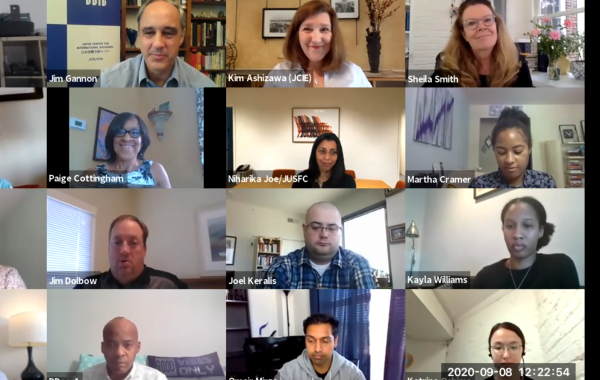
An online course for Congressional staff to bring them up-to-date on the US-Japan relationship and its importance in the US’s approach to Asia.
Global ThinkNet Fellows | Japanese Politics in the New Era
This project focused on the theme of “Japanese Politics in the New Era,” under the direction of Hideo Otake, professor of political science at Kyoto University and leading scholar on Japanese politics. The project reflected an awareness of the difficult constraints that domestic politics often place on effective Japanese participation and leadership in international affairs.
Global ThinkNet Fellows | Nonstate Actors in International Relations
Under the guidance of Professor Taizo Yakushiji of Keio University, a group of eight young scholars and researchers from various academic fields was formed to explore the role of non-state actors, such as multinational corporations, nongovernmental organizations, interest groups, and the mass media, in today’s international relations.
Global ThinkNet Fellows | The Future of Governance & the Role of Politicians
Under the guidance of Professor Gerald Curtis of Columbia University, six emerging political leaders conducted case studies in their respective areas of expertise in order to identify appropriate roles of politicians and new models for the policy-formation process.
Global ThinkNet Fellows | The Japan-US Alliance: New Challenges in the 21st Century
A group of six young scholars examined the elements that might affect the Japan-US alliance in coming decades, including domestic public opinion and politics, tensions between other countries, and cultural outlook. Their final papers were published by JCIE as an edited volume, Japan-US Alliance: New Challenges for the 21st Century.
Global ThinkNet Fellows | Transformation of Japanese Communities and the Emerging Local Agenda
Under the direction of Shun’ichi Furukawa, a team of young scholars and think tank researchers was formed to study the new demands facing local government in the face of rapid changes that have accompanied globalization and decentralization.
Global ThinkNet Fellows | Prospects of ASEAN 10 and Its Implications for Regional International Relations
Established thirty years ago, the Association of Southeast Asian Nations (ASEAN) has developed from a tentative anti-communist coalition into a major international actor in the economic arena. Under the guidance of Prof. Sueo Sekiguchi of Seikei University, a study group of seven young economists and political scientists was formed to examine various aspects of the expansion of ASEAN and analyze what effect it will have on the region’s economies; the participants met regularly to discuss the political, economic, and social issues related to ASEAN and the long-term prospects of the member economies.